



Ducks


Ducks spend most of their time near water, where they search for food and raise their young. They are not fussy feeders, are easy to care for, and provide tasty, fatty meat and eggs. For this reason, they are the most commonly kept waterfowl, and in some parts of Asia they are even preferred to chickens.
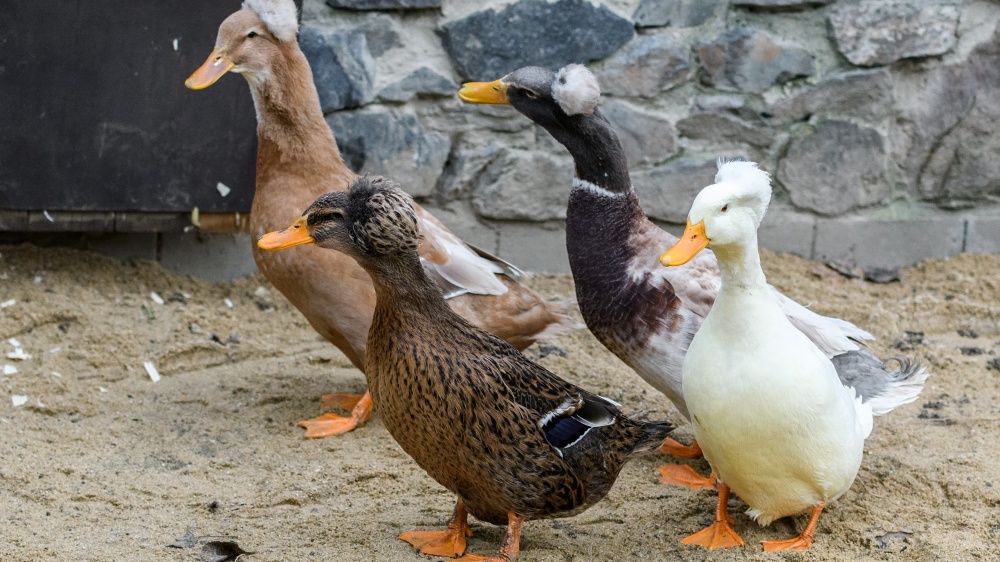 Crested Duck is a popular European breed. Photo: Petr Hamerník, Prague Zoo
Duck Facts & Curiosities
Ducks are highly social animals; they even communicate with one another while still inside the egg. Ducklings use these calls to coordinate their hatching so that they emerge as close together in time as possible, increasing their chances of survival. During the early stages of life, they maintain almost constant contact with their mother through soft peeping, to which she responds with quiet quacks, reassuring them of her presence.
The familiar loud quacking is characteristic of female ducks. Drakes, by contrast, produce a quieter, hoarse rasping sound. A drake of any colour (even those where the plumage of both sexes looks alike) can be distinguished from a duck not only by its voice but also—at least in breeding plumage—by the curled feather above the tail, known as the “drake feather”. However, some drakes lack this feature even in breeding plumage, and in eclipse (summer) plumage it is absent altogether.
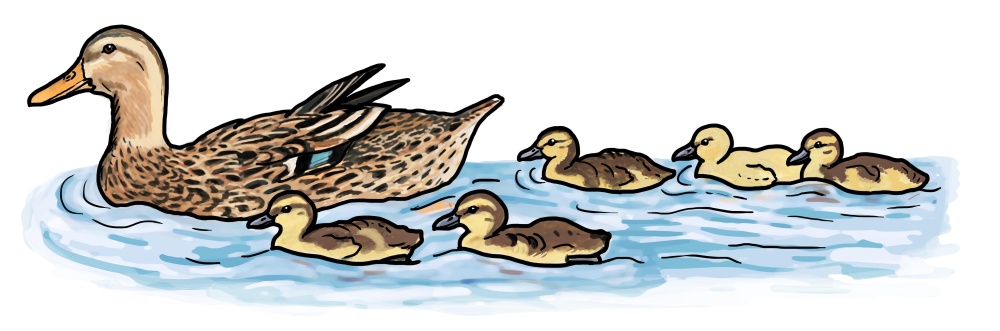
In the early stages of life, ducklings maintain continuous contact with their mother. Illustration: Ivana Hanzlíková
Ducks pay great attention to their plumage, which they preen frequently. Using their beak, they spread a special oily secretion from the uropygial (preen) gland, which makes their feathers water-repellent. Newly hatched ducklings, however, do not yet produce this oil; their feathers become “waterproofed” through contact with the mother’s plumage when they snuggle up to her during rest. If they hatch in an incubator or under a surrogate mother of another species—such as a turkey or a broody hen—they must be protected from water for the first few weeks. Otherwise, their feathers can easily become soaked, causing the ducklings to chill and potentially fall ill.
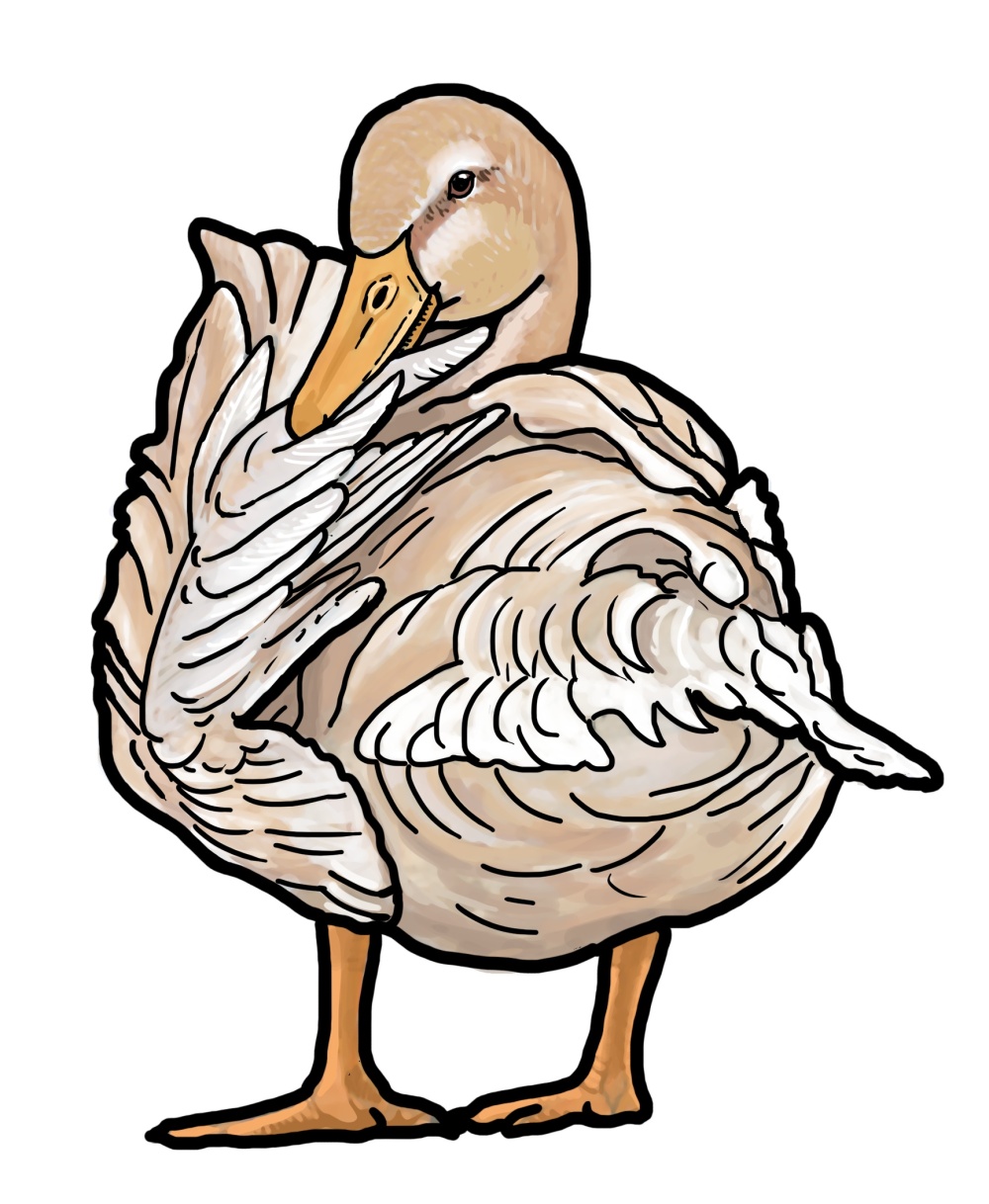
Ducks spend a great deal of time caring for their plumage. Illustration: Ivana Hanzlíková
Steep banks can also be dangerous for ducklings. Although they can swim shortly after they hatch, they are unable to fly or jump as high as adults. They tire quickly and need frequent rests on land. If they end up in a pool or another body of water without a gently sloping exit, they may be unable to get out, which can prove fatal.
For sleeping, ducks seek out the banks of water bodies. They are able to sleep with one eye open (a trait shared by many other bird species). Individuals in the centre of the group rest with both eyes closed, while those on the edges—exposed to a greater risk of predator attack—keep one eye open, monitoring their surroundings for danger. This means that one half of the brain remains alert even though the other half rests.
Uses of Ducks
The primary reason for keeping ducks is their fatty meat. In 2023, ducks were the second most commonly slaughtered animals worldwide after chickens—nearly 4.2 billion were killed in a single year. The largest numbers of ducks are kept in China, Vietnam, and other countries of Southeast and East Asia. In Europe, France ranks among the leading producers; in addition to meat, it is also known for the controversial delicacy foie gras—fattened liver from birds (either ducks or geese) that have been intensively overfed prior to slaughter.
A by-product of duck farming is feathers. Thanks to their excellent insulating properties, they are used as natural filling in sleeping bags, duvets, pillows, and jackets.
Ducks are also valued for their eggs. Like chickens, domestic ducks can lay eggs even in the absence of a male. Such eggs are unfertilised and cannot produce ducklings, but they can be used in much the same way as chicken eggs in the kitchen. They are nearly a third larger than chicken eggs, more nutritious, and richer in vitamins. They have a stronger flavour and a creamier texture due to their higher fat content.
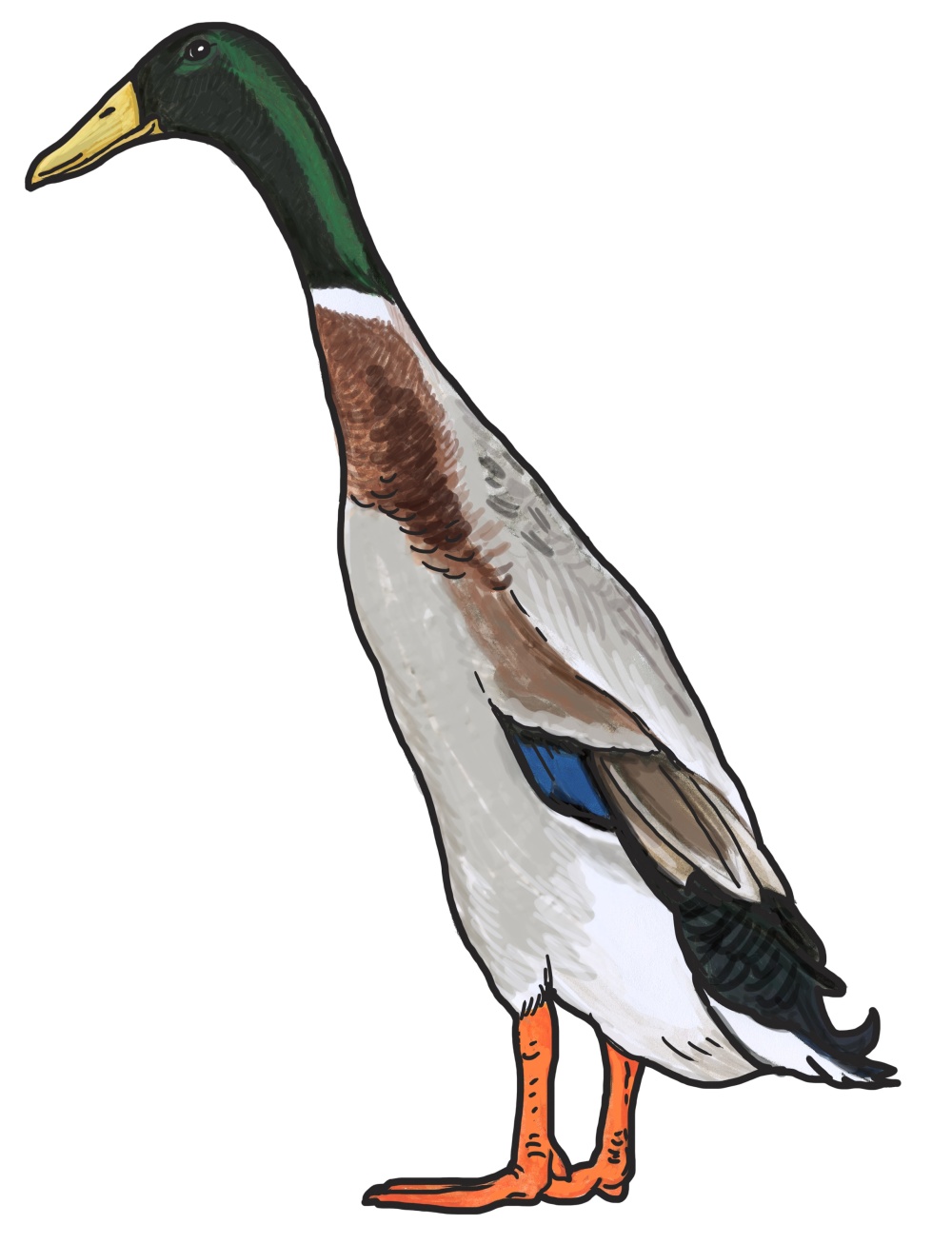
Indian Runner duck breed. Illustration: Ivana Hanzlíková
There are even breeds of ducks kept primarily for egg production—for example Welsh Harlequins, Khaki Campbells, and the now very popular Indian Runners, notable for their upright posture. However, due to a higher risk of salmonella, home-produced duck eggs should always be thoroughly cooked (soft or runny preparations should be avoided). In the European Union, duck eggs are even forbidden to be commercially produced for sale. In Asia, by contrast, duck eggs are considered a delicacy. One of the best-known preparations is the Chinese “century egg”, which, after several months of fermentation, develops a jelly-like, dark amber-coloured egg white, a greyish yolk, and a very strong flavour and aroma that some compare to mature cheese. Another dish, particularly popular in the Philippines, Cambodia, and Vietnam, is balut—essentially a hard-boiled egg, except that it contains a two- to three-week-old embryo.

Century eggs, a duck egg delicacy especially popular in China. Illustration: ChatGPT
Goose or Duck?
Distinguishing a goose from a duck may seem difficult, especially when both are white. Geese, however, are larger, with longer necks and legs, and their beak is firmer and more conical. A duck’s bill, by contrast, is soft, broad, and highly sensitive, allowing it to “feel” for food in murky water.
The two birds also differ markedly in their way of life. Ducks spend much more time on the water and are omnivorous: in addition to plants and seeds, they feed on a wide variety of small animals, from beetles and slugs to newts. Geese, on the other hand, are primarily herbivorous, with grazing forming the basis of their diet. Although they are also drawn to water, they are not as closely tied to it.

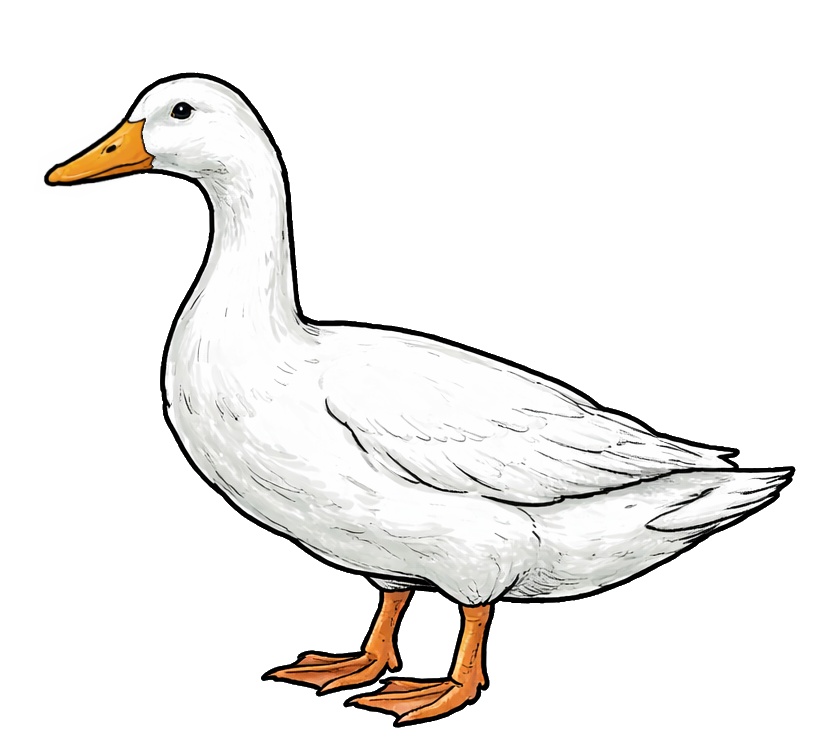
A goose (left) is larger than a duck and has a longer neck and a firm, conical bill, whereas a duck has a flat, soft bill. Illustration: ChatGPT
Muscovy Is Not a Breed
In lists of domestic duck breeds, one may occasionally encounter the Muscovy duck. This is, however, not a breed but a completely separate species of waterfowl. Unlike other domestic ducks, it does not descend from the mallard but from the wild Muscovy duck, which was domesticated in the Americas long before the arrival of Europeans. As an adult, it can be easily distinguished from all other domestic ducks by the conspicuous bare, warty skin at the base of the bill. It can hybridise with other domestic ducks, but the offspring, called mulards, are infertile, as in the case of mules (hybrids of a horse and a donkey).
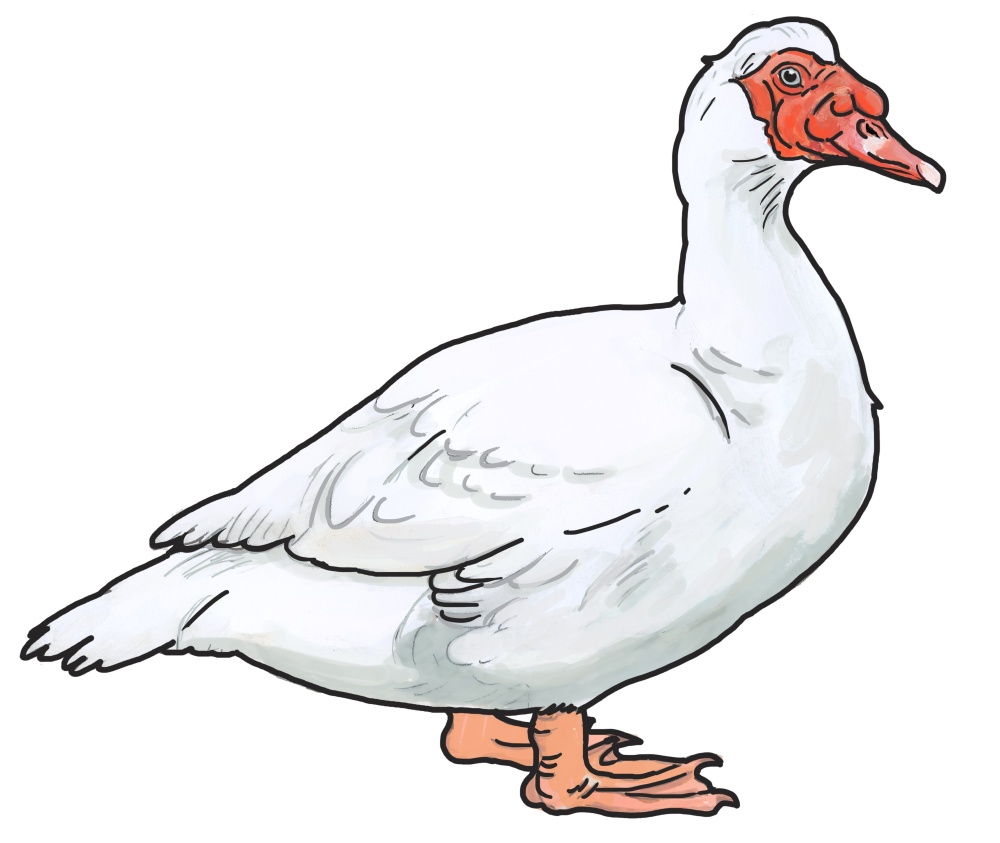
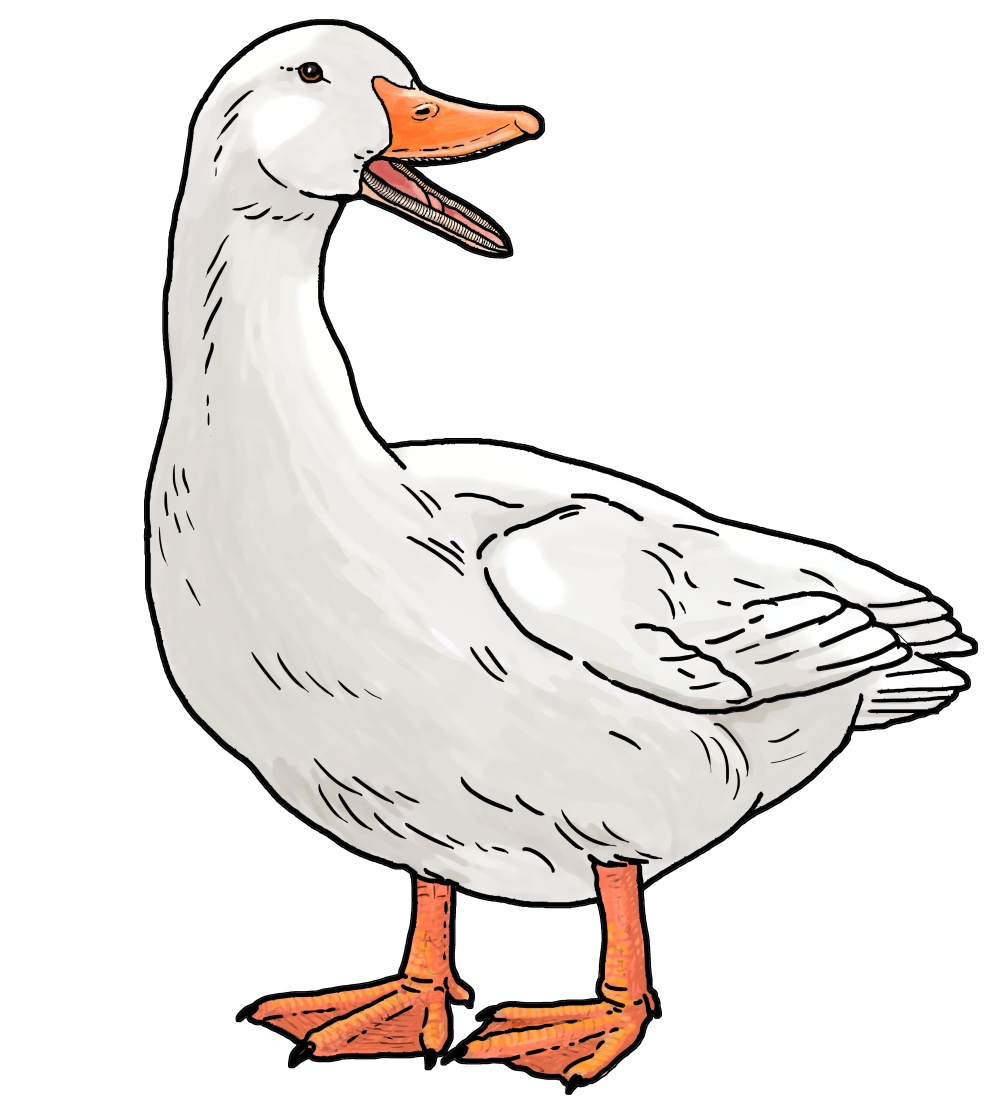
Muscovies (left), unlike other domestic ducks (right), have prominent warty skin at the base of the bill. Illustration: Ivana Hanzlíková
ZOOPRAHA.CZ
Contacts
- The Prague zoological garden
U Trojskeho zamku 120/3
171 00 Praha 7
Phone.: (+420) 296 112 230 (public relations department)
e-mail: zoopraha@zoopraha.cz
Others