



Help for insects
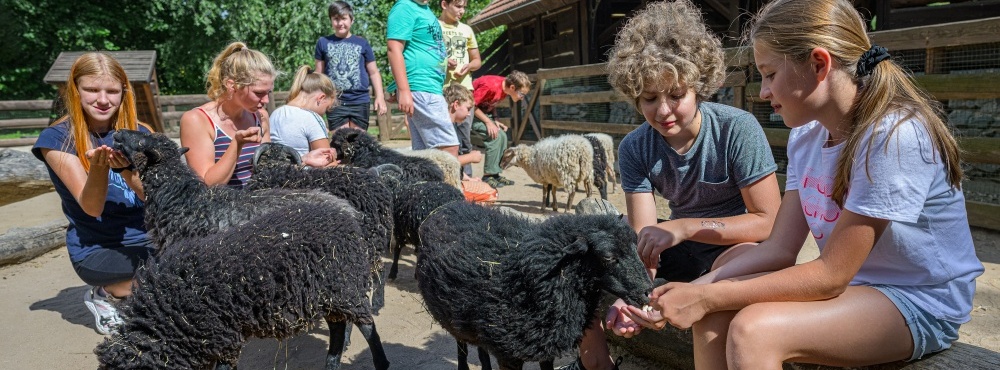

Insects play an irreplaceable role in nature. They can also be very beneficial to humans—whether by pollinating fruit trees and other crops or by helping to control plant pests. Yet the number of flying insects has declined significantly in recent decades. Let’s help change that!
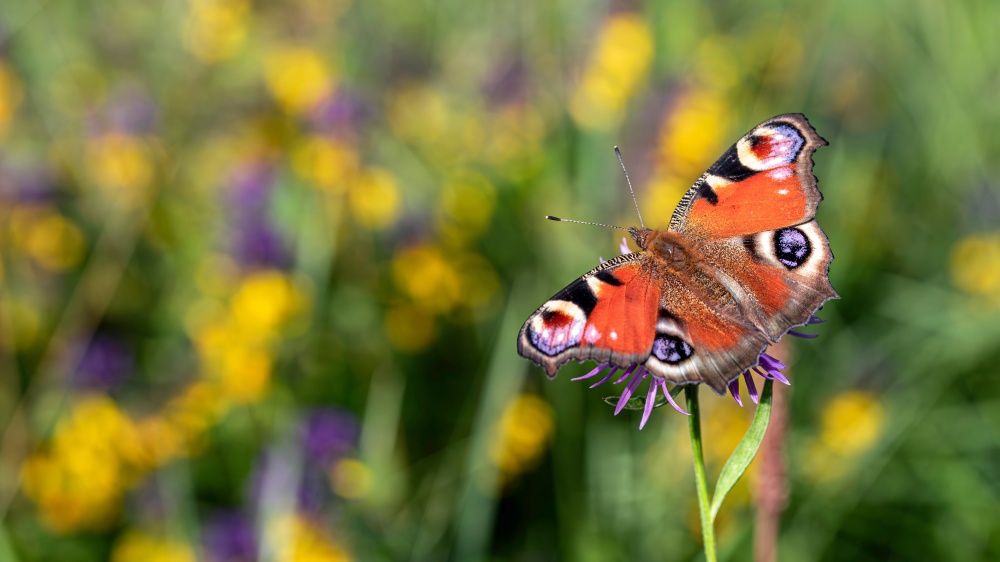 Peacock butterfly. Photo: Erik Karits / Content License, Pixabay (https://pixabay.com/cs/photos/příroda-zvíře-zvířecí-křídlo-krásná-9509921/)
A Place to Live
The best way to help insects is to create suitable living conditions for them. These can be found, for example, in natural gardens planted with a diverse range of plant species. Dry stone walls, hedges, piles of dead wood or leaves all provide excellent shelter. It is important to provide insects with access to water and materials for nest-building, ensure a suitable microclimate (lush vegetation helps with this), and, in the case of pollinating insects, offer plenty of nectar- and pollen-rich flowers from spring through autumn.
To make the environment insect-friendly, we should avoid using pesticides and other chemical sprays. A little “mess” is extremely valuable in landscapes, parks and gardens alike: a pile of branches, an old decaying stump, dry plant stems left in flower beds long after blooming, or unraked fallen leaves. It is precisely these elements that insects use as natural shelters and places for development of their larvae.
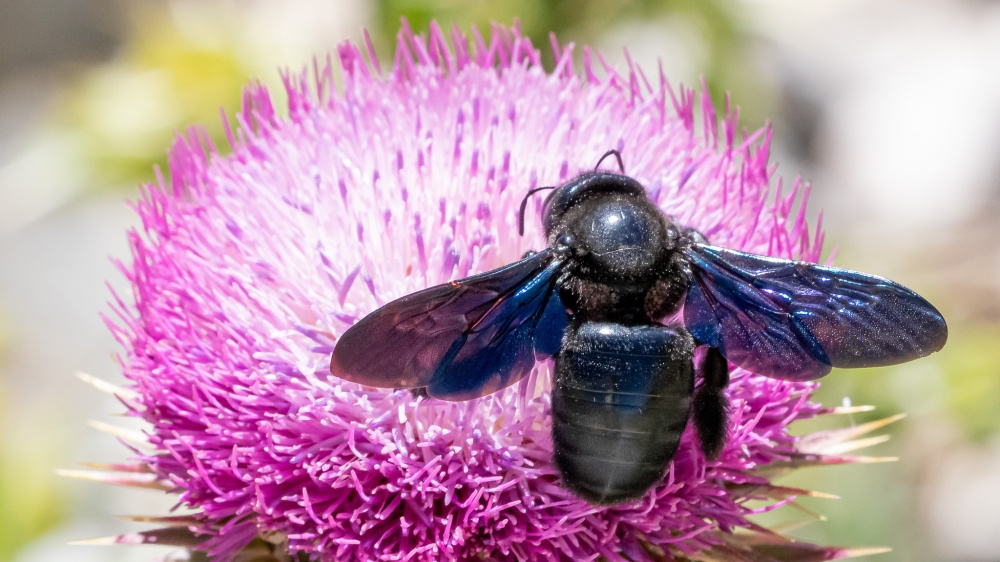
Decaying wood is appreciated by carpenter bees—true giants among solitary bees. They carve out their nesting tunnels in it. Photo: © Simon Plat / CC BY-NC 4.0, iNaturalist
If we also stop mowing the lawn so frequently and let it grow a bit taller in at least some parts of the garden, a much more diverse community of insects and other wildlife will thrive there. At the same time, the garden will require less watering, as taller vegetation retains moisture better and helps maintain a more pleasant microclimate even in the middle of summer. There’s a simple rule to follow: when mowing, never mow the entire area at once, but rather in a patchwork pattern. Part of the area should remain untouched until the mown section has recovered and come back into bloom.
Wildflowers should not be viewed as undesirable weeds, but as a welcome addition. The flowers of clovers and dead-nettles are an important food source for bumblebees; dandelions provide abundant nectar and pollen for bees; wild carrot flowers attract many species of small solitary bees and wasps; and stands of nettles or thistles, left where they do not bother anyone, become a feast for the caterpillars of certain butterflies.
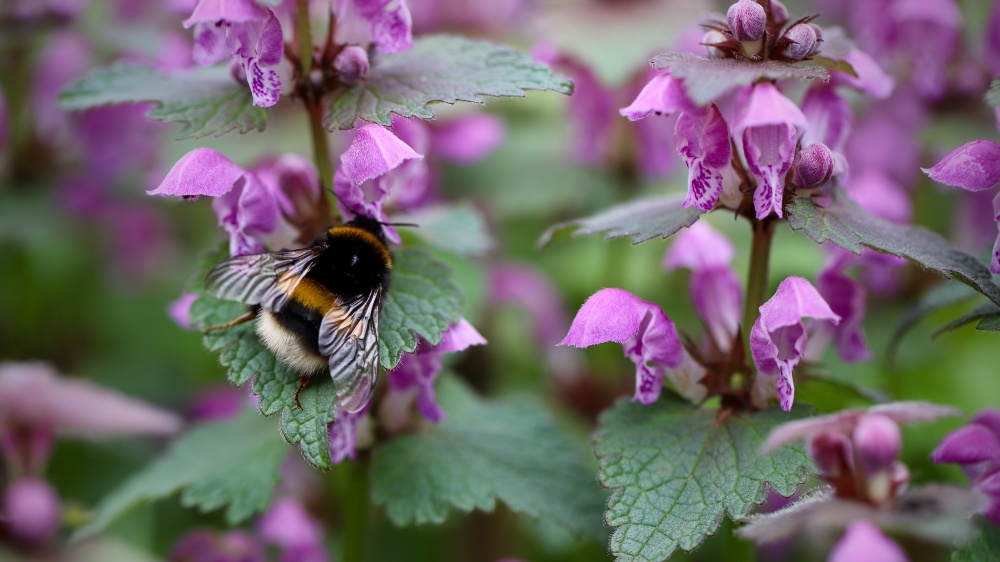
Dead-nettle flowers are a valuable source of nectar for bumblebees Photo: Annette Meyer / Content License, Pixabay
When choosing ornamental annuals, perennials or flowering shrubs, favour nectar-rich species and opt for single flowers rather than double-flowered cultivars, whose nectaries are often inaccessible to insects. Suitable plants include stonecrops and thymes, lavenders, sages, cornflowers, coneflowers, mulleins, cosmos, phlox, single-flowered asters, winter aconites, snowdrops, crocuses, hellebores and columbines, as well as summer lilacs (“butterfly bush”), species roses, hawthorns, black elders, honeysuckles, snowberries, dogwoods and buckthorns—and, of course, fruit trees. Window boxes and pots on balconies and terraces can also play their part: pelargoniums are a favoured nectar source for hummingbird hawk-moths, while the flowers of basil, lemon balm, chives, hyssop and common marigold attract a wide range of insects.
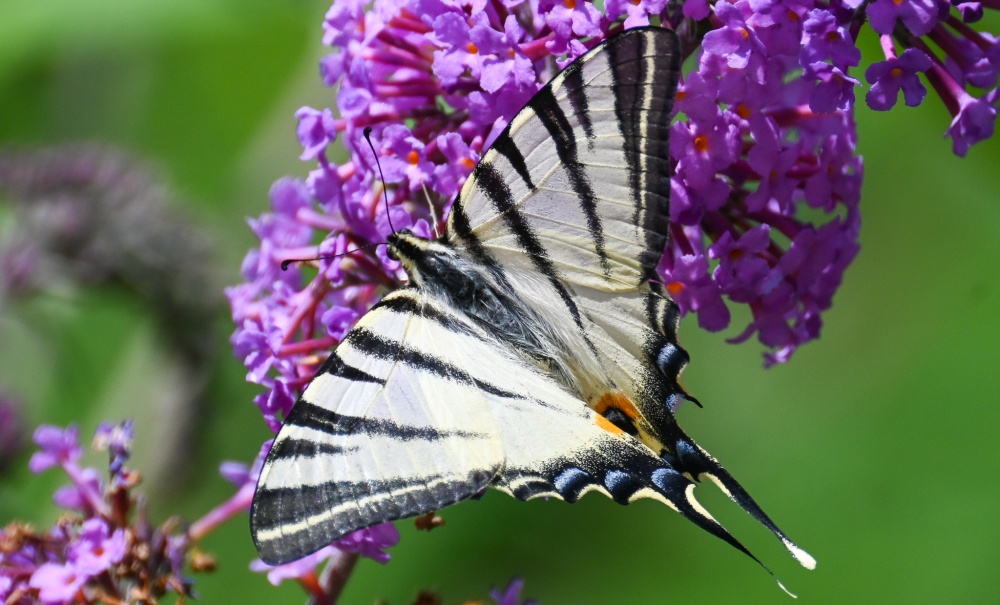
Flowering summer lilac (“butterfly bush”) can attract such gems as the specially protected scarce swallowtail. Photo: © Frank Sengpiel / CC BY 4.0, iNaturalist
The importance of patches of bare ground is often underestimated. People tend to cover or mulch every piece of soil, yet sandy or loamy patches in lawns or along path edges are crucial nesting sites for many solitary bee species.
To support insects, simple drinking stations can also be provided. A shallow dish—such as a plant saucer—filled with pebbles will suffice: the stones serve as a landing surface and prevent the dish from being blown away. Fill it with rainwater so that the pebbles protrude above the surface. It doesn’t matter at all if the water is slightly murky. In fact, insects often prefer it this way. Deep-water containers, such as barrels or swimming pools, pose a threat for insects. As such, they should be covered or fitted with floats to prevent them from becoming deadly traps.
Insect Hotels
One way to help beneficial insects is to provide them with nesting opportunities in the form of so-called insect hotels. These are human-made structures with various types of cavities, designed primarily for solitary bees and wasps (hence another common name, bee hotels), which build brood cells for their larvae inside them. They can also serve as year-round refuges or winter shelters.
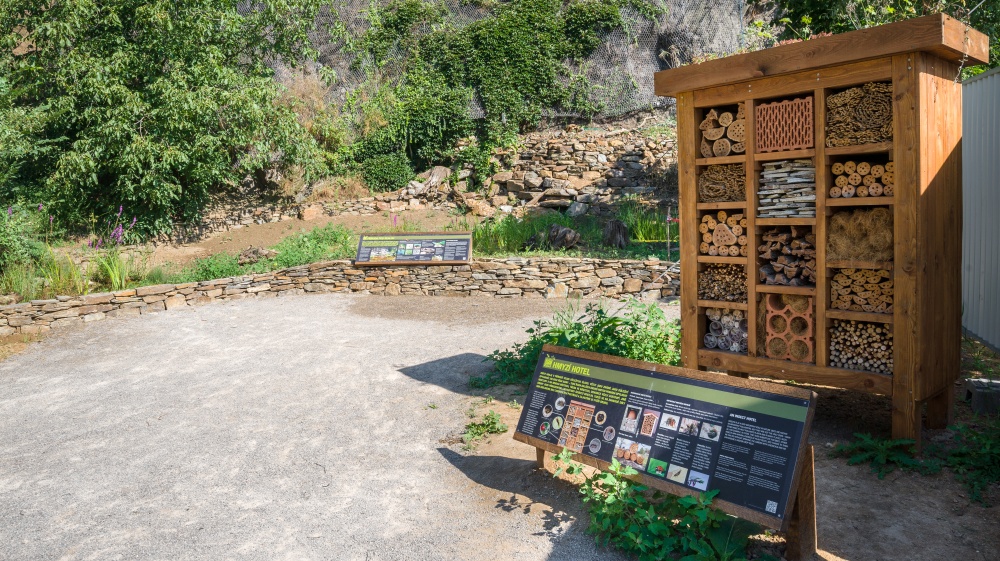
This insect hotel can be seen at Prague Zoo, but many other types exist. Photo: Petr Hamerník, Prague Zoo
Placing an insect hotel on a balcony or in a garden not only supports important pollinators, but also offers a unique opportunity to observe their lives up close. However, insect hotels are not a cure-all: even the best-designed hotel will remain empty if its surroundings do not provide suitable living conditions. Moreover, many species use entirely different types of nesting sites, as described above. Insect hotels should therefore be seen as a complement rather than a complete solution.
Insect hotels do not have to take the form of large constructions with individual compartments filled with assorted materials, such as the one pictured above. Simple, small objects—such as a single drilled log or a perforated clay brick—can be just as effective. Different species of insects prefer different types of “accommodation”, and many of them actually appreciate these more.
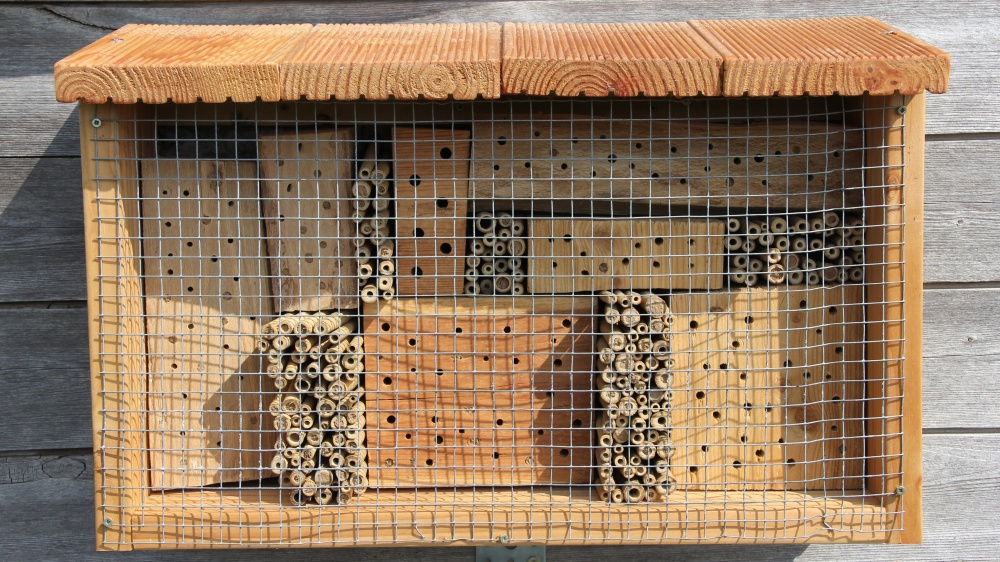
This is what a smaller insect hotel can look like. Hollow stems and drilled logs with holes of various sizes provide nesting opportunities for solitary bees or wasps; wire mesh protects them from birds, and a sunny spot ensures a suitable microclimate for the heat-loving insects. Photo: Peterkkgmbh / Content License, Pixabay
An insect hotel should ideally be placed in a sunny spot facing south, southwest, or southeast. A roof is recommended to keep rain out, and larger structures should have a closed back, as draughts are not good for the insects. Covering the front with wire mesh (ordinary chicken wire will do) helps protect inhabitants from birds. Regular maintenance is essential for a hotel to be functional, including the periodic replacement of filling materials to prevent moisture build-up and mould.
Unfortunately, most insect hotels commonly available in shops are poorly designed and prioritise appearance over functionality. That is why it is often better to build your own insect hotel. It doesn’t have to be anything complicated. In nature, insects use all sorts of crevices, cracks, fissures, and cavities in in wood or masonry. An insect hotels should offer precisely such features. If intended primarily for solitary bees and wasps, an insect hotel should not contain pine cones, straw, bark or hay, which are of little use to them. It is better to choose one of the materials listed below.
Tubes
Hollow stems of various diameters, reeds, bamboo, straws made of natural materials or paper tubes are suitable. The cut edges must be smooth and the ends open; frayed edges can damage insects’ delicate wings.
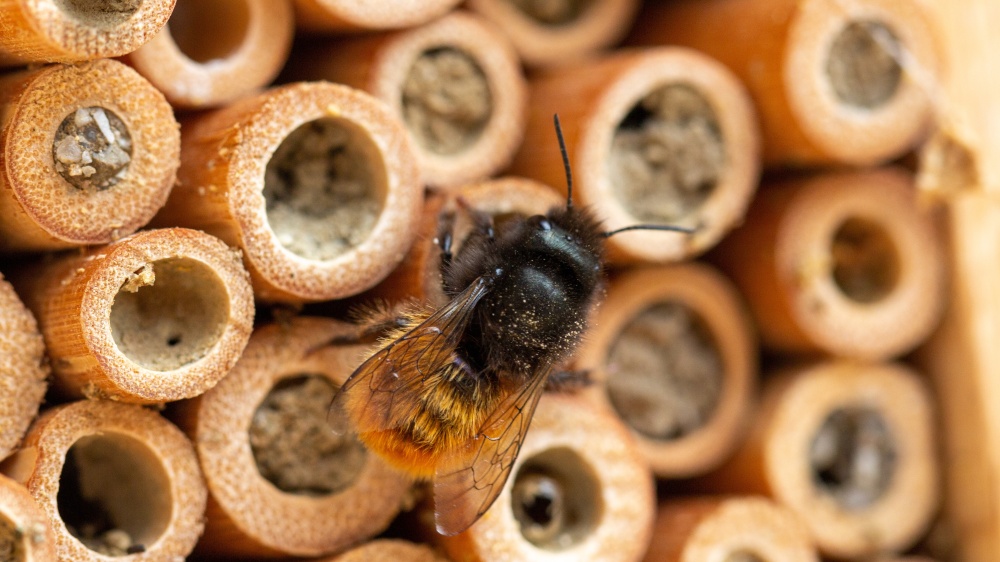
One of the most common residents of bee hotels are mason bees, which readily nest in hollow stems and other type of cavities. Photo: David Hablützel / Content License, Pixabay
Drilled logs
Hardwood logs are ideal. Softwood and coniferous wood tend to splinter, posing a risk to the insects’ wings. Drill holes 5–15 cm deep and 2–10 mm in diameter (up to 20 mm at most), perpendicular to the grain. Holes drilled along the grain (perpendicular to the growth rings) tend to crack over time and cracked holes are rarely occupied. A suitable spacing between individual holes is 2–4 cm, and the tunnels should not be drilled all the way through.
Pithy stems
Some species of solitary bees excavate nesting tunnels in soft plant pith. Bramble stems are particularly popular with them, but elder, rose, Jerusalem artichoke or goldenrod stems can also be used. Place them vertically and individually—for example, attached to the outside of the structure. Insects generally do not colonise horizontally placed bundles of stems.
Adobe bricks with holes
These can be purchased or easily made at home. Mix clay-rich soil with water and straw chopped into 5–10 cm long pieces. Press the adobe mix into a mould (a simple frame will do) all the way to the edge and let it dry. Once the brick has hardened, drill holes with a diameter of approximately 2–6 mm. The holes can also be created while the material is still wet, which prevents cracking during drilling.
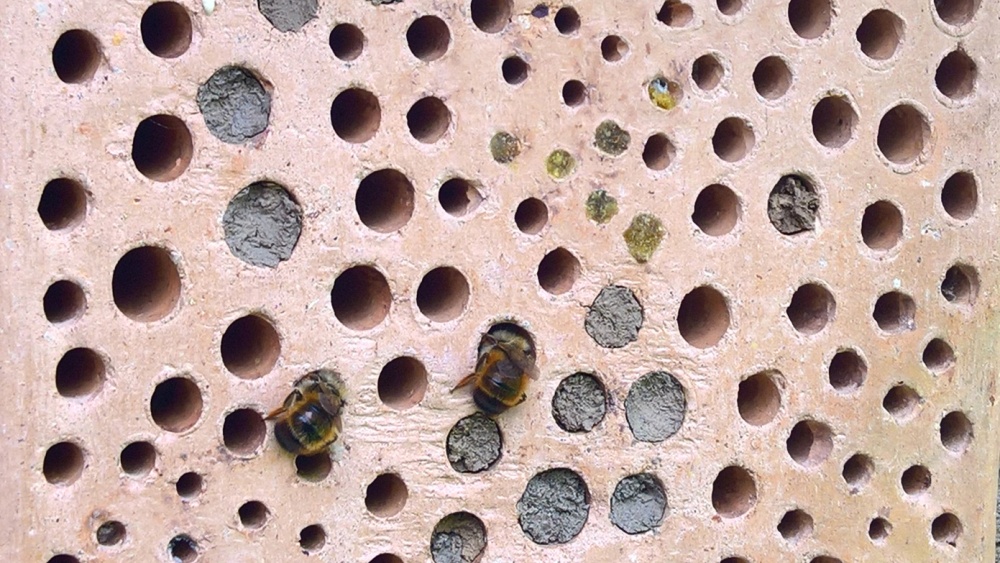
Bricks with holes of various sizes are used by many species of solitary bees, including mason bees (pictured). Occupied tunnels can be recognised by the fact that they are sealed off. Photo: Ra Boe / CC BY-SA 3.0, Wikipedia
Residents of Insect Hotels
Solitary bees
Mason bees, leafcutter bees, wool-carder bees, scissor bees, digger bees, furrow bees, mining bees, cellophane bees, carpenter bees and many others—all of these collect nectar and pollen from flowers and are important pollinators of fruit trees and a wide range of other plants. Unlike the familiar honey bee, however, they do not produce honey, do not build wax combs and, above all, do not live in large, organised colonies.
Some species of solitary bees nest in burrows in the ground or in old wood. These can be supported, for example, by leaving a strip of bare, sandy-clay soil along a house wall, or by providing a dry stone wall, a tree stump, or even an entire dead tree, which can be secured and left standing in the garden rather than felled and processed. Other species readily make use of insect hotels for rearing their larvae. There is no need to fear them—although females possess a sting, they are very docile.
How does a solitary bee actually nest? In a tunnel, it constructs a series of brood cells arranged one behind the other. It works from the deepest part of the tunnel outwards and finally seals the entrance with a plug, the composition of which varies depending on the species. For some bees, a plug made of wood particles is typical; others use a mixture of soil, clay and saliva, or materials such as resin.
Each cell is provisioned for a single larva and contains a supply of pollen that must last for the entire course of its development. Some larvae pupate and emerge as adults within the same year, while in other species the larvae or pupae overwinter, and the adult bees do not emerge from the nest until the following spring.
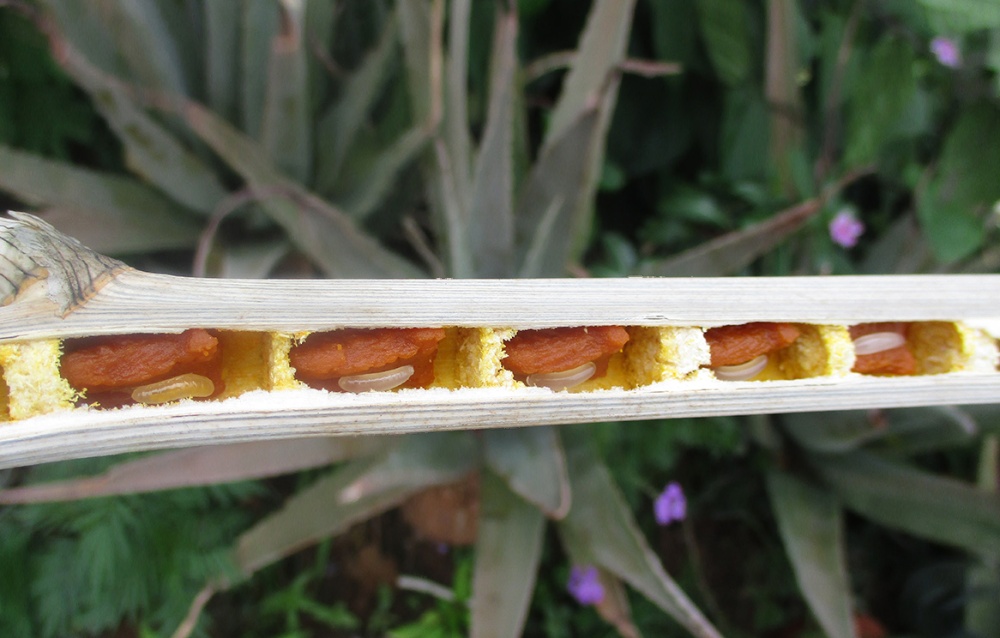
A view inside the nest of a solitary bee (in this case, an African carpenter bee nesting in a dried flower stem of aloe). The nest cavity contains a row of individual chambers separated by partitions, each designed to house a single larva and a food supply sufficient for its entire development. Photo: © botswanabugs / CC BY-NC 4.0, iNaturalist
Solitary wasps
Besides members of the wasp superfamily Vespoidea (for example potter wasps and spider wasps), mud daubers and cuckoo wasps are also sometimes referred to as solitary wasps. In reality, however, cuckoo wasps form their own superfamily, while mud daubers belong to a broader lineage within the bee superfamily (Apoidea), differing from true bees in the feeding habits of their larvae, which more closely resemble those of wasps.
Like solitary bees, solitary wasps and similar insects seek out insect hotels as nesting sites. In many species, their nesting behaviour mirrors that of solitary bees: within cavities such as hollow stems, they construct a series of sealed brood cells, each provisioned in advance so that the developing larva has a ready food supply throughout its growth. Unlike bees, however, their larvae are carnivorous. Their provisions therefore consist of small live prey (such as aphids, psyllids, thrips and the like), insect larvae, or spiders, usually paralysed with venom from the female’s sting. Many of these hymenopterans help to keep populations of plant pests under control and are thus highly beneficial in gardens. Adults typically feed on nectar and contribute to pollination.
Very useful in the garden are also social wasps—the familiar black-and-yellow, sweet-loving insects that often build their characteristic spherical nests under roof eaves, in sheds or in lofts. They tend to be unpopular, as they can be quite persistent in their search for sugary food, particularly in late summer when they become more active around human food sources. Few people realise how efficient they are as predators of caterpillars, aphids and other small insects, including flies and mosquitoes. Captured prey is fed to their larvae, while the adults themselves subsist on nectar, fruit and other sugary liquids. A single nest can remove up to 20,000 insects in an hour—biological control in action. And those much-feared stings? If you stay relaxed, don’t harm or startle the wasp (for example by flapping your hands), and keep your distance from the nest, it has no reason to sting.
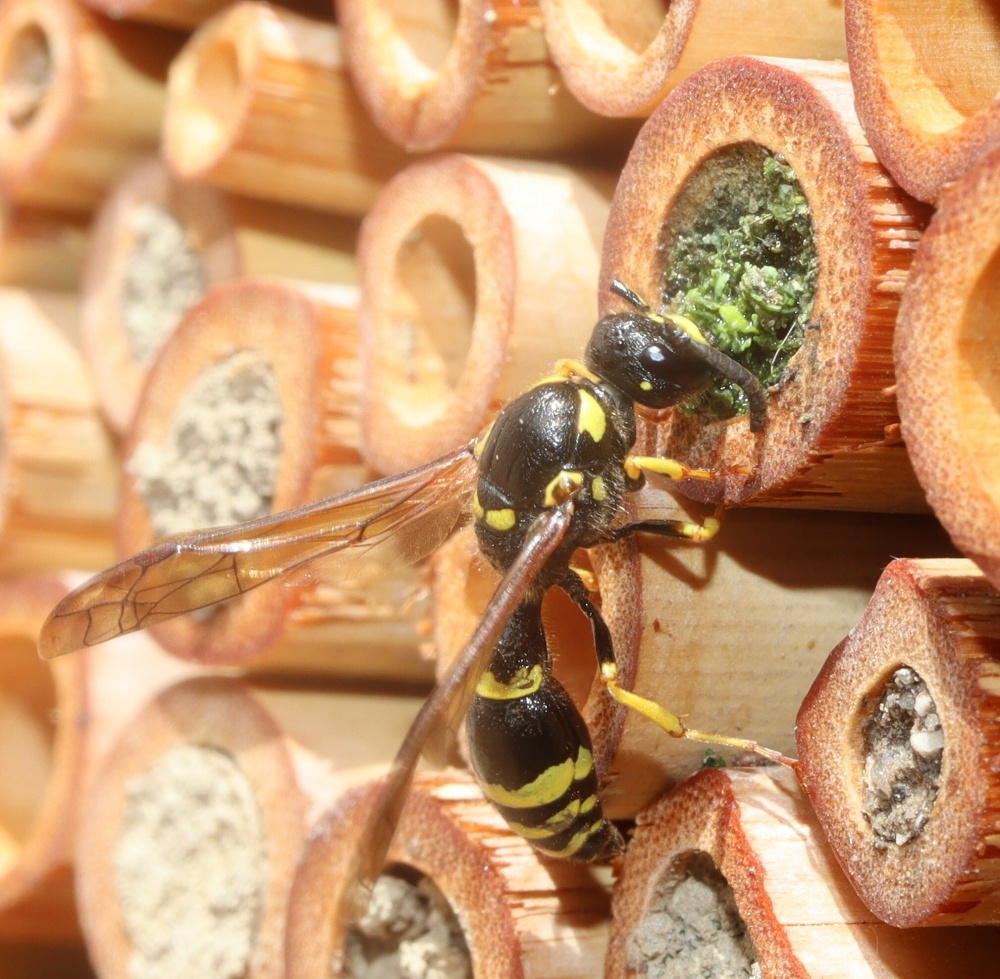
Insect hotels are also readily occupied by small potter wasps, whose larvae feed on larvae of leaf beetles or on caterpillars of leafroller moths. Photo: © Barbara Klenner / CC BY-NC 4.0, iNaturalist
Ladybirds
They use insect hotels mainly as shelters during winter. In gardens, they help control aphids—over the course of its lifetime, a single ladybird can consume up to four thousand of them. They are eaten both by ladybird larvae and by adult beetles. There are many species of ladybirds; the best-known species in Czechia is the seven-spot ladybird.
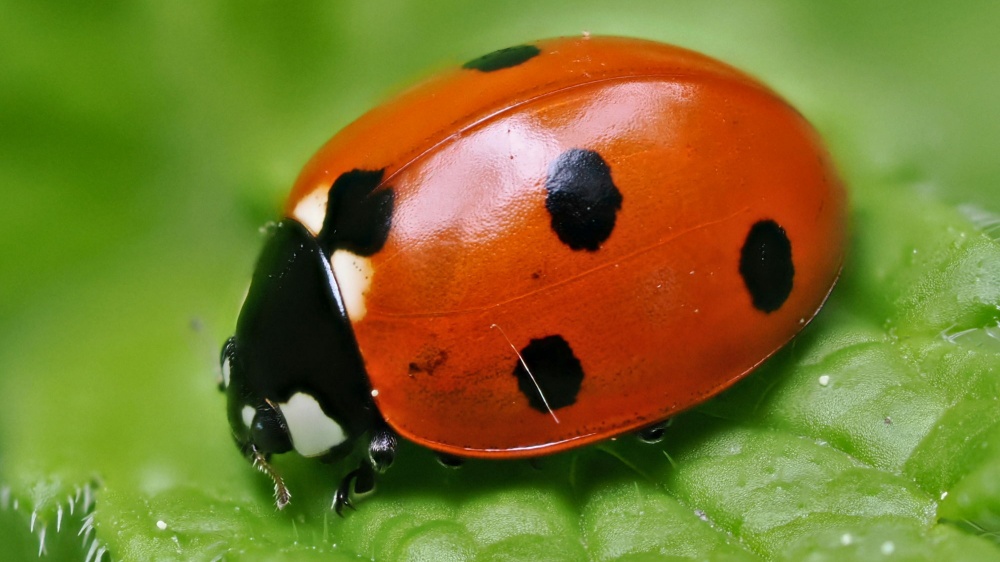
Seven-spot ladybird. Photo: © Gilles San Martin / / CC BY-SA.4.0, iNaturalist
Earwigs
They are omnivorous, hiding in sheltered places during the day and emerging after dark to feed. Providing shelters such as flower pots loosely stuffed with hay and placed in trees can help increase their numbers. Since their diet also includes aphids, mealybugs, spider mites and other small insects, as well as their eggs, they can be beneficial for gardeners—especially on fruit trees, where they provide effective control of fruit aphids. Although earwigs can also damage plants by eating flower petals and young leaves and by chewing holes in ripe fruits such as apples or pears, their benefits largely outweigh the potential losses.
ZOOPRAHA.CZ
Contacts
- The Prague zoological garden
U Trojskeho zamku 120/3
171 00 Praha 7
Phone.: (+420) 296 112 230 (public relations department)
e-mail: zoopraha@zoopraha.cz
Others