



Four More Przewalski’s Horses Settle into Kazakhstan as This Year’s Transport Sets a Record
Four Przewalski’s horse mares have safely arrived in Kazakhstan from Berlin. Togs and Shara, originally from the UK’s Marwell Zoo, Bela, born in Nuremberg, and Theresa from the partner institution Tierpark Berlin, were released into acclimatisation enclosures at the Alibi reintroduction centre yesterday at ten minutes past seven in the evening.
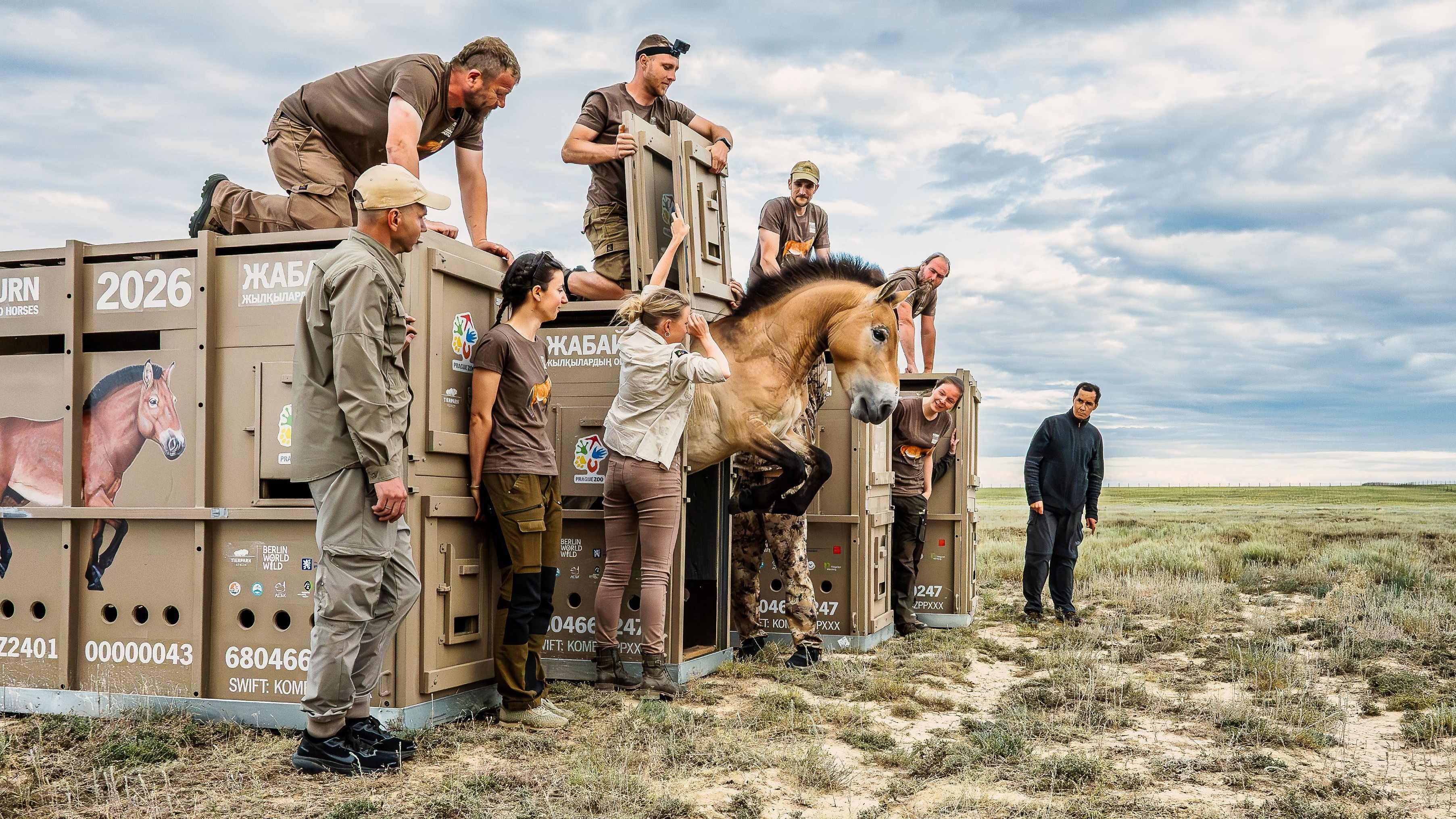 Przewalski's horses transported from Berlin being released into acclimatization enclosures in the Golden Steppe, Kazakhstan. Pictured is the mare Togs. Photo: Petr Jan Juračka
Like the group of four stallions flown from Prague-Kbely a few days ago, they too travelled aboard a Czech Air Force CASA military aircraft. A total of eight endangered Przewalski’s horses have thus been transported this year to the Altyn Dala reserve in central Kazakhstan. This marks the highest number moved since operations in Kazakhstan began in 2024. At the same time, Prague Zoo has set a new record for the number of individuals transported from Europe to Central Asia over the entire fifteen-year history of the Return of the Wild Horses project.
“We have encountered tremendous support from local colleagues—indeed, I would say friends. These eight Przewalski’s horses reached their destination thanks only to Kazakhstani conservationists in the field and our partners in government circles. I must also highlight the consistently outstanding performance of the Czech Air Force and Tierpark Berlin, with whom we are collaborating for the third time this year on returning animals to the wild—following European bison and Vietnam pheasants,” says Lenka Poliaková, Director of Prague Zoo. “Both hard work and a sense of gratitude are evident across all fronts of this internationally unique project. Each participant comes from a different part of the world, yet we share a common—and, I believe, widely inspiring—goal: to return to nature something that has been lost and that rightfully belongs there.”
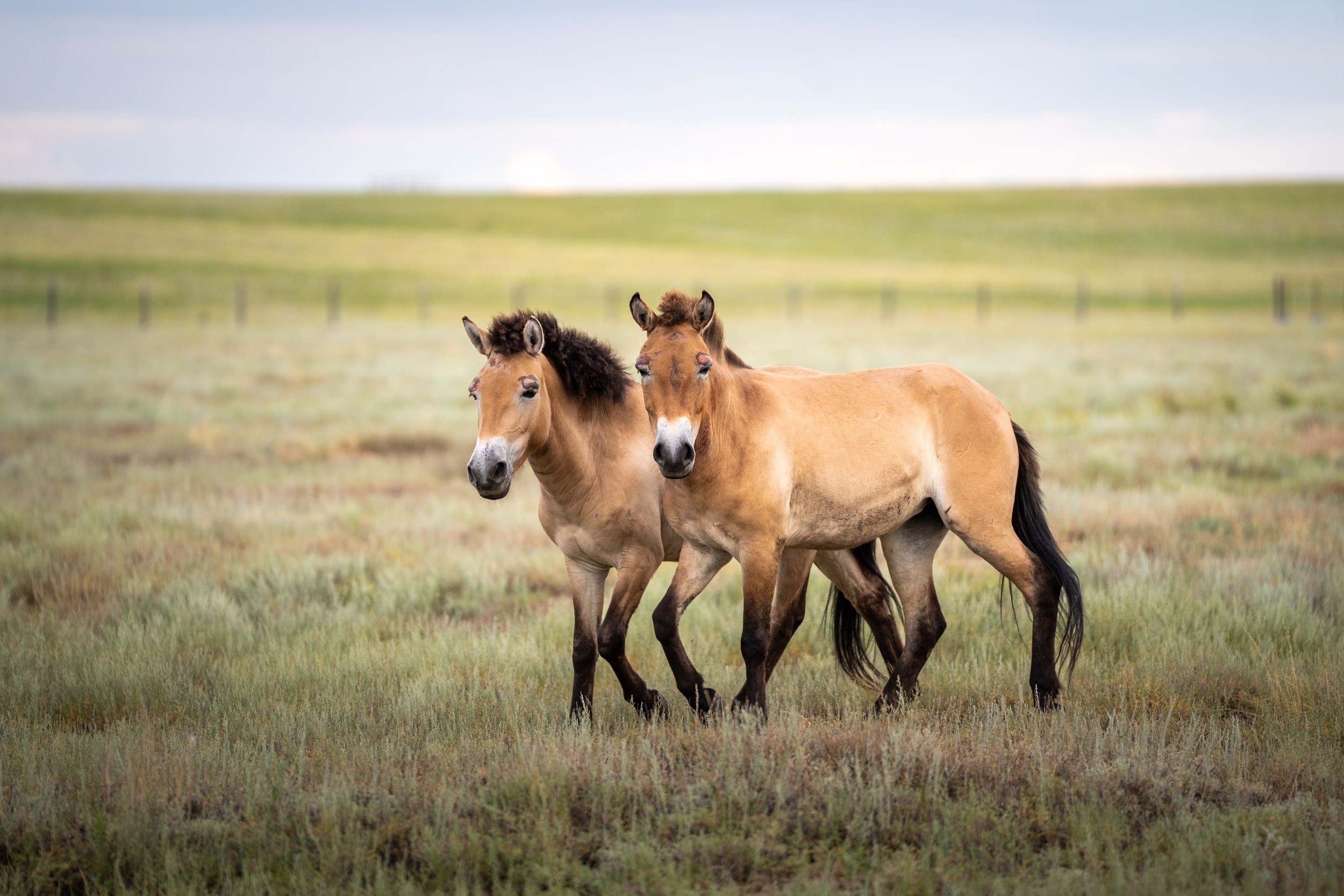
Przewalski's horses mares exploring vast acclimatization enclosures at the Alibi reintroduction center. Shara is on the left, Theresa is on the right. Photo: Oliver Le Que, Prague Zoo
The Przewalski’s horse, the last truly wild horse species on the planet, disappeared from central Kazakhstan more than 200 years ago. As in Mongolia—its final refuge in the 1960s—it was driven out primarily by hunting pressure and competition with livestock, including domesticated horses.
“Without a shared vision and the close cooperation of various conservationists, the Przewalski’s horse might no longer exist today. We are proud to once again make possible, in collaboration with Zoo Prague, local NGOs, and the authorities in Kazakhstan, something that for a long time was only a dream. What matters most is that the animals are carefully prepared for release into the wild and are able to establish themselves long-term in their natural habitat,” says Andreas Knieriem, Director and CEO of Zoo and Tierpark Berlin.
The four mares departed at 12:30 Central European Time aboard a Czech military aircraft from Berlin Brandenburg airport. Like the stallions before them, they made two stopovers for refuelling and crew changes—in Istanbul and Baku. During the flight, the British mares Shara and Togs were at times restless and required calming medication, whereas the German mares Bela and Theresa handled the journey exceptionally well. After fifteen hours, the aircraft landed in Kostanay, where the crates containing the valuable cargo were transferred onto lorries in approximately fifty minutes.
The journey to the Alibi reintroduction centre—managed by the NGO ACBK and also involved in reintroducing species such as the Asian wild ass (kulan) as part of broader steppe ecosystem restoration—took around ten hours. Unlike Monday’s transport of the stallions, the overland transfer of the mares took place in light rain and temperatures not exceeding 18 °C, meaning that stops for watering or cooling the horses were not required as frequently.
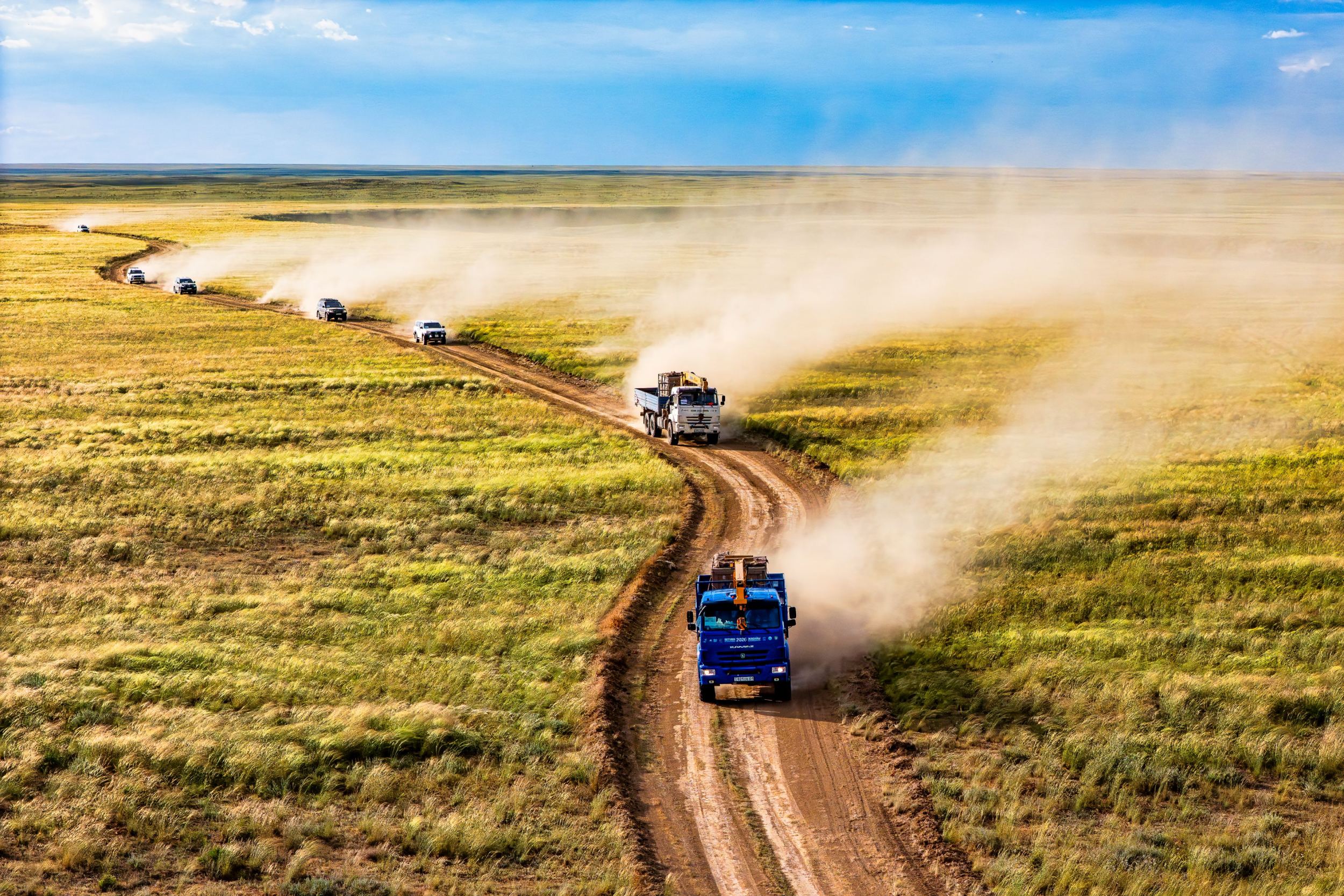
The final leg of the more than thirty-hour journey of the Przewalski’s horses from Europe. Kamaz trucks carry crates with horses along a dirt road in the Altyn Dala state reserve. Photo: Petr Jan Juračka
The mares entered the acclimatisation enclosures in the following order: Shara, Theresa, Togs and Bela. Local rangers will now monitor how they cope with the harsh steppe climate, where summer heat and winter frost can differ by as much as 80 °C. Under supervision, they will also learn to deal with parasites, forage for food in the snow, and establish stable, natural social bonds. Only then will they be released into the wild using the so-called soft-release method, whereby the enclosure is opened and the animals themselves decide when to leave.
Prague Zoo intends to continue the Return of the Wild Horses project in Kazakhstan over the next two years, aiming to establish a viable population with sufficient genetic diversity. It will then focus on reintroducing Przewalski’s horses to eastern Mongolia, in the so-called Valley of Monasteries.
Partners of this year’s transport of Przewalski’s horses
Prague Zoo maintains the International Studbook and coordinates the EEP (EAZA Ex situ Programme) for the Przewalski’s horse. After the Second World War, the zoo played a crucial role in saving the species. It later gave rise to the idea of its reintroduction and subsequently became actively involved. Particularly significant were its nine transports of Przewalski’s horses from Europe to western Mongolia between 2011 and 2019. In addition to the current transports to Kazakhstan, Prague Zoo is now preparing a reintroduction project for eastern Mongolia, in the so-called Valley of Monasteries.
The Association for the Conservation of Biodiversity of Kazakhstan (ACBK) is a national non-profit organisation dedicated to biodiversity conservation and public awareness. In a broader context, the Return of the Wild Horses project forms part of its long-term efforts to restore original steppe ecosystems in the country. ACBK has been responsible for building the necessary infrastructure in the Altyn Dala State Nature Reserve, previously used for the reintroduction of kulans in cooperation with the Frankfurt Zoological Society (FZS).
The Committee for Forestry and Wildlife (FWC) is a governmental body under the Ministry of Ecology and Natural Resources of the Republic of Kazakhstan. It is responsible for nature conservation and the management of protected areas. Its invitation to Prague Zoo in autumn 2022 initiated the Return of the Wild Horses project in Kazakhstan.
Tierpark Berlin is a zoological garden that has long been involved in the breeding, management and reintroduction of various animal species, including cooperation in the conservation of the Przewalski’s horse. Within the Return of the Wild Horses project, it provides horses from its own breeding, gathers candidates from other European institutions at its facilities, and directly participates in their transport to Kazakhstan.
The Frankfurt Zoological Society (FZS) is an international organisation coordinating conservation projects for endangered species and ecosystems in 18 countries worldwide. In Kazakhstan, it contributes to the conservation of species such as the saiga antelope and kulan. In 2006, it co-founded the Altyn Dala Conservation Initiative (ADCI).
The Czech Air Force, specifically the 24th Air Transport Base stationed at Prague-Kbely Airport, provides the air transport of the horses to Kazakhstan. It has previously cooperated with Prague Zoo, including the transport of the western lowland gorilla Duni and nine transports of Przewalski’s horses to western Mongolia.
ZOOPRAHA.CZ
Contacts
- The Prague zoological garden
U Trojskeho zamku 120/3
171 00 Praha 7
Phone.: (+420) 296 112 230 (public relations department)
e-mail: zoopraha@zoopraha.cz
Others