Four Przewalski’s Horse Stallions Successfully Released into the Golden Steppe
02. 06. 2026
Przewalski’s horses transported from Prague Zoo have safely arrived in Kazakhstan after a 15-hour flight. A subsequent 11-hour overland journey on the beds of lorries carried them from Kostanay to the Altyn Dala State Nature Reserve (the Golden Steppe). There, shortly before 8 pm, they were released into an acclimatisation enclosure of the Alibi reintroduction centre, managed by the Association for the Conservation of Biodiversity of Kazakhstan (ACBK), where they will spend approximately one year. On Friday, four mares will join the transported stallions; the Czech Air Force aircraft is currently returning to Tierpark Berlin to collect them.
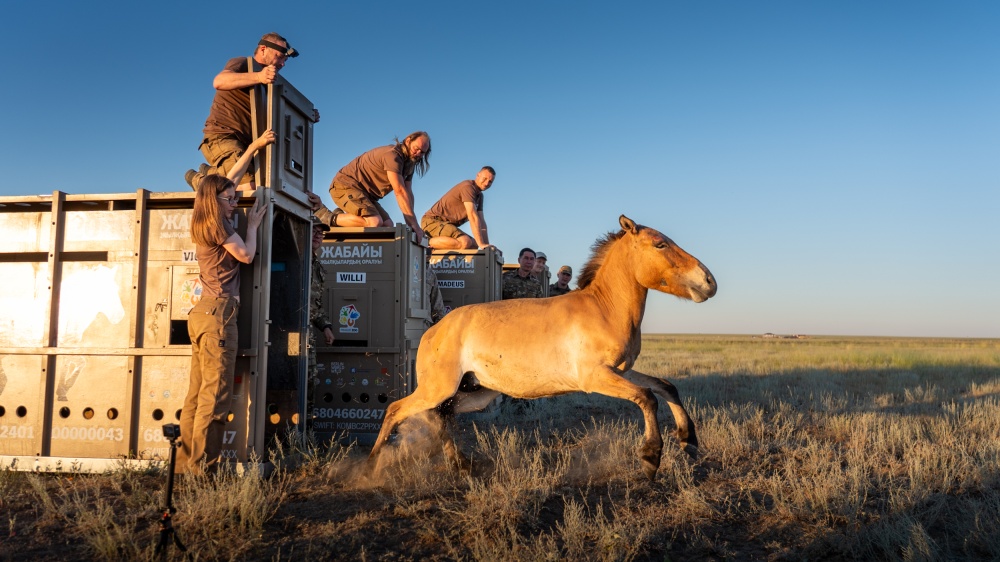
After thirty-five hours of transport, all four stallions ran out of their crates. Photo: Oliver Le Que, Prague Zoo
In addition to the partners already mentioned, the Return of the Wild Horses to Kazakhstan project would not have been possible without the goodwill of the Forestry and Wildlife Committee of the Republic of Kazakhstan (FWC) and the support of the Frankfurt Zoological Society (FZS).
Prague Zoo Director Lenka Poliaková said directly from the site: “This year’s transport of Przewalski’s horses to Kazakhstan involved several records. We transported the highest number of stallions in Prague Zoo’s history; the journey from the airport took the longest due to the inability to land in Arkalyk; yet at the same time, thanks to the excellent coordination of the Czech and Kazakh teams, we managed the unloading at the airport in the shortest time the project has ever seen.”
The first to run into the acclimatisation enclosure was the stallion Victor, originally from Cologne Zoo in Germany. He had been the most restless during transport and even sat down in the crate on the way to Alibi, indicating exhaustion and posing a risk to his circulation. He was followed by the Berlin-born stallion Willi, while the quartet was completed by the Czech-born Amadeus and Claudius.
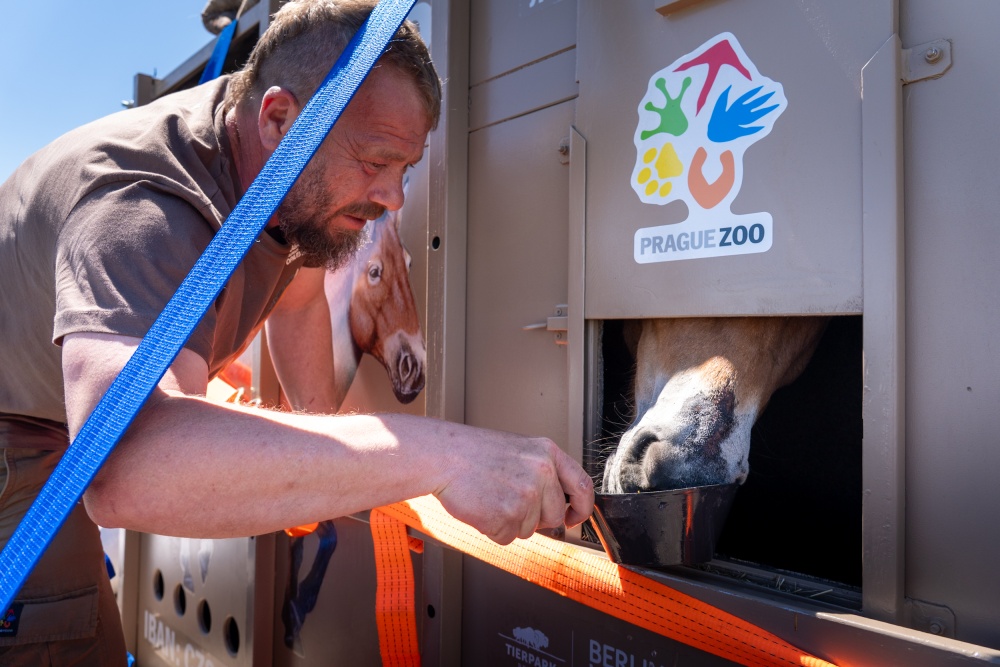
Checking and watering the horses during the overland journey. Photo: Oliver Le Que, Prague Zoo
Like all newly arrived P-horses, this year’s newcomers will adapt to steppe conditions within the acclimatisation enclosures. These span dozens of hectares, and researchers will monitor the horses there for at least ten months. It is particularly important that the animals survive the harsh Central Asian winter in good condition. Temperatures can drop to as low as minus 40 degrees Celsius, and the horses must be able to dig through snow to find food. Only then can they be released into the wild.
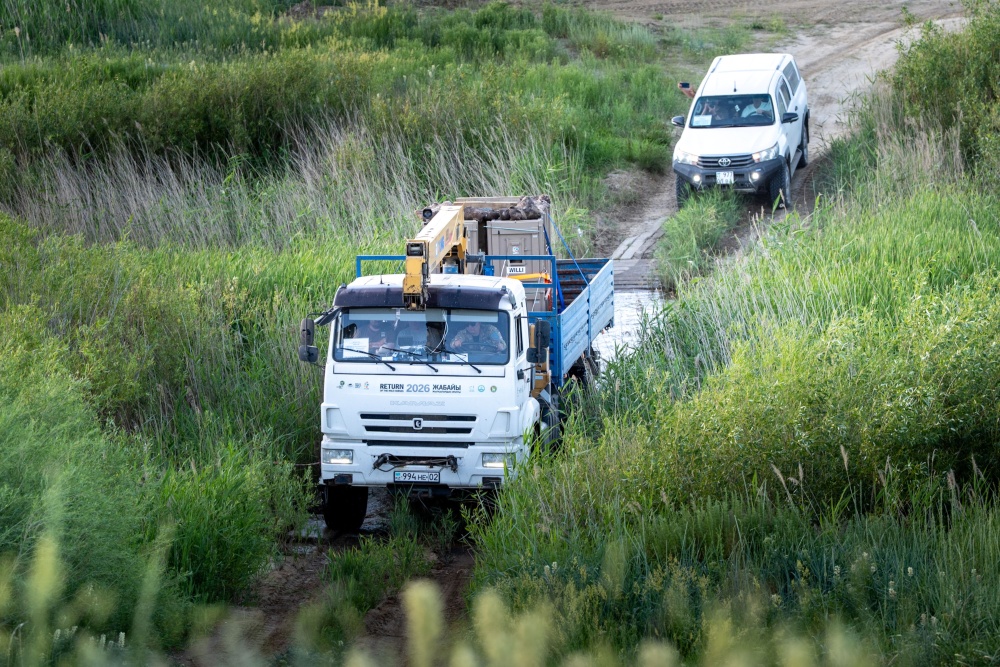
Lorries carrying the horses ford a river during the final leg of the journey. Photo: Oliver Le Que, Prague Zoo
“Welcoming more wild horses to Kazakhstan is a significant step resulting from international cooperation and long-term conservation planning. We are committed to safeguarding their natural habitat and striving for their prosperity. We thank our partners for their trust in this project and for their unwavering support,” said ACBK Director Vera Voronova.
As in 2024, when the first-ever transport of Przewalski’s horses to central Kazakhstan took place, this year’s project partner is Tierpark Berlin. The zoo in the German capital is a long-standing and experienced breeder of these last truly wild horses. This year, it is once again serving—among other roles—as a collection point for genetically suitable horses from European breeding programmes. The second phase of this year’s transport will begin in Berlin on Thursday, aiming to deliver four mares to Alibi.
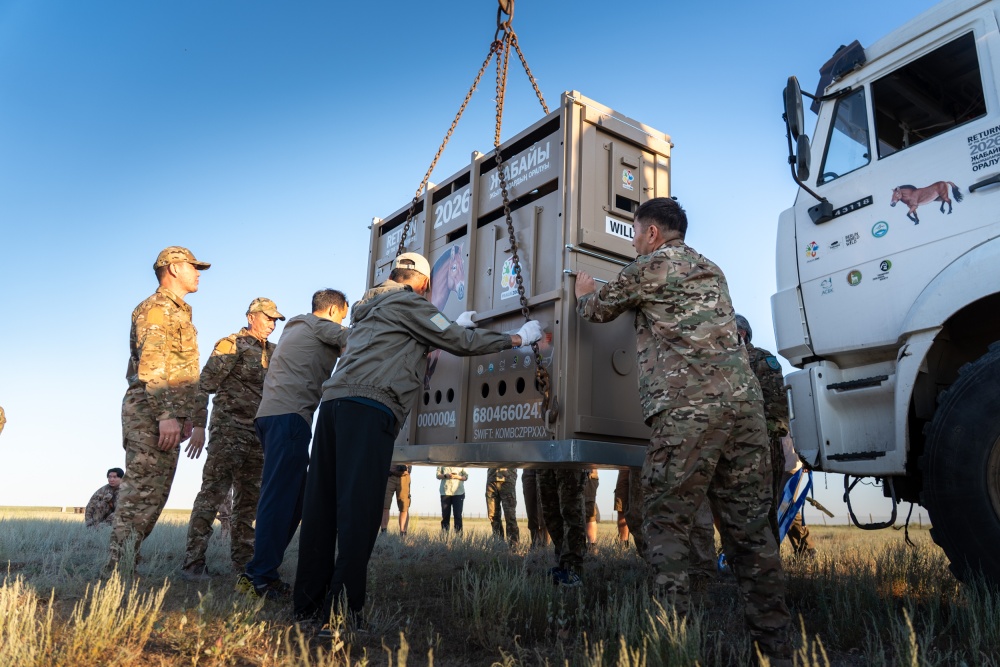
Cranes assisted with unloading the crates from the lorries. Photo: Oliver Le Que, Prague Zoo
Suitable candidates are selected by Prague Zoo, whose Curator of Hoofed Mammals, Barbora Dobiášová, coordinates the EAZA Ex situ Programme (EEP) for the world’s last wild horse. Since 1959, Prague Zoo has also maintained the International Studbook for Przewalski’s horse. Thanks to this, and to nine transports to western Mongolia between 2011 and 2019, the zoo has played a significant role in saving the species from extinction. From the mid-20th century to the present day, Przewalski’s horse has been saved from extinction thanks to zoological gardens. Today, it is listed on the Red List of Threatened Species “only” as “Endangered”.
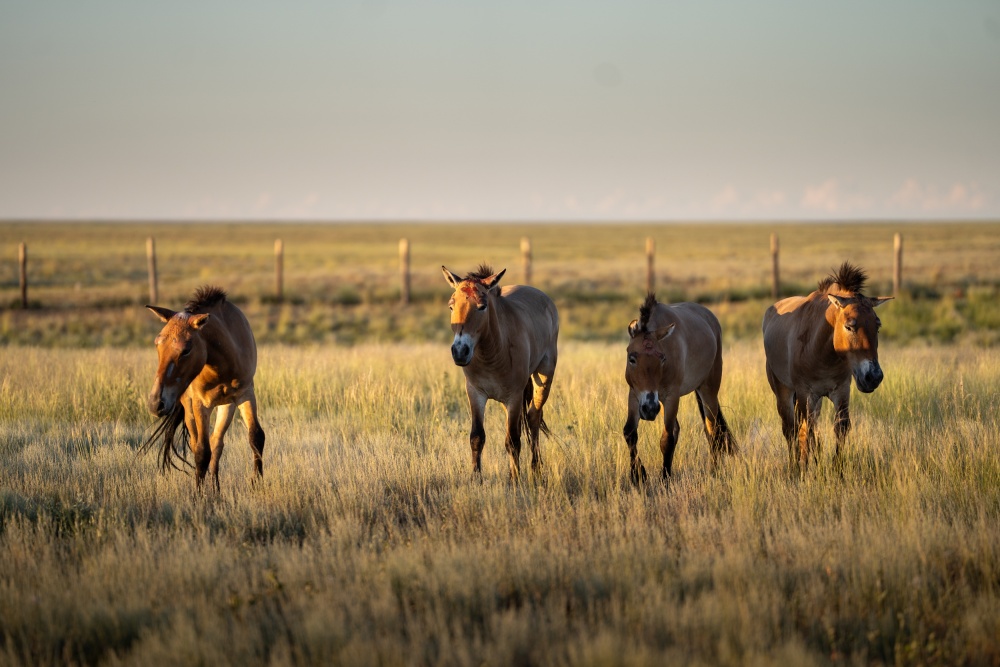
After release, the stallions grouped together and began exploring their new home side by side. Photo: Oliver Le Que, Prague Zoo
Menu
Social networks