



Sheep of the World


People keep sheep for wool, meat and milk—and have created hundreds of different breeds. Some have four horns, others long drooping ears, and some a strikingly fat tail. Here we present a small cross-section of this remarkable diversity and the reasons why sheep are so highly valued.
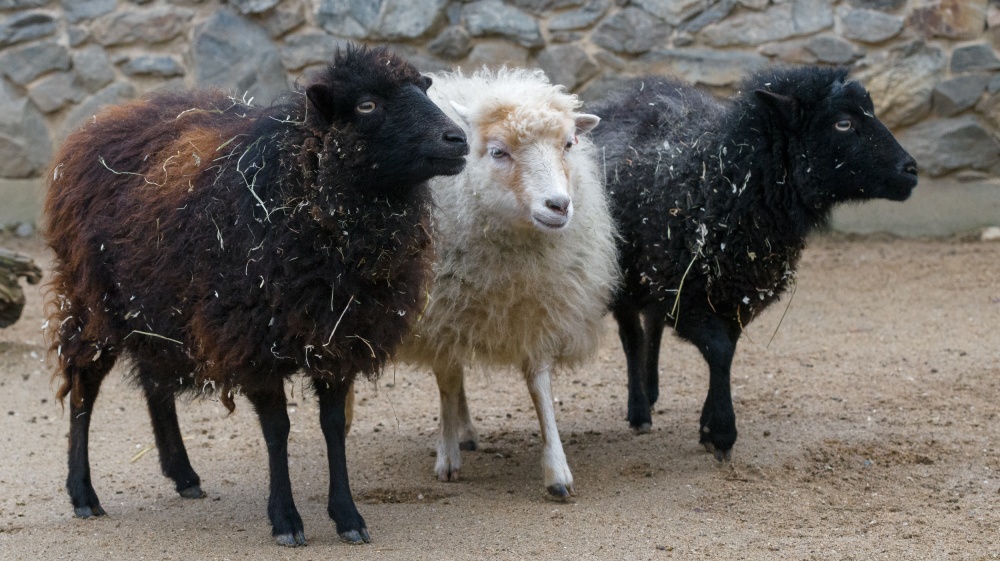 Photo: Petr Hamerník, Prague Zoo
Sheep are among the oldest domestic animals. They were domesticated around 11,000 years ago in the region known as the Fertile Crescent in the Middle East. They proved to be hardy and adaptable animals, thriving in places where larger livestock would struggle. They can be found in cold, rainy highlands as well as on arid mountain slopes with hot summer days, cold nights and freezing winters. Local conditions, together with selective breeding, have gradually produced a rich array of breeds that may differ markedly not only between countries but often even between neighbouring regions or mountain valleys.
According to their primary use, sheep breeds are classified as meat, dairy, wool or pelt types. Many, however, are dual- or multi-purpose. Increasingly, sheep are also kept as hobby animals or used in landscape management. Managed grazing by sheep is a gentle way to maintain meadows and steppe habitats, helping to support certain rare species of plants and animals.
Wool-producing Powerhouses
The symbol of fine wool is the Merino. From the original Spanish breed, numerous other merino types have been developed, adapted to local conditions and needs—from southern Africa through Australia to Germany. The largest populations are found in China, Australia and New Zealand, which are major wool-producing countries where merino sheep number in the millions, even tens of millions.
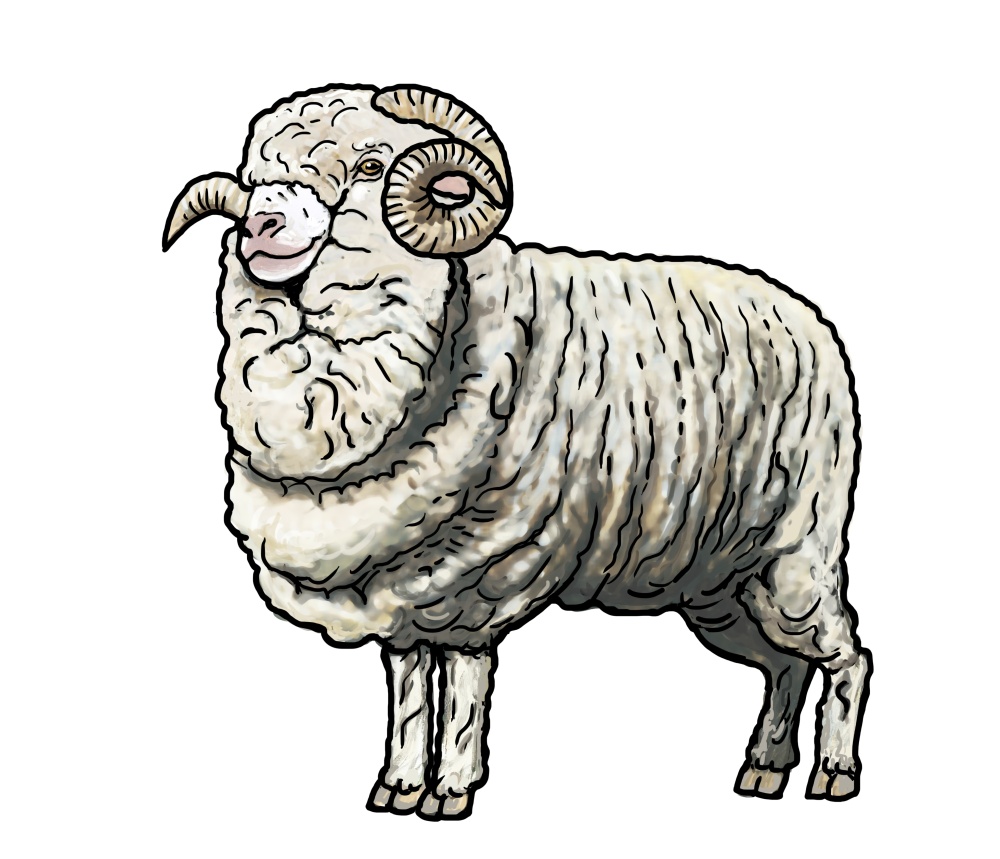
Illustration: Ivana Hanzlíková
Great Britain has also played a major role, being the place of origin of many wool breeds. Wool production and processing were for centuries a driving force of its economy, and fabrics such as tweed, flannel and tartan became iconic. Many British breeds, however, are dual-purpose—kept not only for wool but also for meat or milk. This is the case, for example, with the Border Leicester, notable for its large upright ears and Roman-nosed profile, or the Jacob sheep, unmistakable thanks to its four horns and piebald fleece.
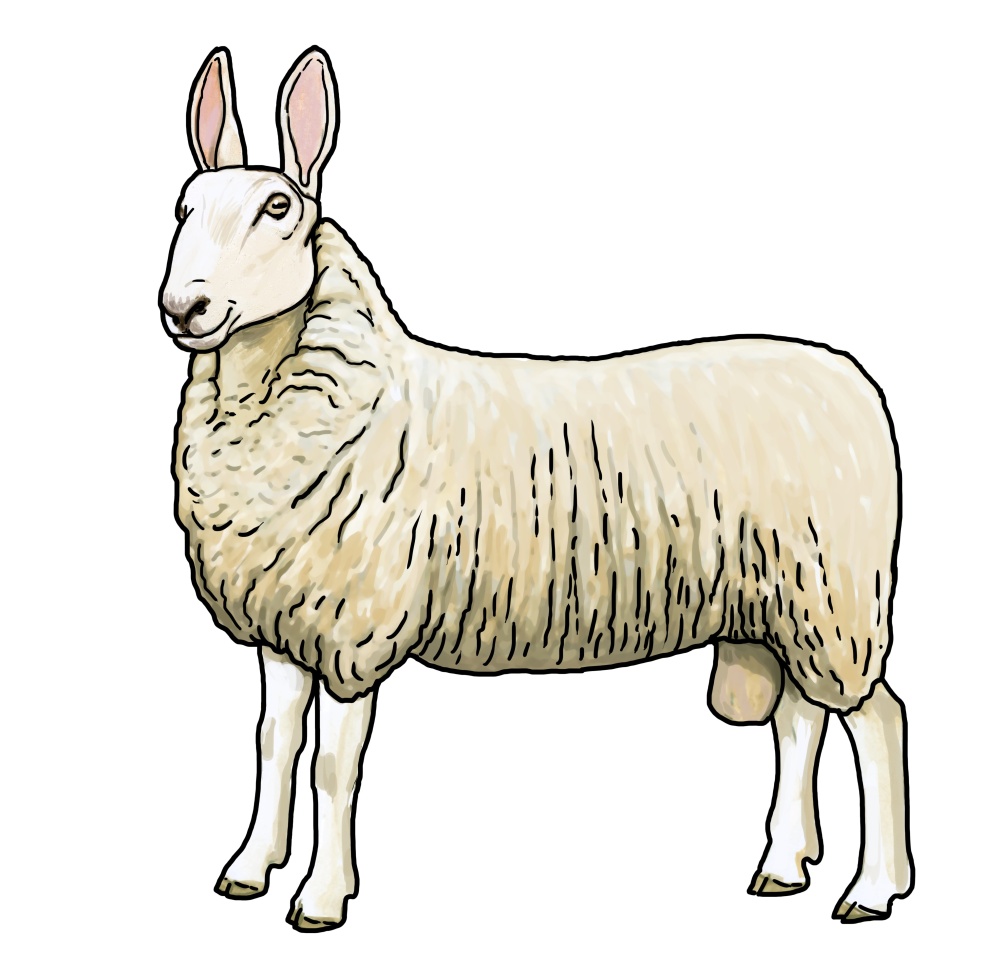
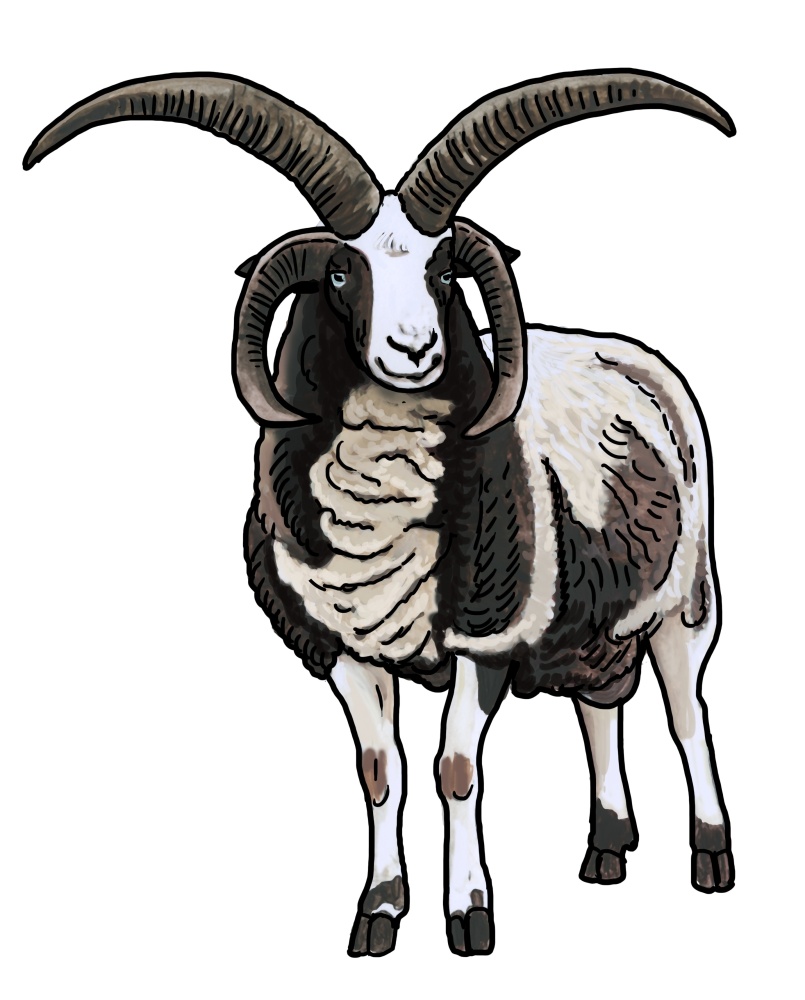
Illustration: Ivana Hanzlíková
Sheep of Arid Lands and Steppes
In the dry regions of the Middle East and Central Asia, fat-tailed or fat-rumped breeds predominate, kept primarily for meat and milk. The fat stored in their hindquarters serves as an energy reserve for lean times—much like a camel’s hump. Among the best known are the Awassi, Hissar, Damara, Somali and Karakul sheep. The latter provides the renowned Persian lamb—a very fine fur, used for luxury coats.
A distinctive fat-tailed breed is the Najdi sheep from the hilly desert region of Najd in Arabia. Local people prize it for its elegance and beauty, and are sometimes willing to pay astonishing sums for a fine ram. It is kept for its milk and its long, flowing fleece.
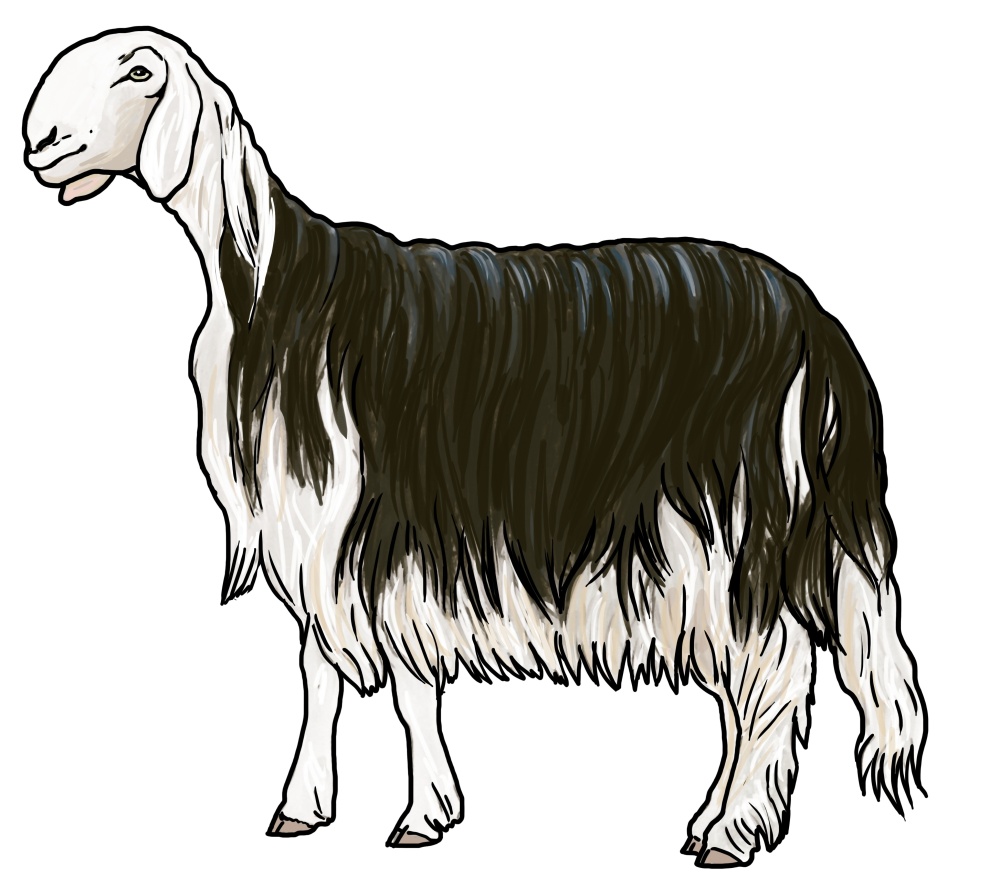
Illustration: Ivana Hanzlíková
Among the breeds with the largest tails in the world is the Large-tailed Han sheep, whose tail can weigh up to 25 kilograms. It is native to the fertile regions of northern China but its ancestors lived on the dry plains of Mongolia. Today, the large fat tail is maintained through selective breeding, as the fat it contains is valued as a versatile culinary ingredient.
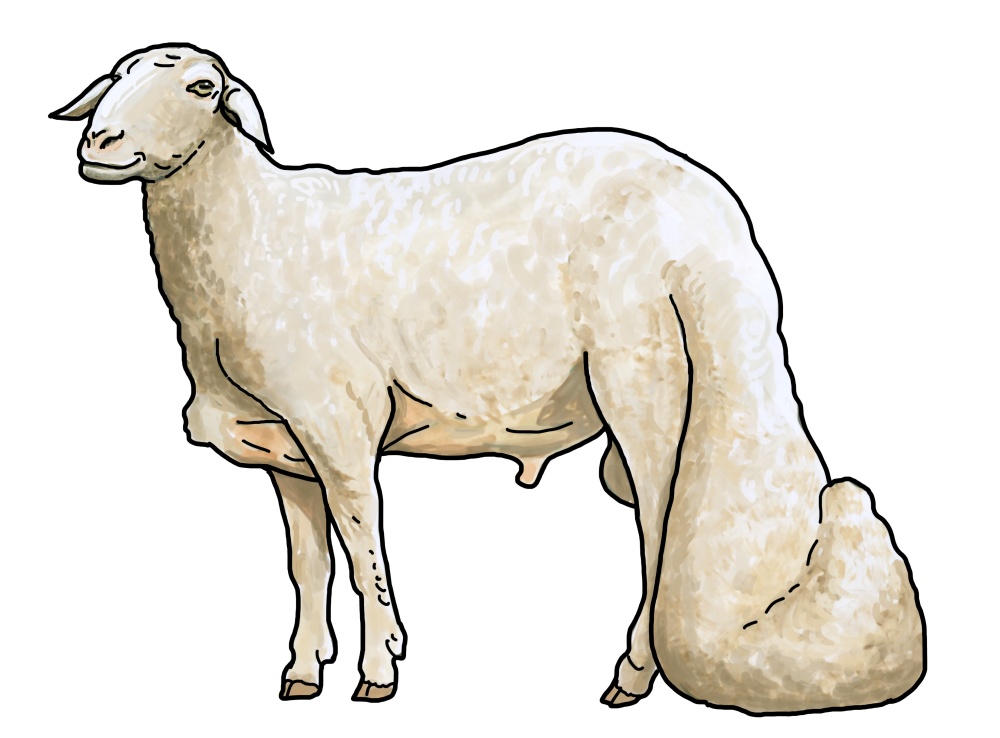
Illustration: Ivana Hanzlíková
Sheep meat—lamb (from animals under one year of age) and mutton (from adult sheep)—is among the most popular meats in many countries. It is particularly important in the Middle East and Central Asia, the Caucasus, the Balkans and India. Distinctive meat breeds have also been developed in Great Britain, South America and Africa. One of the best known is the South African Dorper, with its short legs, white coat and black head, valued both for its tender, lean meat and for its high-quality skin.
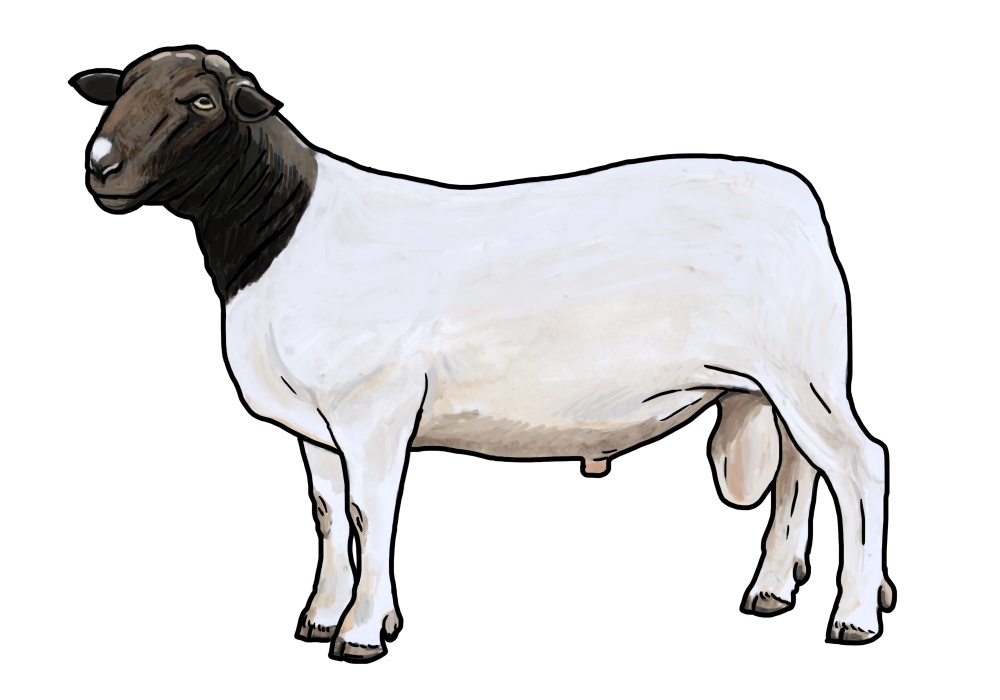
Illustration: Ivana Hanzlíková
Sheep Milk and Cheeses
Sheep milk is most commonly processed into cheese. Well-known examples include Slovak bryndza, parenica, korbáčik and oštiepok (and the related Polish oscypek), Italian pecorino romano, Greek feta, Cypriot halloumi and the French blue cheese roquefort. For people with an intolerance or allergy to cow milk, sheep cheeses may be a suitable alternative—though it is advisable to check the ingredients. Although the cheeses mentioned above were traditionally made from sheep milk, some may now contain a proportion of cheaper cow milk, or even be made exclusively from it.
Important dairy breeds include the East Friesian sheep from Germany, recognisable by its smooth “rat-like” tail, and the Lacaune from France. In dry regions, the most important dairy breed is the previously mentioned fat-tailed Awassi.
Czech National Breeds
The Czech Republic has two national sheep breeds: the Wallachian and the Šumava sheep. The Wallachian sheep is an original local breed with long fleece and striking spiral horns. It is hardy, undemanding and well suited to year-round grazing in cool foothill and mountain regions. It provides wool, meat, milk and pelts. The processed wool is coarse and not particularly suitable for clothing, so it is mainly used for woven carpets, while the pelts are popular interior accessories—for example as bedside rugs.
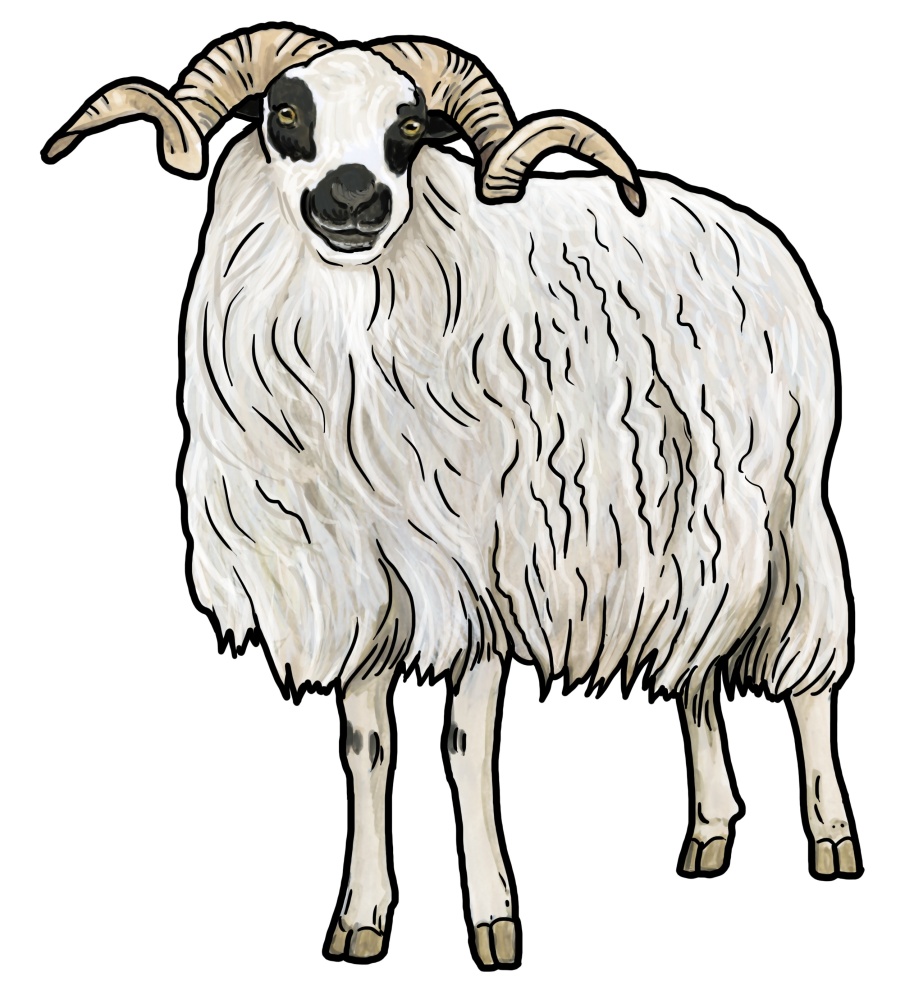
Illustration: Ivana Hanzlíková
The Šumava sheep was developed in the second half of the 20th century through selective breeding, with the aim of restoring the characteristics of the original Czech peasant sheep. It is robust, undemanding and well adapted to mountain and foothill conditions.
ZOOPRAHA.CZ
Contacts
- The Prague zoological garden
U Trojskeho zamku 120/3
171 00 Praha 7
Phone.: (+420) 296 112 230 (public relations department)
e-mail: zoopraha@zoopraha.cz
Others