



Southern Ground-hornbill Chick: Exceptionally on View to Visitors This Year
A southern ground-hornbill chick can exceptionally be seen by visitors at Prague Zoo. The rearing of this majestic African bird usually takes place in the off-exhibit areas, but this year the keepers decided to let the chick out unusually early. The small risk has paid off. The young hornbill is settling in very well with its neighbours, Nile lechwe, and exploring the world under the watchful eyes of its parents, Vendelín and Vendulka. What makes this year’s success particularly noteworthy is the significant role played by the ungulate keepers, as the hornbills share their enclosure with the aforementioned antelopes. Rearing this species is among the more challenging tasks. Prague Zoo was the first institution in Europe to successfully rear this species, in 1994. This year, only six other chicks are being raised in European zoos.
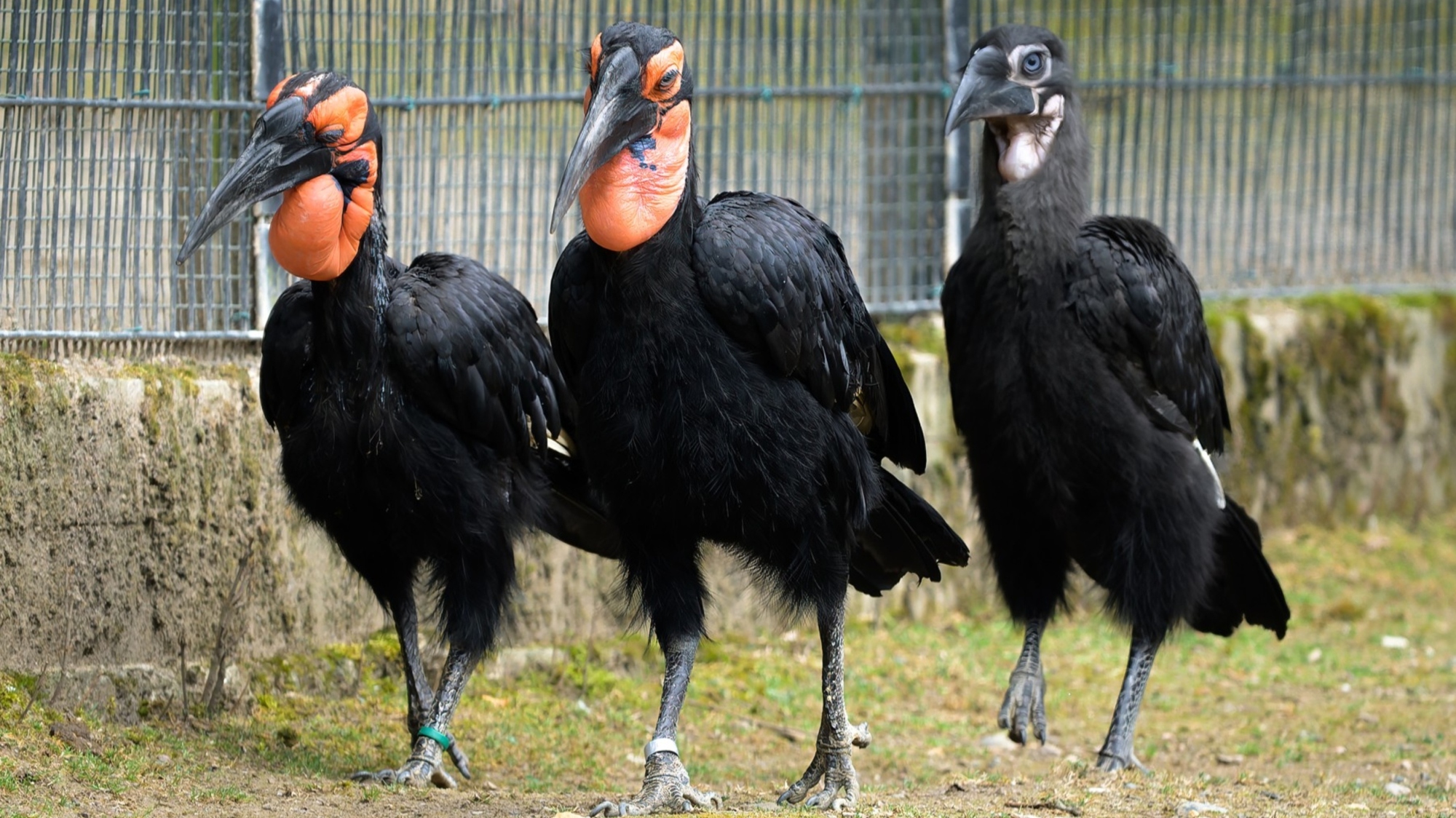 The chick often stays close to its parents. On this photo, it is accompanied by its mother, Vendulka (left), and father, Vendelín (centre). Photo: Petr Hamerník, Prague Zoo
“This is a partially hand-reared chick, as the male had repeatedly destroyed the eggs in the past. Shortly before the egg was due to hatch in April, we therefore replaced it with a dummy egg and placed the real egg in an incubator,” explains Curator of Birds Antonín Vaidl, adding that the female continued to sit on the false clutch and carry on with her nesting activity. “After about a month, once the chick was stable and had been well fed by our experienced bird keepers, we returned it to the vicinity of its parents in the upper part of the zoo. That was when the team of young ungulate keepers stepped in,” he says, highlighting the cooperation between the two keeper teams.
The chick was subsequently placed in a special box secured by two sets of bars, which kept it safe while allowing it to gradually bond with its parents. During the first few weeks after the transfer, the chick was still fed by the keepers, mainly on rat and mouse pinkies and a varied selection of fruit, including apricots, bananas and figs as well as mangoes and papayas.
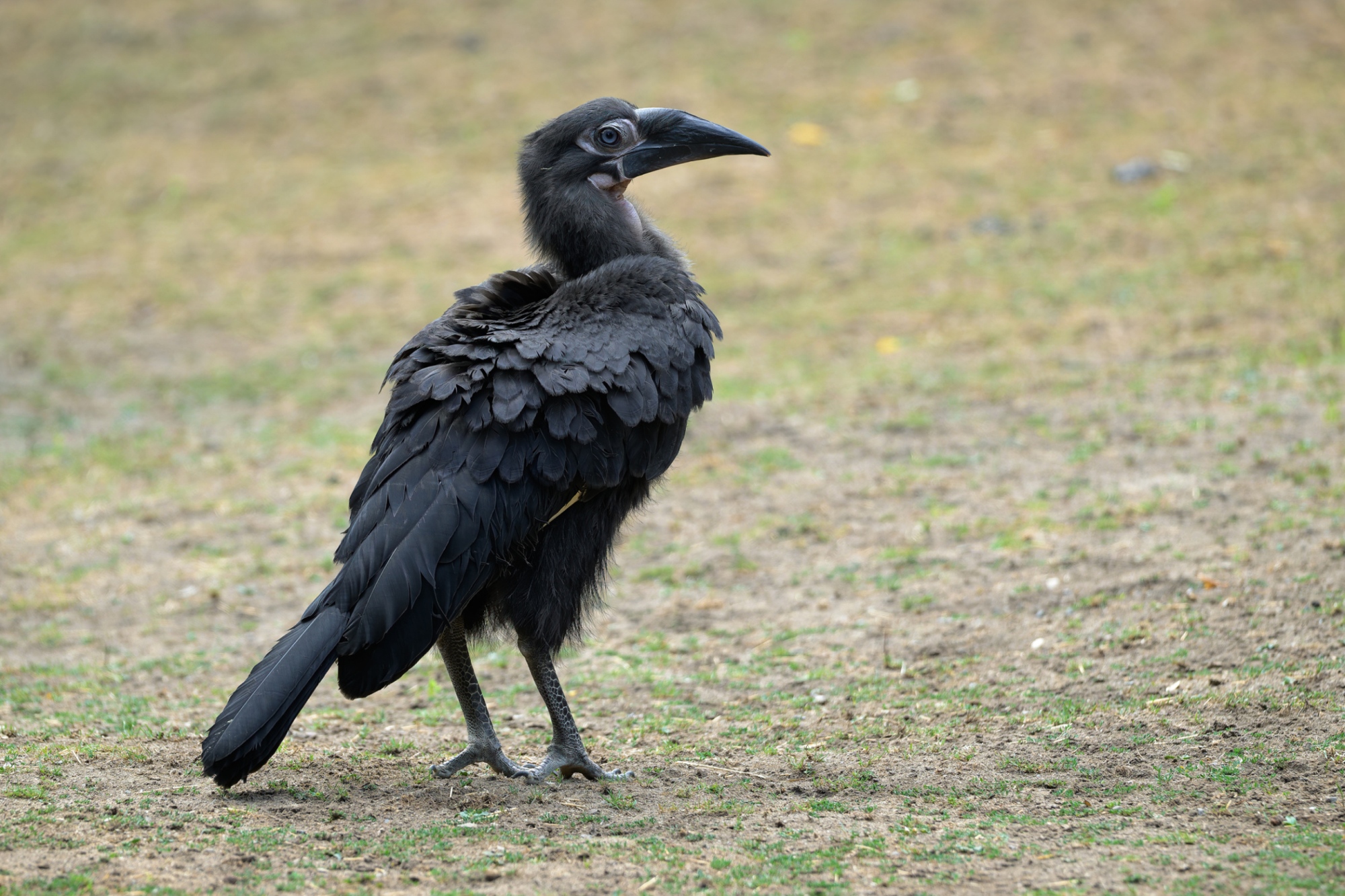
Visitors to Prague Zoo can easily identify the chick by the absence of red colouring on its head and neck. Photo: Petr Hamerník, Prague Zoo
“Elena Kulhavá and Veronika Doležalová, who normally look after giraffes and antelopes, thoroughly enjoyed caring for their unusual charge. It is well worth gaining experience of looking after animals quite different from those we are used to. Every such experience makes us better keepers,” says Aleš Doležal, Head Keeper of Ungulates.
At around 65 days old, the chick reached another important milestone. The first set of bars was removed, allowing the parents to feed the chick themselves. Thanks to several weeks of gradual bonding and the chick's healthy vocalisations, they took to the task immediately. The natural bond between the parents and their offspring was fully restored. A week later, the second barrier was removed as well, allowing the parents to enter the box completely and eventually lead their offspring out of it.
“Placing such a large chick back under its parents is a unique method that we have already used with several bird species. This allows us to prevent the chick become imprinted on humans,” stresses Prague Zoo Curator of Birds Antonín Vaidl.
When, at the end of July, the chick was strong enough to follow its parents out of the box and able to fly up to the highest perches, the keepers released all three birds into their spacious outdoor enclosure. The young southern ground-hornbill, whose adult colouring has not yet fully developed, can now be seen in the enclosure between the exhibit of northern river otters and the Hippo House.
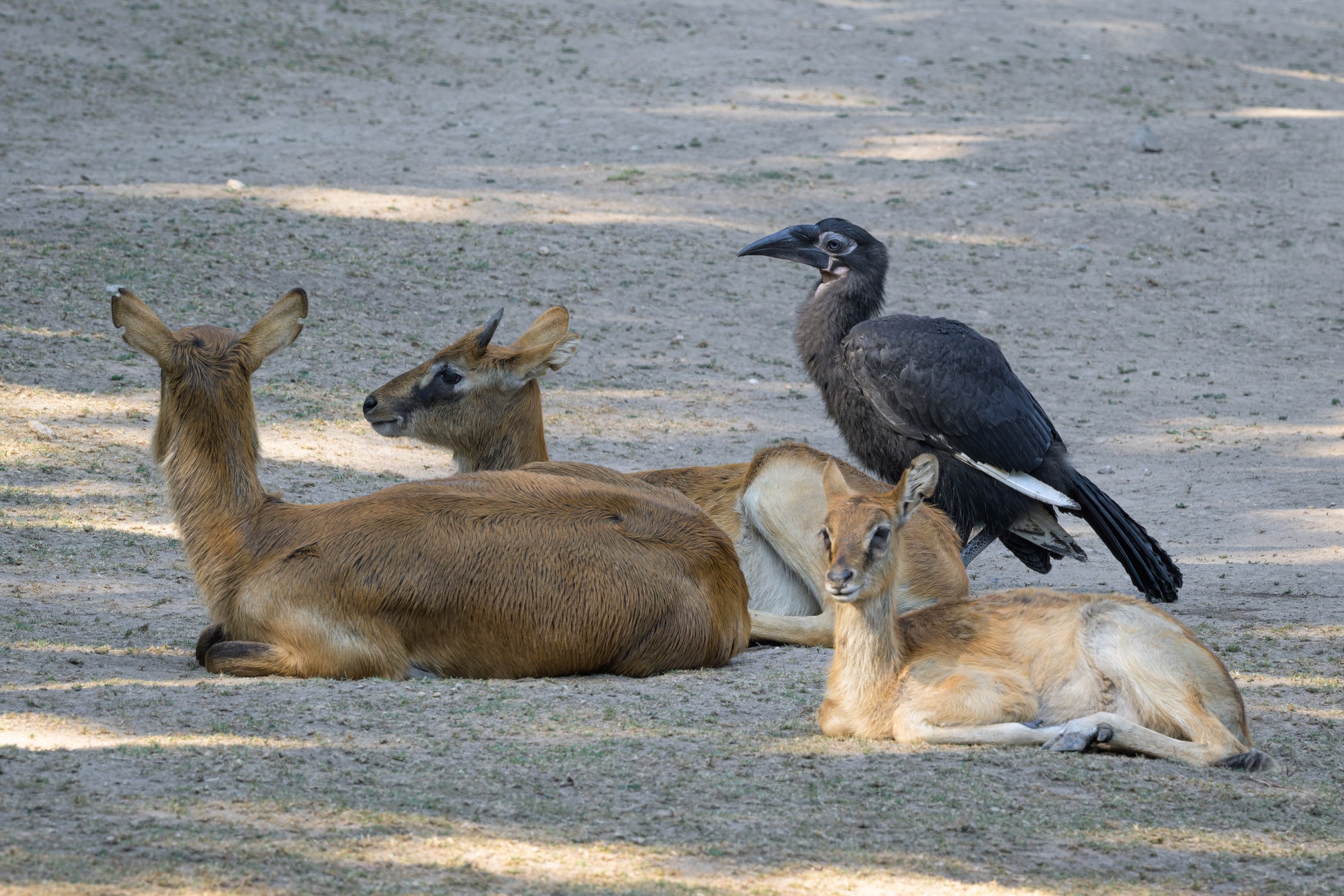
The introduction to the herd of Nile lechwe went smoothly, and the chick now regularly perches near them. Photo: Petr Hamerník, Prague Zoo
The first southern ground-hornbills arrived at Prague Zoo as early as 1954, but unfortunately they were not kept here for long. Another pair arrived in 1984, and the species has been kept at the zoo continuously ever since. The first chick hatched here in 1994, marking the first successful rearing of the species in Europe. The following chick, hatched in 1995, still lives at the zoo today: it is Vendelín, the father of the current chick, who has just reached the age of 31. To date, Prague Zoo has successfully reared 16 southern ground-hornbill chicks.
The southern ground-hornbill is one of the largest hornbills in the world. Although it has an impressive wingspan of between 120 and 170 centimetres, it spends most of its time on the ground. It roams across grassy savannahs in search of large insects and small vertebrates. In its native southern and eastern Africa, its numbers are declining as a result of hunting and secondary poisoning. Its slow rate of reproduction does not help, which is why the species is listed as Vulnerable on the IUCN Red List of Threatened Species.
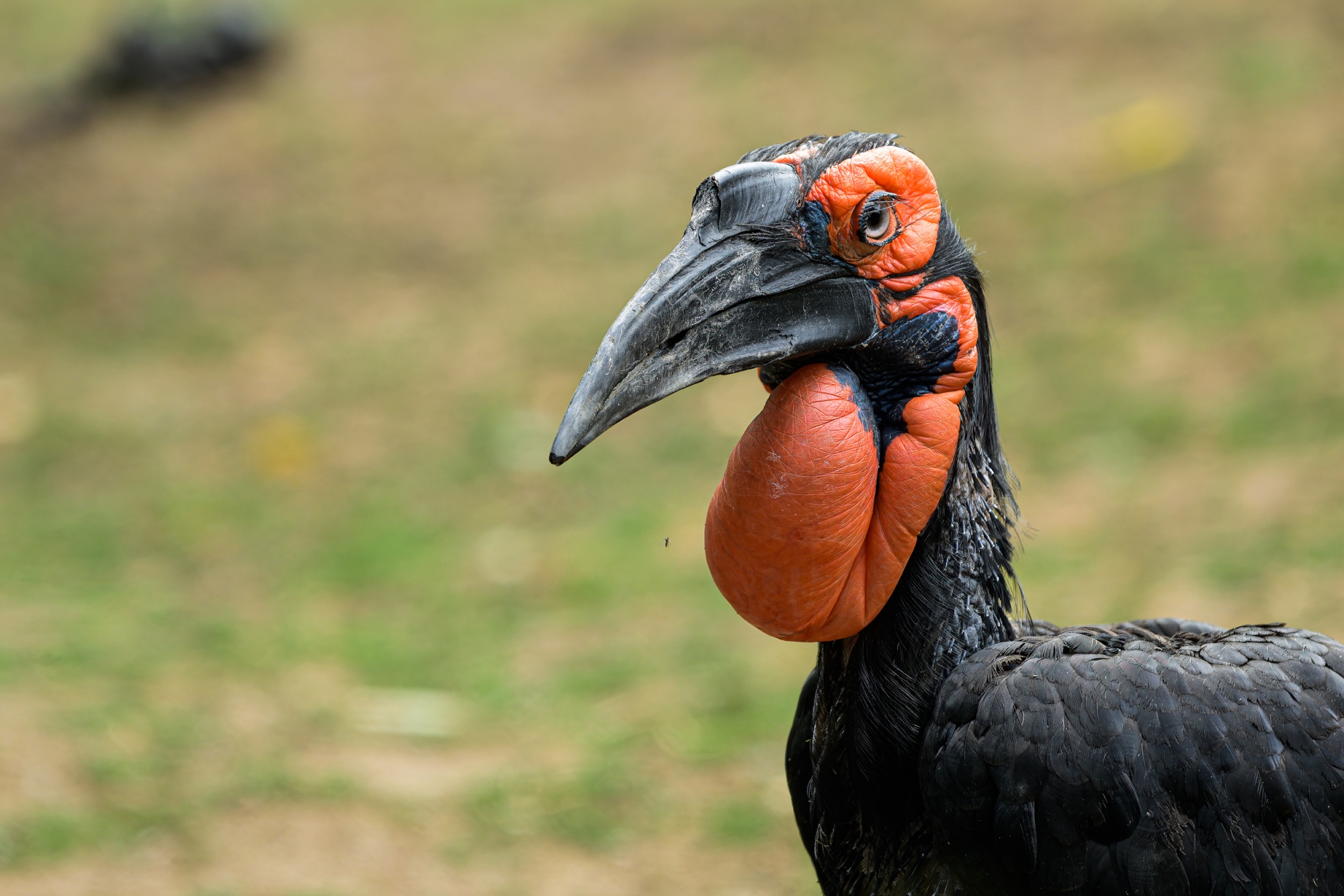
An adult southern ground-hornbill has black plumage with red patches of bare skin and wattles on its head. The female has bluish-purple colouring on her throat. Photo: Petr Hamerník, Prague Zoo
ZOOPRAHA.CZ
Contacts
- The Prague zoological garden
U Trojskeho zamku 120/3
171 00 Praha 7
Phone.: (+420) 296 112 230 (public relations department)
e-mail: zoopraha@zoopraha.cz
Others