



A Shared Success of Three Zoos: Prague, Zlín and Ostrava Join Forces to Save Vultures

Rare chicks of two vulture species, three zoological gardens and one common goal. This neatly sums up the collaboration between Prague Zoo, Zlín Zoo and Ostrava Zoo in rearing young cinereous vultures and Egyptian vultures. Thanks to the joint effort, expertise and coordination of specialists from all three institutions, several chicks have been given a chance of life and will, in all likelihood, be released into the wild. Vultures are currently among the most threatened bird species in the world. Altogether, 90 vultures have already been released into the wild from these three zoos.
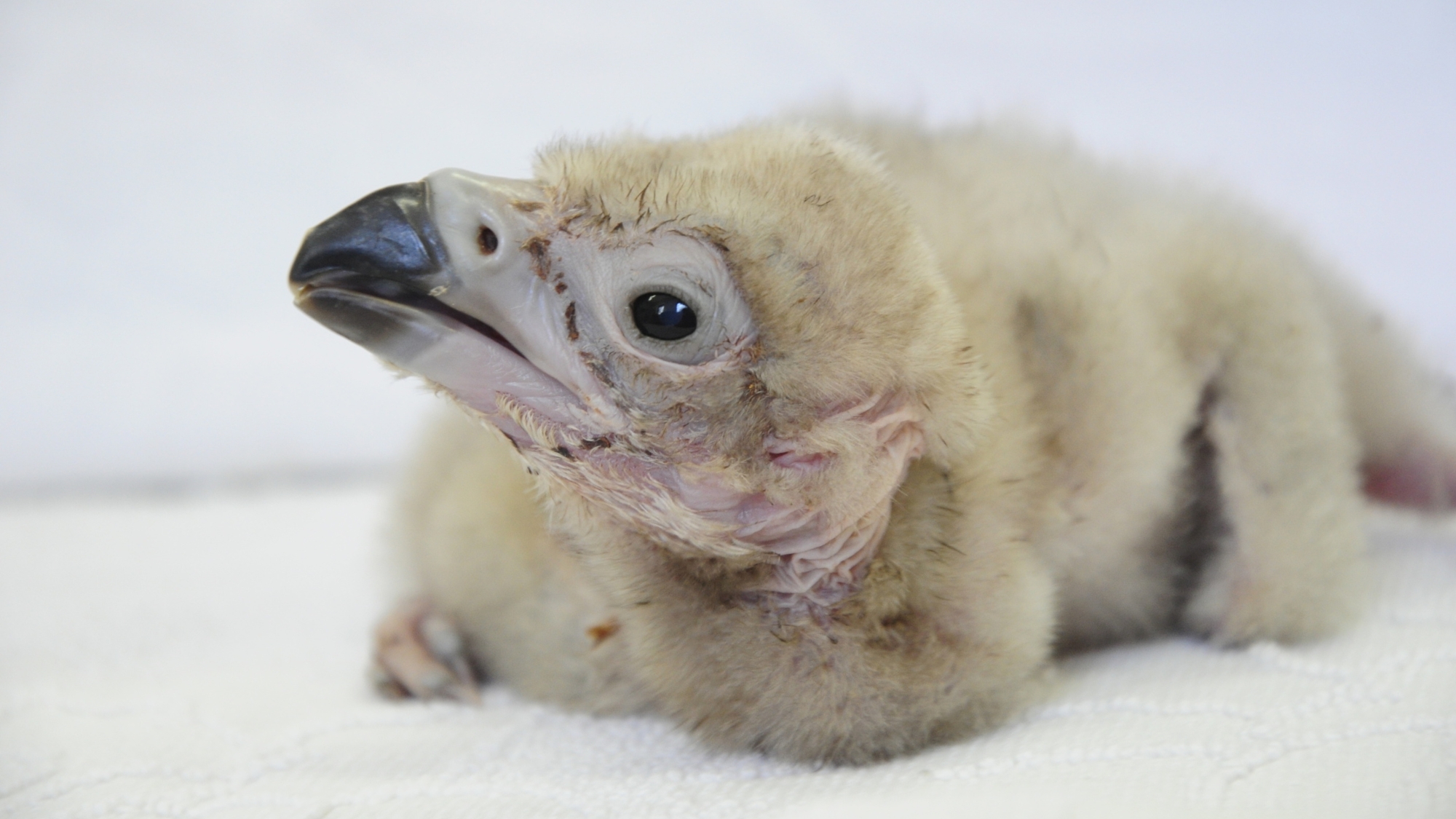 Cinereous vulture chick at five days of age. Photo: Zlín Zoo
When breeding rare and threatened species, close cooperation between zoological gardens often plays a crucial and decisive role. An excellent example is the long-term collaboration between the zoos in Prague, Zlín and Ostrava in breeding vultures and subsequently releasing them into the wild.
“Rearing young vultures is exceptionally demanding. Females lay only a single egg, so reproduction is very slow. Thanks to cooperation with colleagues from Prague and Ostrava, however, we are able to rear more chicks each year,” emphasises Václav Štraub, Zoologist at Zlín Zoo.
When, at the beginning of March, a female cinereous vulture in Zlín laid an egg, keepers removed it and placed it in an incubator. This prompted the breeding pair to lay again, and in April the female produced a second egg. After hatching, the first chick was returned to the Zlín parent pair, while the second was transferred to Ostrava Zoo one week after hatching.
“The experienced pair of cinereous vultures here had been caring for an egg, but the embryo died during incubation. This allowed us to place our chick with these foster parents,” continues Štraub. As he adds, the Zlín keepers initially cared for the second chick for a week behind the scenes. “We fed the chick five times a day using a special puppet imitating the head of an adult vulture. This method is essential to prevent imprinting on humans and to ensure the chick retains natural behaviour and instincts for its future life. Once it was strong enough, we transferred it to Ostrava.”
“After losing their egg, we provided the pair of cinereous vultures with a dummy egg so they would not lose interest in nesting and could later accept a chick from Zlín. However, they had to sit for more than two weeks longer than the normal incubation period, as the egg in Zlín had been laid later. We were therefore unsure whether they would persist. Fortunately, everything worked out: the pair is providing exemplary care for the chick. We can monitor everything via a camera that continuously records the nest without disturbing the birds,” explains Petr Vrána, Head Zoologist at Ostrava Zoo. The entire operation has thus been highly successful, and the chicks in both Zlín and Ostrava are thriving.
Prague Zoo also played an equally important role. An Egyptian vulture chick was transferred there from Zlín. “After arrival, we placed it near a female experienced in fostering. Initially, a so-called protected contact takes place, during which the birds become acquainted through a barrier. Throughout this period, keepers feed the chick using a special puppet, as in Zlín. Once the chick is sufficiently developed, we will place them together in a shared space. In this way, the chick acquires behaviour typical of its species,” explains Antonín Vaidl, Curator of Birds at Prague Zoo and coordinator of the European Ex situ Programme (EEP) for Egyptian vultures.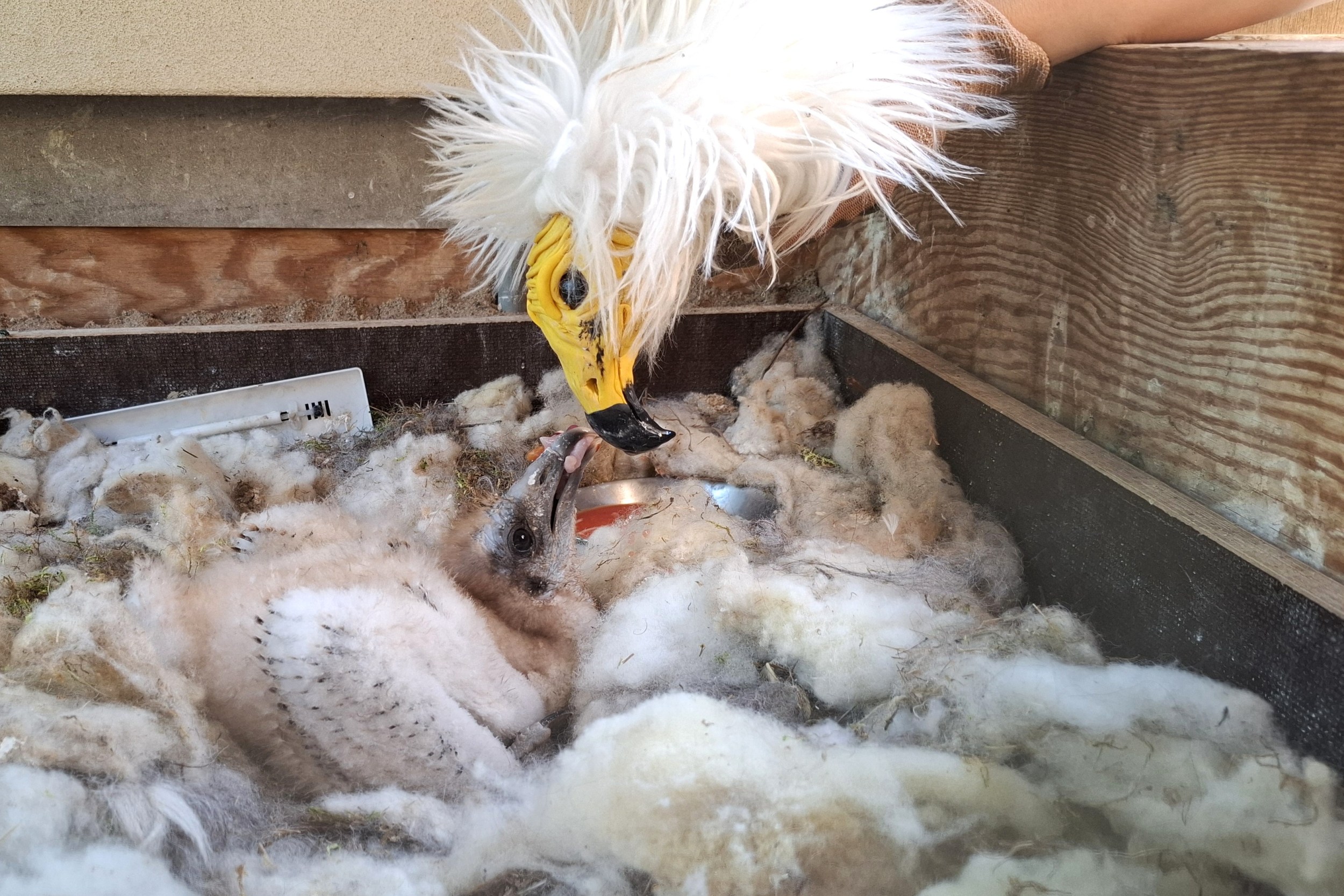
Egyptian vulture chick, originally from Zlín Zoo, is currently hand-fed at Prague Zoo using the so-called “puppet method”. It will later be placed into full foster care. Photo: Antonín Vaidl, Prague Zoo
The young vultures will remain with their foster parents until approximately five months of age, when they begin to become independent. Based on recommendations from the coordinators of both species, they will most likely be released into the wild, or alternatively contribute to the managed population in human care.
According to zoologists, cases such as these illustrate a modern approach to the conservation of threatened species. “Today, conservation and successful breeding efforts transcend the boundaries of individual zoological gardens. It is often no longer the work of a single institution, but of a network of experts across Czech zoos or throughout Europe. When our cooperation also strengthens wild populations, it fulfils one of the most important missions of every modern zoo,” jointly affirm Václav Štraub, Petr Vrána and Antonín Vaidl.
Vultures rank among the most endangered bird species on the planet. Their populations face numerous threats, including habitat loss, pesticide use, poisoning of carcasses by poachers, and illegal hunting. In ecosystems, they play an irreplaceable role: as scavengers, they remove carcasses from the environment and help prevent the spread of disease. Prague Zoo, Zlín Zoo and Ostrava Zoo are currently among the most successful vulture breeders worldwide. They also actively contribute to restoring wild populations, for example in Bulgaria, Spain, France and Italy. Together, they have already provided 90 vultures for release into the wild. At the same time, they financially support conservation efforts in the species’ natural habitats and help raise awareness of the importance of protecting not only vultures, but other threatened species as well.
Numbers of vultures released into the wild
- Prague Zoo: 25 individuals across three species—13 Egyptian vultures, 11 bearded vultures, 1 cinereous vulture
- Zlín Zoo: 27 individuals across three species—3 Egyptian vultures, 4 cinereous vultures, 20 griffon vultures
- Ostrava Zoo: 38 individuals across four species—5 Egyptian vultures, 26 bearded vultures, 5 cinereous vultures, 2 griffon vultures
ZOOPRAHA.CZ
Contacts
- The Prague zoological garden
U Trojskeho zamku 120/3
171 00 Praha 7
Phone.: (+420) 296 112 230 (public relations department)
e-mail: zoopraha@zoopraha.cz
Others