



Bearded Vulture from Prague Released in Andalusia
A young bearded vulture that hatched at Prague Zoo this March has been released into the wild. The juvenile female will soon be soaring above the Sierra Nevada mountains in Andalusia, Spain. Colleagues from the Vulture Conservation Foundation have named her Alhorí, after a local glacial valley. The European population of these birds of prey is threatened with extinction. Thanks only to reintroduction efforts in Austria, Switzerland, Spain, Italy and France, Europe’s mountain ranges are now home to no more than 250 individuals.
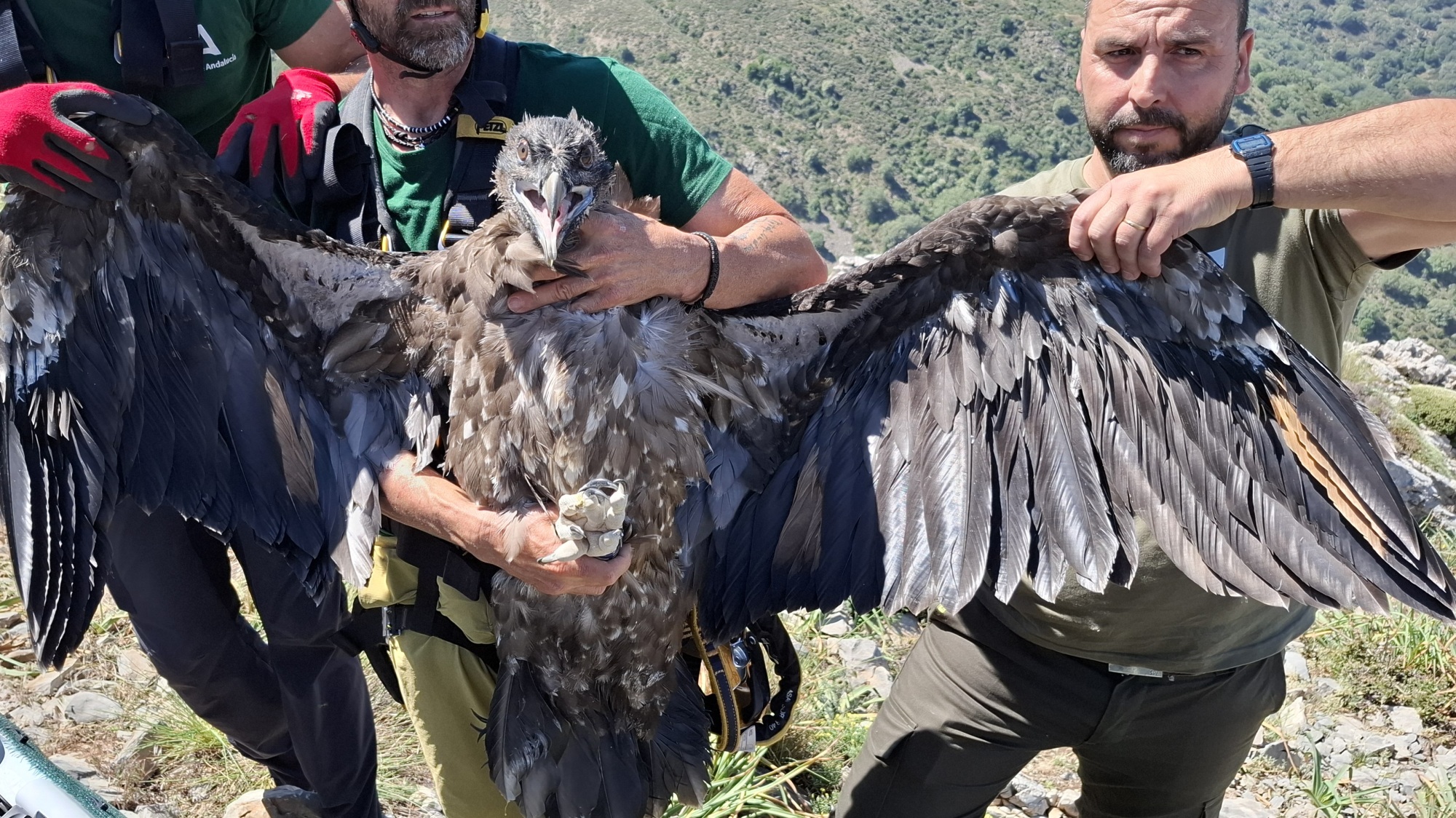 Final inspection of the Prague Zoo bearded vulture before its placement on an artificial nest in the wild in Spain. Photo: Vulture Conservation Foundation
“The bearded vulture was the first raptor species to be released from Prague Zoo into the wild, back in 2000,” says Antonín Vaidl, Curator of Birds at Prague Zoo. According to him, most of the vultures reared here—including chicks from other zoos fostered by Prague’s birds as adoptive parents—have gone on to reinforce the wild population.
“We have been waiting twenty years for a chick. The hiatus was caused by the search for a new breeding pair, which has finally proved successful this year. The wait has paid off, and the icing on the cake is that this genetically valuable chick is already preparing for life in the wild at just three months of age,” adds Vaidl.
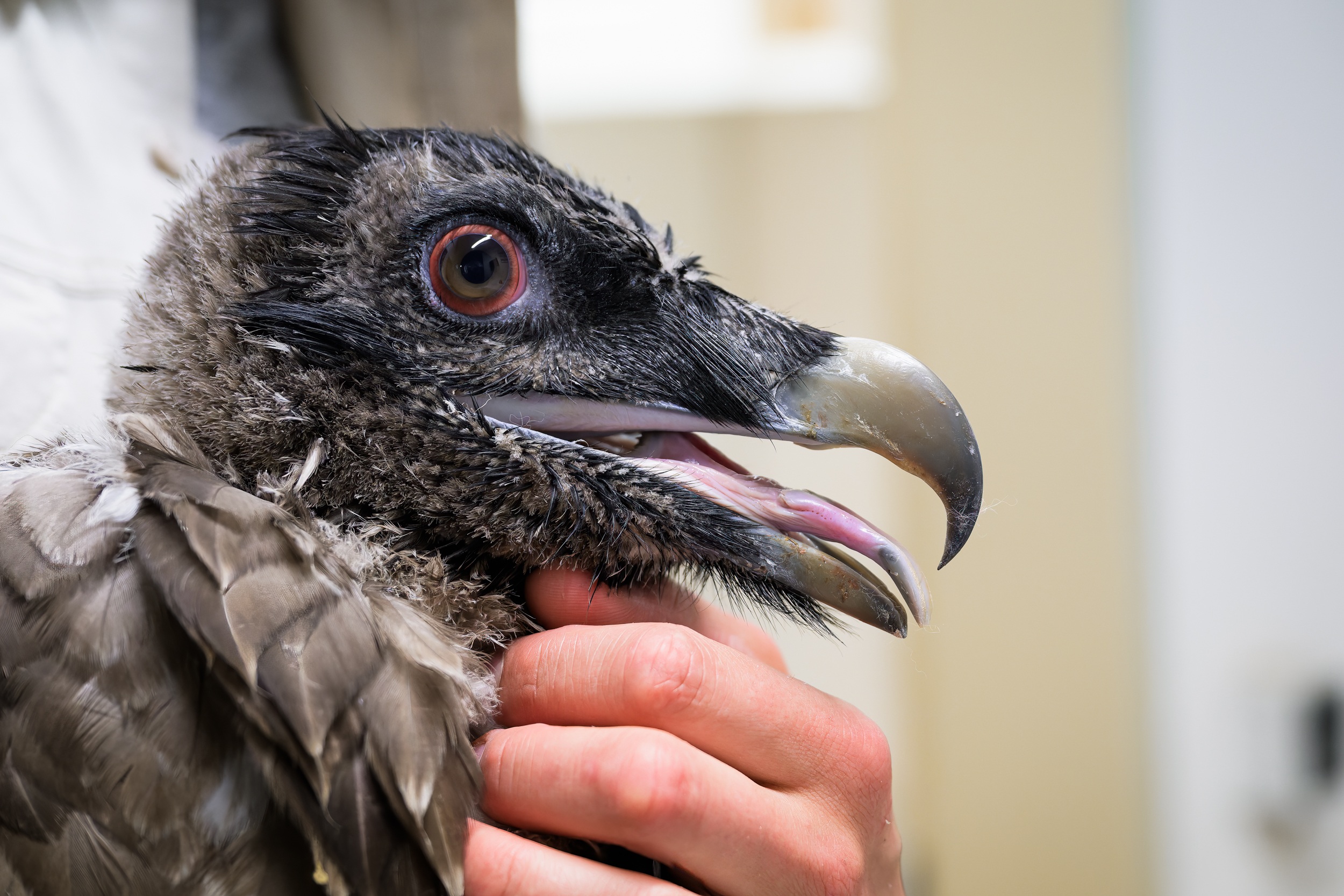
Portrait of a three-month-old female bearded vulture, showing the red eye-ring and massive bill. Photo: Petr Hamerník, Prague Zoo
The female hatched at Prague Zoo on 1 March, weighing 133 grams. She was raised in off-exhibit facilities of the zoo. After initial supplementary feeding by keepers, full care was taken over by the parent pair. When she set out on her life’s journey on 26 May, she weighed around five kilograms and her wingspan had already reached two metres.
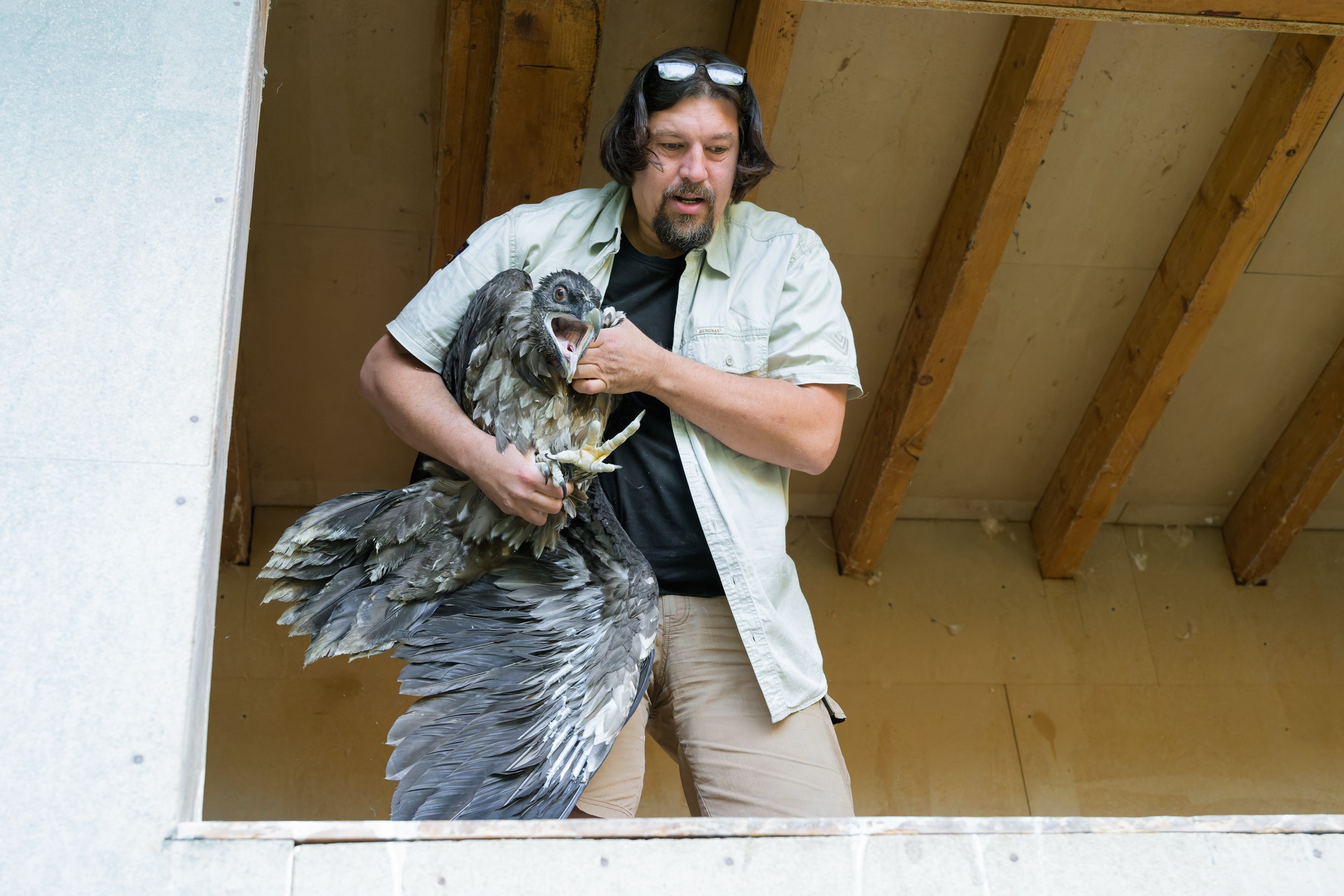
Antonín Vaidl, Curator of Birds at Prague Zoo, carries the young bearded vulture from the nest for a veterinary check prior to transport. Photo: Petr Hamerník, Prague Zoo
The chick was first transported in a crate to the breeding centre in Haringsee, Austria, with which Prague Zoo has cooperated since 1990 on the exchange of individuals suitable for breeding and the transfer of birds for reintroduction. From there, she travelled to the Guadalentín centre in Spain, which specialises in releasing bearded vultures and rears more chicks of this species annually than any other facility in the world.
Spanish colleagues fitted the female with a GPS transmitter and bleached selected flight feathers with hydrogen peroxide. This will make her easily recognisable even to amateur observers, significantly contributing to the essential monitoring of reintroduced birds. She was then released into the wild together with two other juveniles from breeding institutions in Austria and Spain using the hacking site method. This involves placing an almost fully fledged chick on a cliff ledge, where it is fed via an artificial tube and, after roughly two to three weeks, takes off towards independence.
She was placed on such an artificial nest in the Sierra Nevada National Park, on the border between the provinces of Granada and Almería, on 29 May. This brings the number of bearded vultures released at this site to nine. The total population in the national park is now estimated at around twenty individuals.
These impressive birds of prey—known for their black “beard”, red eye-ring and their habit of feeding on the bones of dead animals—have been kept at Prague Zoo since its earliest days. The first successful breeding, then also the first in the whole of Czechoslovakia, took place in 1989. Visitors can find the bearded vultures in the aviary beneath the rock outcrop between the enclosures of Barbary sheep and West Caucasian turs.
Bearded vulture breeding at Prague Zoo in numbers:
- 12 own chicks hatched
- 10 own chicks reared
- 7 chicks reared by the Prague pair
- 3 chicks transferred for foster care to the breeding station in Austria
- 4 own chicks retained in human care
- 5 own chicks released into the wild
- 9 chicks hatched in other zoos placed with the Prague pair for adoption
- 8 adopted chicks reared
- 2 adopted chicks retained in human care
- 6 adopted chicks released into the wild
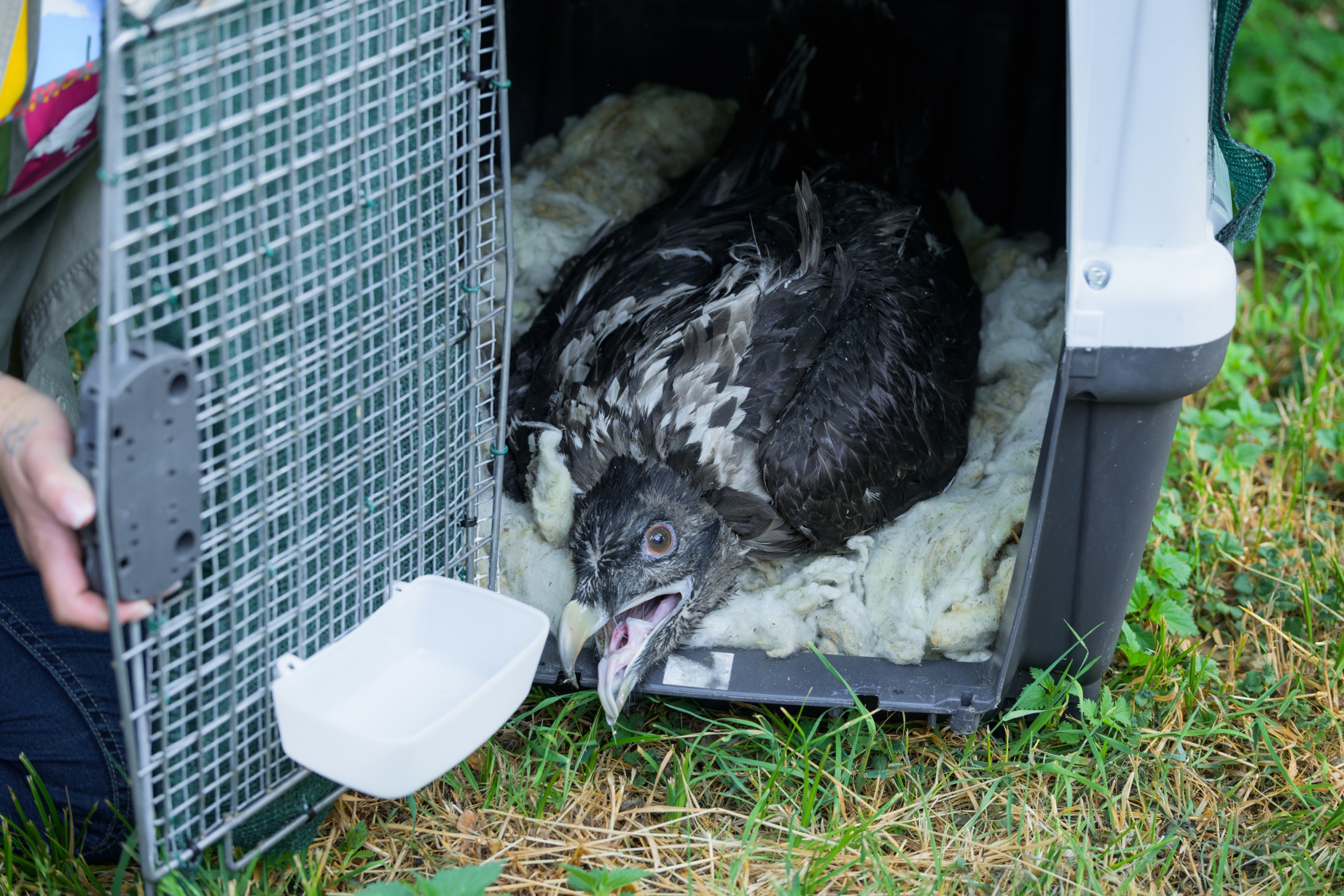
A padded transport crate with its precious cargo shortly before departure for Haringsee, Austria. Photo: Petr Hamerník, Prague Zoo
ZOOPRAHA.CZ
Contacts
- The Prague zoological garden
U Trojskeho zamku 120/3
171 00 Praha 7
Phone.: (+420) 296 112 230 (public relations department)
e-mail: zoopraha@zoopraha.cz
Others