



Prague Zoo Has Bred the Critically Endangered Lord Howe Island Stick Insect
Prague Zoo has seen its first Lord Howe Island stick insects hatch. These are the heaviest flightless insects on the planet. Thirteen little Lord Howe Island stick insects emerged from the first clutch to be laid at Prague Zoo. The luminous green nymphs are now in the zoo’s off-show facilities. Prior to their extinction, these endemic invertebrates were nicknamed “tree lobsters” by the inhabitants of Lord Howe Island. Prague Zoo has been breeding them since 2024.
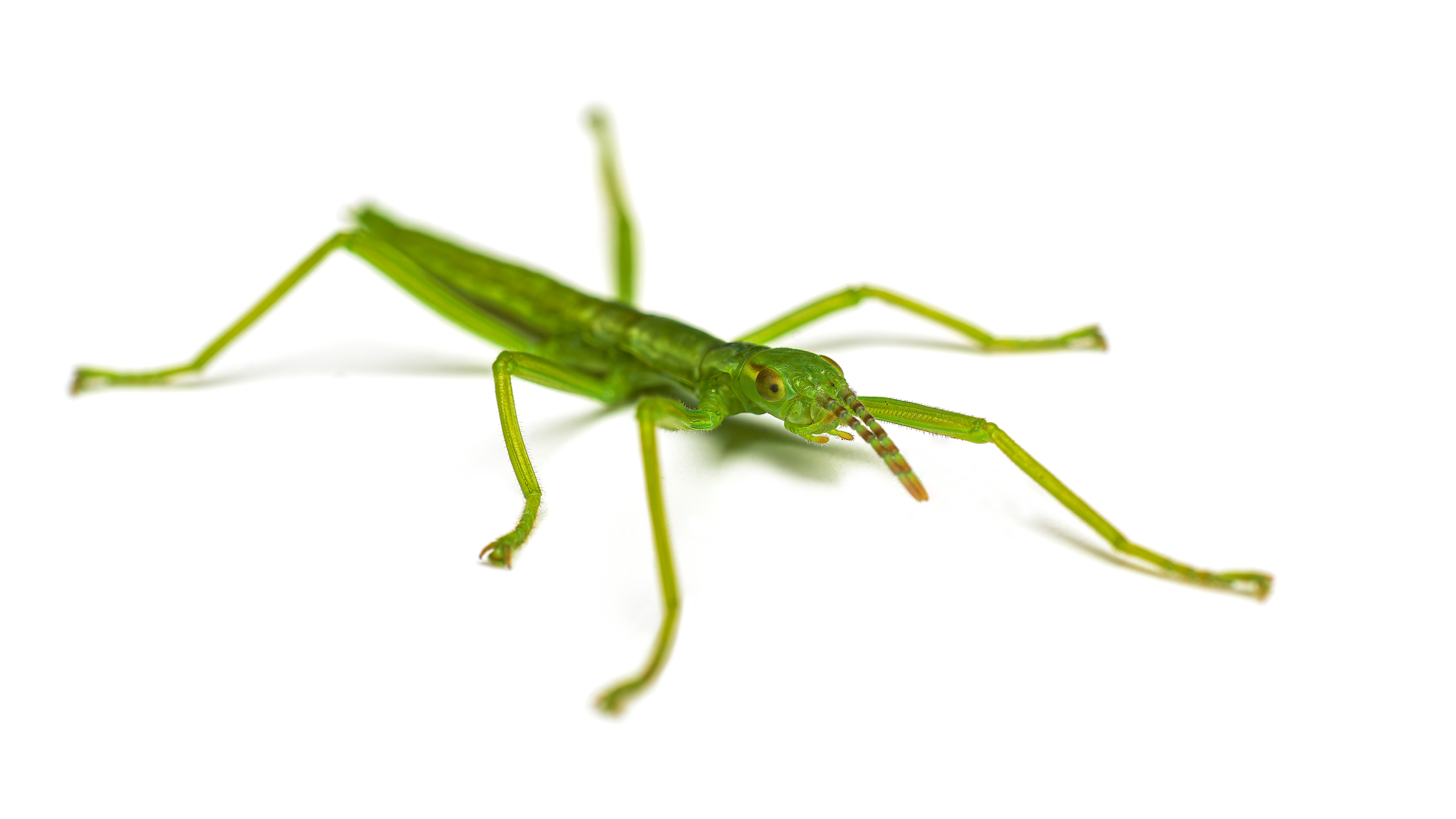 A Lord Howe Island stick insect nymph at Prague Zoo. This is the first instar of the first generation to come from a Prague clutch. Photo: Petr Hamerník, Prague Zoo
Vojtěch Víta, an expert in invertebrate breeding at Prague Zoo, said: “We started breeding a year and a half ago thanks to four hundred eggs that we received from our colleagues in England. Some of them are already adults and have now reproduced. These are the first stick insects of this species to hatch from eggs laid in the Czech Republic.”
Besides their size, these stick insects are fascinating because of the story of their rediscovery. So far, the only European country to have successfully bred them is Great Britain. It was from Bristol Zoo that Prague Zoo obtained the first eggs in August 2024, with the permission of the Australian authorities. In November of the same year, the first nymphs hatched here, and in March 2025, the almost adult insects were introduced to zoo visitors in the Ball’s Pyramid exhibition. Upon reaching adulthood, they laid their first eggs last July. The first tree lobster to be fully bred in Prague hatched on 9 February, followed by twelve others.
Once hatched, the nymph is 20 mm long, very slender, and bright green, which camouflages it on plants. As the nymph grows, it sheds its old cuticle, usually seven times, and gradually changes its appearance. “The individual stages between moults are called instars. Each subsequent instar is characterised by a more massive body. Gradually, they turn brown with each new moult, and in the end the adults are shiny black,” explained Víta, adding that adults, unlike nymphs, are active at night, which is why they have a dark colour. They live for about two years in total, of which 8 to 12 months are spent in the nymph stage.
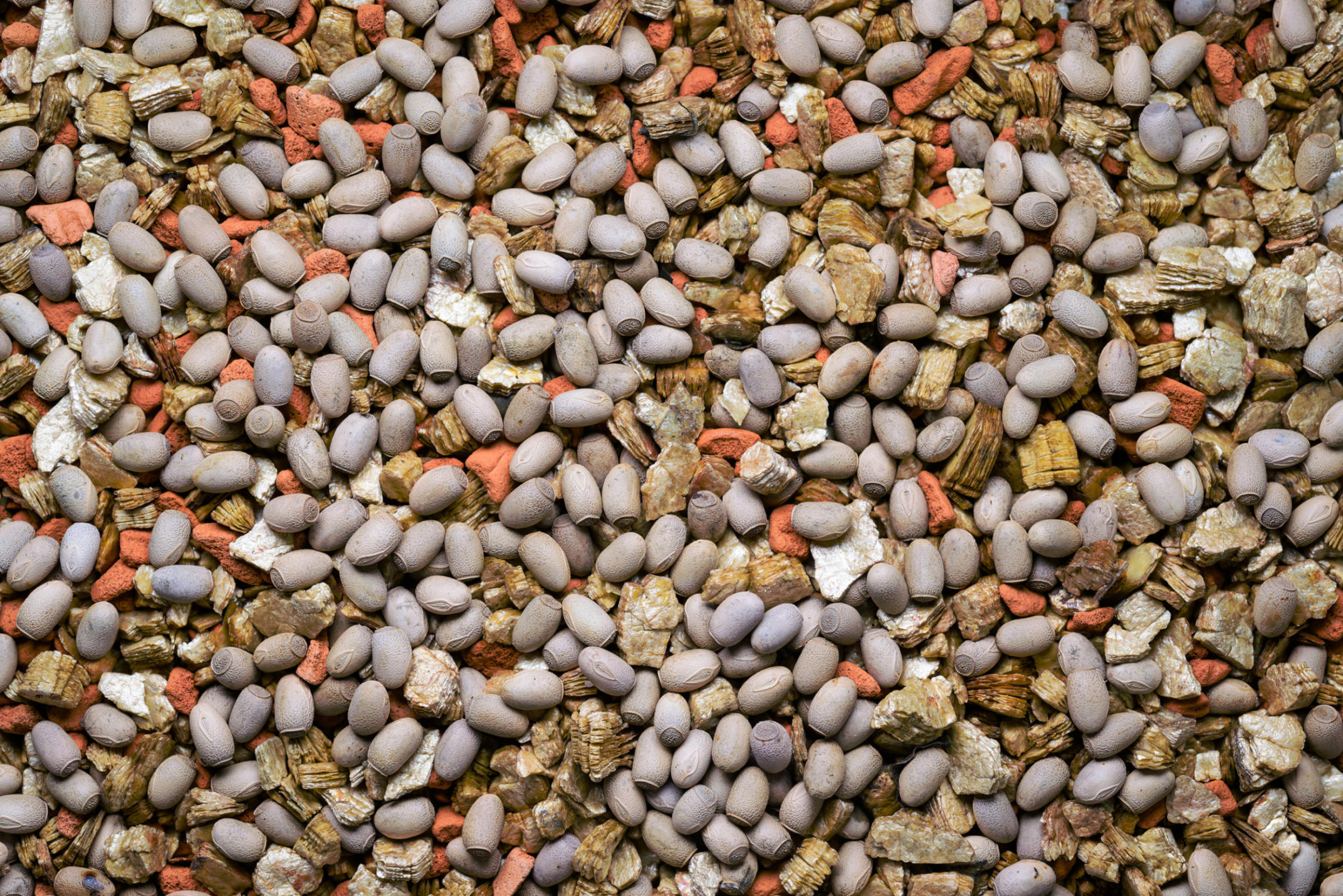
Grey tree lobster eggs in a mixture of beige vermiculite and brick-coloured Seramis. The latter component—a clay granulate popular among gardeners—allows breeders to assess the moisture level of the substrate with the naked eye. Photo: Petr Hamerník, Prague Zoo
The tree lobster can grow up to 15 centimetres long when fully grown. It was once common on Lord Howe Island, which lies in the South Pacific, about 700 km north-east of Sydney. Then, in 1918, a steamer ran aground on the reefs, releasing rats. That was the beginning of its decline. Within two years, it had disappeared from the island.
In the 1960s, a group of Australian adventurers set out to climb Ball’s Pyramid, the world’s tallest sea stack, which rises from the ocean about twenty kilometres off Lord Howe Island. They didn’t manage to do so, but they did discover the corpse of a giant insect on the seemingly inhospitable rock.
It wasn’t until the start of the new millennium that the existence of the Lord Howe Island stick insect on Ball’s Pyramid was confirmed. These were the first live specimens to be seen by humans in over 80 years. Scientists then discovered a total of 24 individuals and, in 2003, four of them were collected as the basis for breeding in captivity. It is no exaggeration to say they were the rarest insects in the world.
Vojtěch Víta, who carefully plans the number of individuals hatched, went on to add: “Our current aim is not to hatch all the eggs that have been laid. We must not take on too much at once. We have to consider how many individuals we can feed. These stick insects are extremely fussy about their food. The holly oak, which grows in the temperate zone and is cultivated in the zoo for feeding purposes, does not grow fast enough to feed hundreds of nymphs in the new generation.”
Given the limited number of studies on breeding this species in captivity, Prague’s success represents an opportunity to contribute to international knowledge. Currently, breeders are monitoring factors that affect the hatchability of individual clutches or the length of the incubation period. These may include humidity or temperature, but also the manner of egg-laying. Some females laid their eggs directly into the offered substrate, while others did not use it when laying. Thanks to Prague Zoo monitoring and recording these processes, it fulfils one of its important roles—that of research in a modern zoo.
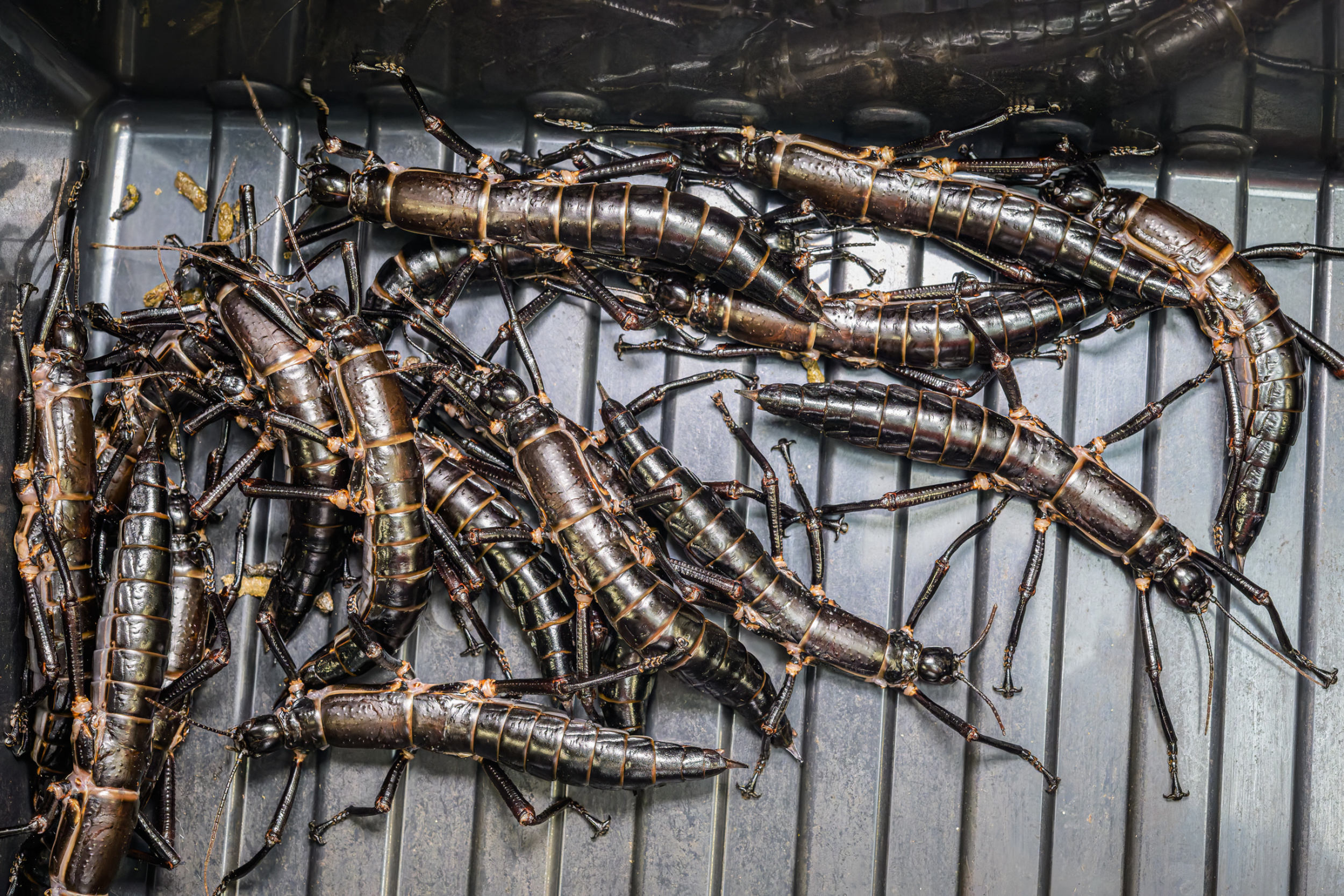
Just as they do in the wild, the adult tree lobsters at Prague Zoo also group together in shelters during the day. This possibly gives these giant insects a sense of security. They are usually active at night. Photo: Petr Hamerník, Prague Zoo
ZOOPRAHA.CZ
Contacts
- The Prague zoological garden
U Trojskeho zamku 120/3
171 00 Praha 7
Phone.: (+420) 296 112 230 (public relations department)
e-mail: zoopraha@zoopraha.cz
Others