Caracals Have Settled Down at Prague Zoo
27. 02. 2026
Lithe, powerful and incredibly agile. Visitors to Prague Zoo can now see caracals in the outdoor exhibition of the Feline and Reptile House. These active felines stand out thanks to their characteristic ear tufts. The new pair will hopefully follow on from the breeding successes of the past. After a hiatus of seven years, Prague Zoo is once again keeping this species, which roams the savannas of Africa and Asia.
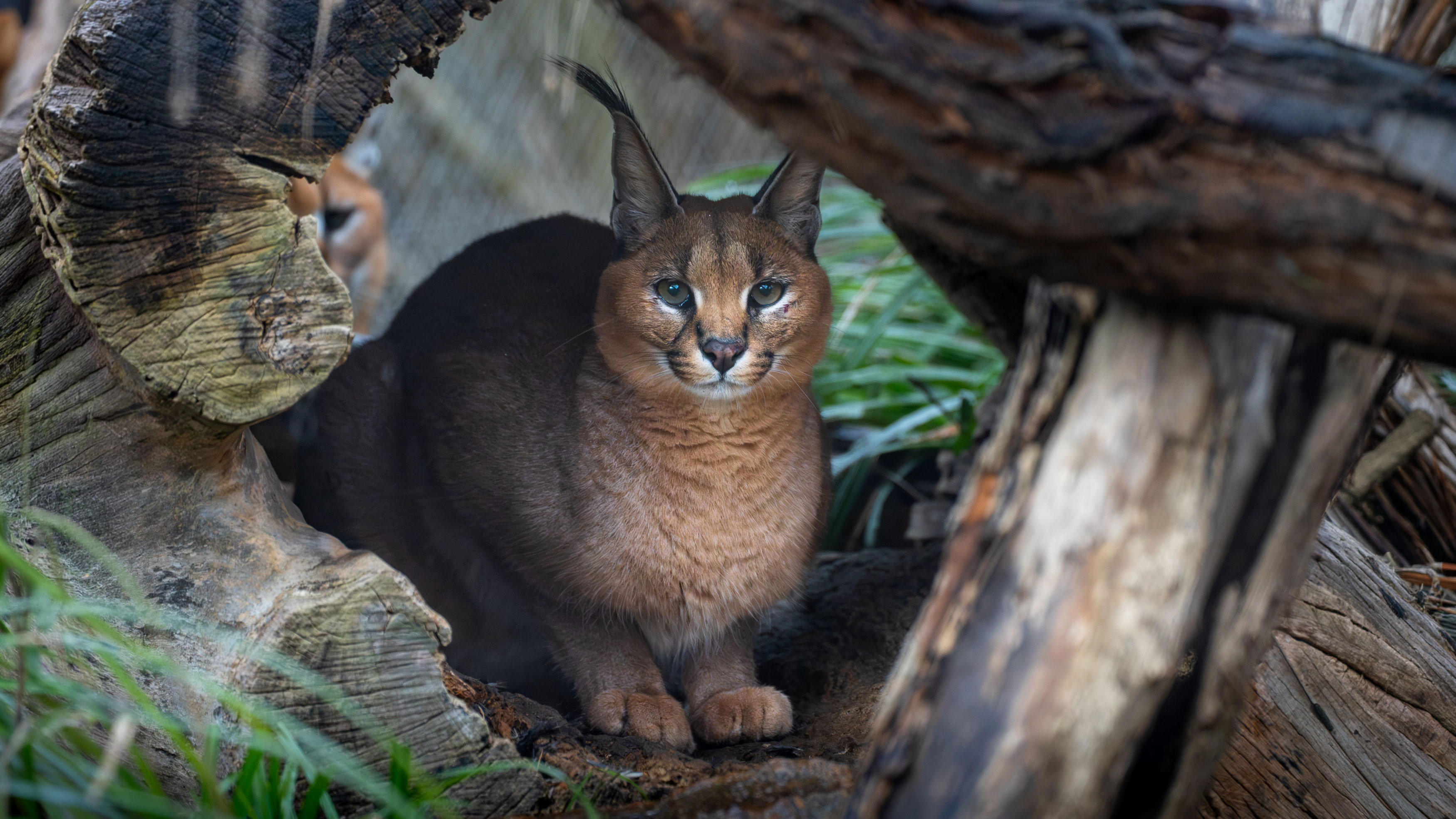
The caracal is one of the fastest cats of its size. Visitors can now observe it in the Feline and Reptile House next to the fossas. Photo: Oliver Le Que, Prague Zoo
Pavel Brandl, Prague Zoo’s curator of mammals, said: “We were deciding which species would be able to ‘get the party going’ in the exhibition left vacant by the Geoffroy’s cats. Although they successfully raised kittens, it was difficult for visitors to see them as they are quite small and the exhibition is almost 100 m². In the end, we returned to caracals, one of the reasons being that we have been keeping a pair in the off-show facilities for over a year.”
The caracal is a fast runner that excels in tough, rocky terrain and among jagged boulders. The soles of its hind feet are covered with hairy pads, allowing it to spring into action incredibly quickly. It can jump up to three metres and catch a bird in flight. Moreover, it also hunts rock hyraxes, which are difficult to catch. However, caracals, which weigh less than twenty kilograms, can sometimes take on prey twice their size.

While caracals’ ear tufts grow from the entire rear surface of the ear, those of Eurasian lynxes grow only from the tip. Photo: Petr Hamerník, Prague Zoo
Pavel Brandl went on to add: “Visitors love the distinctive lynx-like ear tufts. Despite this similarity, the caracal is not closely related to the lynx. In fact, it has more in common with the African golden cat.” The large ear tufts are used to detect prey and communicate with one another. Living in a dry savanna environment, the caracal has excellent water conservation, and its colouring allows it to blend in perfectly.
The caracals have returned to the same exhibit where three cubs were successfully raised in the past. With any luck, the young pair could soon breed as well. After giving birth, the female usually raises the cubs in an abandoned porcupine burrow or in a cave. After roughly five months, the cubs develop their permanent teeth and begin to become independent from their mother, although siblings may stay together for several more months.
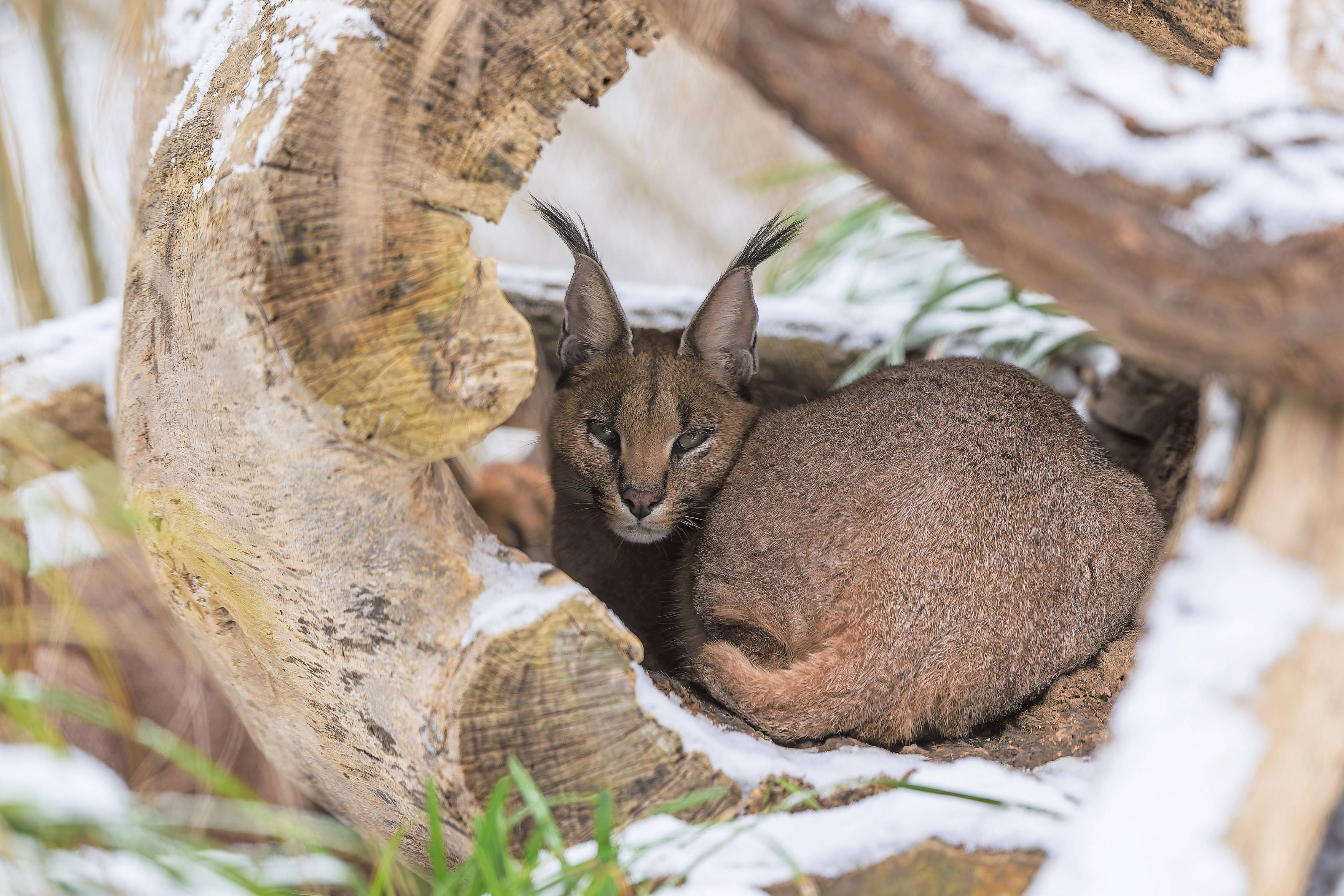
Caracals used to be found across southern and western Africa and all the way to western India; nowadays, their range is more limited. They are often considered pests by farmers. Photo: Petr Hamerník, Prague Zoo
Menu
Social networks