



Biggest Transport Since Project Began: Czech Bison Flown In To Azerbaijan
European bison from Prague Zoo and Olomouc Zoo have made it to Azerbaijan. They will strengthen the population reintroduced into the Shahdag National Park. What’s more, the original four females are now five—whilst waiting for the transport, which was delayed due to the risk of foot-and-mouth disease, a Prague cow gave birth to a calf. Last week’s transport, organized by Tierpark Berlin and the German branch of the World Wide Fund for Nature (WWF), was the largest of its kind. In all, eighteen animals headed to the foothills of the Greater Caucasus Mountains: twelve bison from German, Austrian, Hungarian and Czech zoos and six from the Rothaar Mountains.
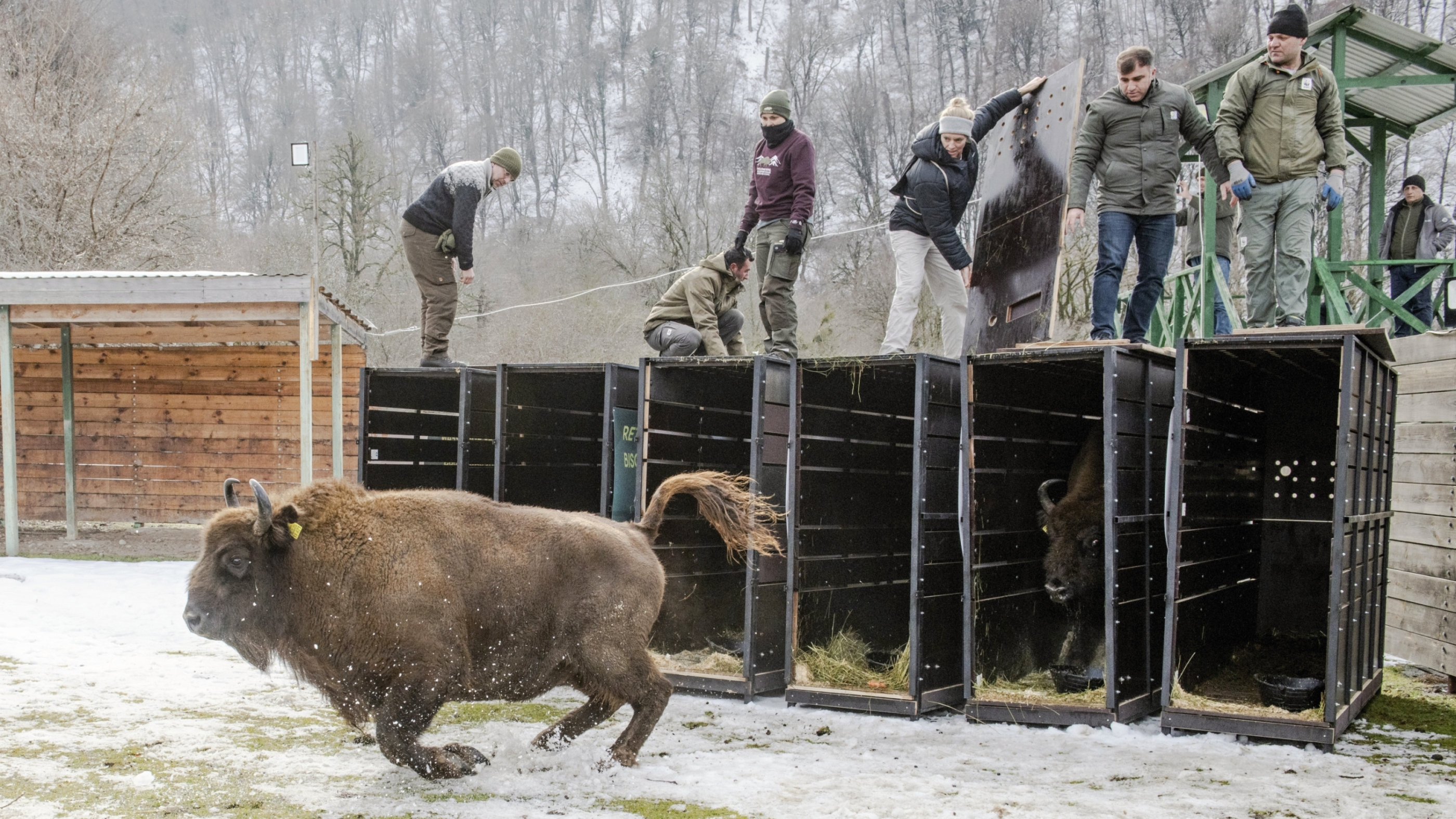 Releasing bison into the acclimatization enclosure. Photo: Emil Khalilov, WWF
Barbora Dobiášová, Prague Zoo’s curator for ungulate breeding, said, “The zoos’ cooperation was essential. Without it, we would not be able to carry out such projects, let alone even think about them. I am glad that the Czech Republic has also left its mark on this international initiative. One from us in Bohemia and one from our colleagues in Moravia. Besides transporting the animals, we are also contributing to spreading awareness about zoos as key institutions for nature conservation.”
The coordinator of the European Breeding Programme (EEP) for European bison, based in Berlin, was charged with choosing the specific individuals. This primarily involved taking into account each bison’s age, health and genetic suitability. The animals were transported to the German capital in 2024. This meant they had the opportunity to get to know one another before the trip. Berlin Zoo coordinated the air transport, on a Boeing 777F cargo plane that flew from Frankfurt to Baku. They were then taken overland in lorries to the Shahdag National Park.
Christian Kern, Berlin Zoo’s zoological director, said, “Prior to such a transport, every step—from choosing the animals, carrying out medical examinations to preparing for and undertaking the journey—requires expertise in veterinary medicine, wildlife management and logistics. We accompanied the bison for the entire time, right up until they had safely arrived in the national park.”
On Wednesday last week, the bison were released into an acclimatization enclosure. For now they will get used to the local conditions. After that, they will head into the wild, i.e. into the park’s vast deciduous forests. Shahdag National Park was established in 2006 and, with 130 thousand hectares, is the largest in Azerbaijan and the Caucasus as a whole. The reintroduction centre lies in its eastern tip and was set up in 2018.
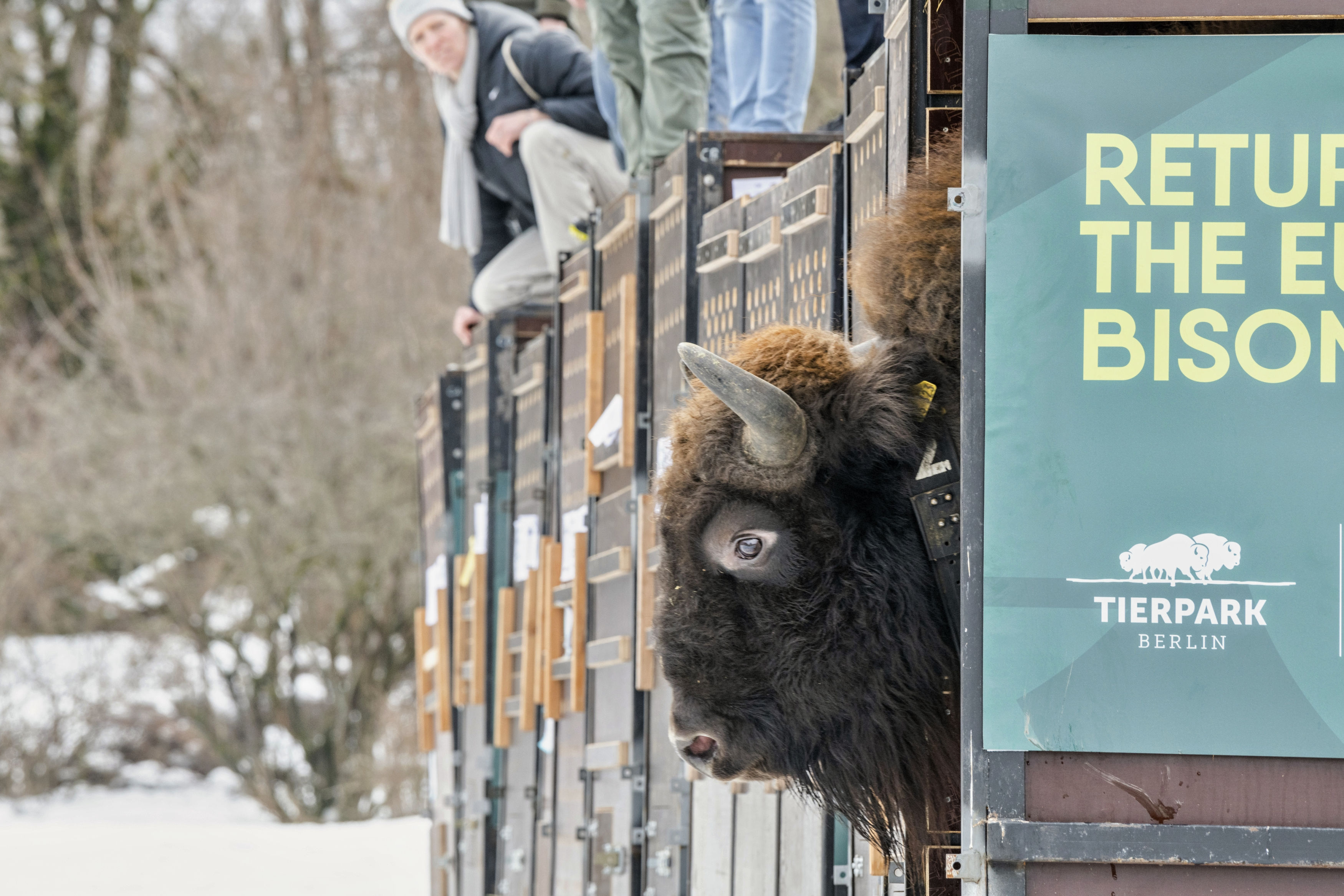
The head of one of the three bulls. Photo: Emil Khalilov, WWF
The Return of the Bison to the Caucasus project began the following year and so far 64 bison have been transported to Azerbaijan. They are breeding and last year alone nine calves were born there. This brings the total number of these ungulates in Shahdag to around 90. The project aims to create a self-sufficient bison population in their original habitat. A hundred years ago the Caucasus was the last refuge for bison.
Zeynab Khalilova, the WWF Azerbaijan Project Manager, said,“After a century of being extinct, the return of the bison holds a special significance for our region. Local communities, schools and visitors are all getting involved in our work and experiencing at first-hand how ecosystems work and the role endangered species play in them.”
The only reason European bison, also known as Wisent, have survived to this day is thanks to the efforts of zoological institutions. In the 1920’s they became extinct in the wild. This led to European experts setting up the International Society for the Preservation of the Wisent. Its first output was the European bison studbook. At the time, it was the first studbook for a wild animal species in the world (interestingly the second stud book was for the Przewalski's horse in 1959). Its first edition, published in the 1930s, registered the last 56 living individuals. Since then, bison numbers have been rising.
1952 saw the first release of bison into the Białowieża Forest and their successful return to the wild has continued in a number of European countries. They currently live in ten European countries. In total, there are over 2,800 bison in the wild. Several thousand more live in game reserves, fenced pastures and zoos. The European bison’s current status on the IUCN Red List of Threatened Species is “near threatened”.
Prague Zoo first started breeding bison in 1948. Since then over a hundred calves have been born here. Apart from the zoo’s grounds in Troja, it is also possible to see them in the enclosure in Prague’s Dolní Počernice district. Prague Zoo has long provided bison for reintroduction, not only to strengthen the Caucasian population, but also for the Bieszczady National Park in Poland.
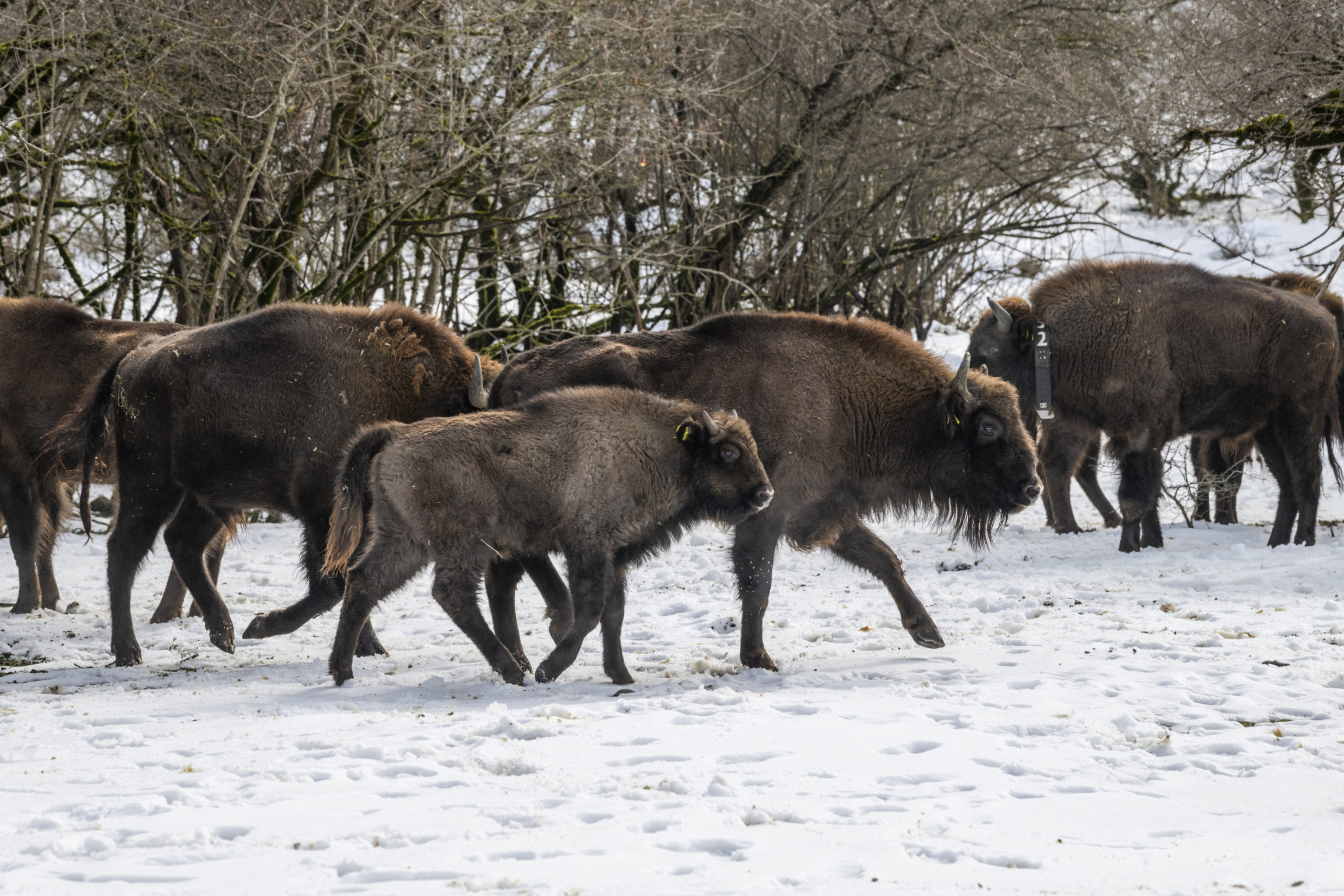
The bison herd takes its first steps in the acclimatization enclosure. Photo: Emil Khalilov, WWF
ZOOPRAHA.CZ
Contacts
- The Prague zoological garden
U Trojskeho zamku 120/3
171 00 Praha 7
Phone.: (+420) 296 112 230 (public relations department)
e-mail: zoopraha@zoopraha.cz
Others