



Prague Zoo’s Top Ten for 2025
Prague Zoo is in its 94th year. It has been a year that has seen the successful breeding of almost two hundred species, some of which were the first to be bred in Europe. It was also a year of fantastic visitor numbers and huge public support. We opened exhibitions both inside and outside the zoo, we have started breeding new species whilst continuing our regular animal breeding programmes, and, working closely with the Czech Army and other partners, we have transported more Przewalski’s horses to the wilds of Kazakhstan.
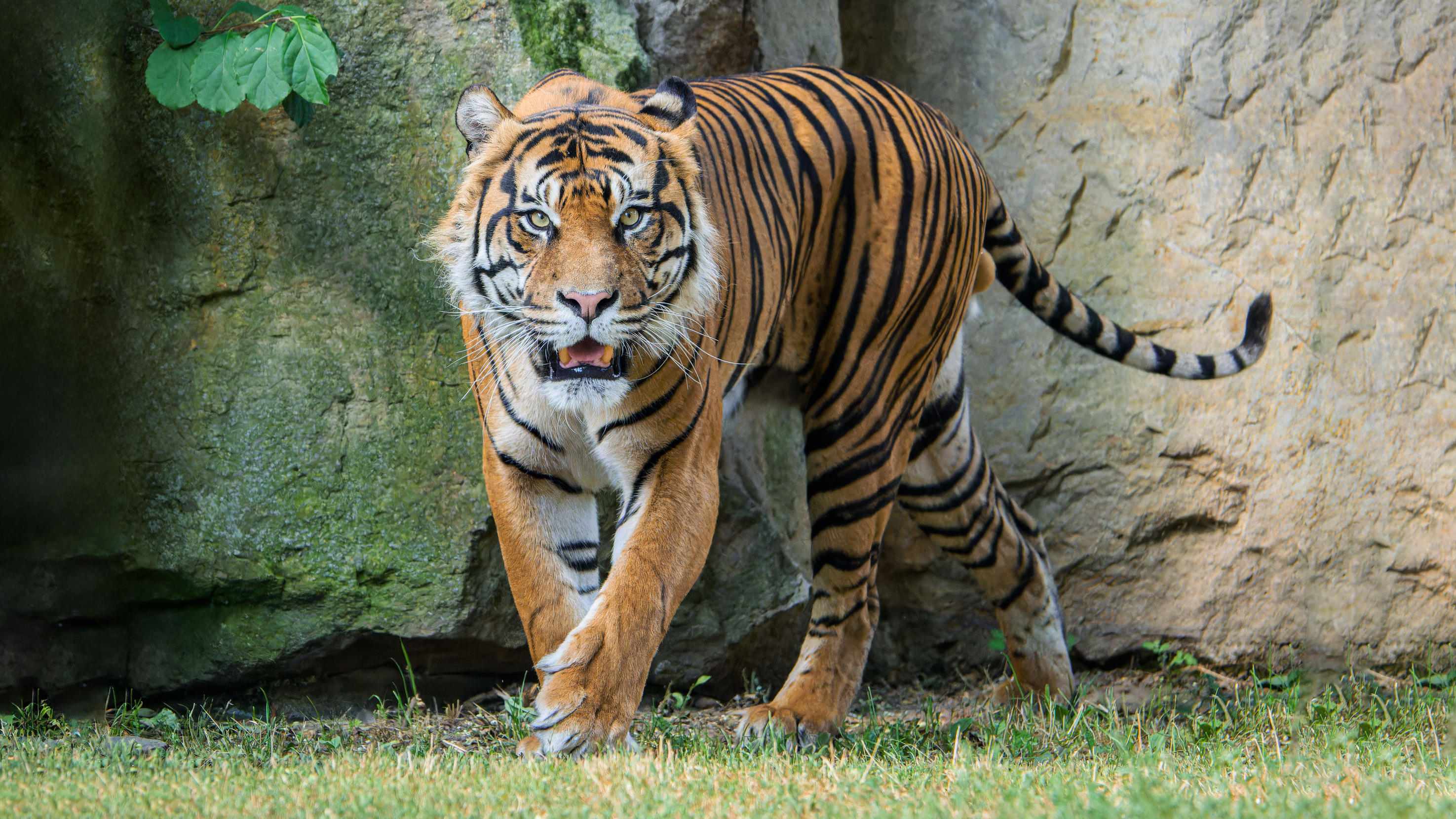 Achilles the Sumatran tiger shortly after his arrival to Prague. Photo Petr Hamerník, Prague Zoo
Let’s take a look at the Top Ten highlighting Prague Zoo’s greatest successes and the most important moments of 2025.
The Rarest Duck in the World
Last January, Prague Zoo’s team, headed by bird curator Antonín Vaidl, bred one of the planet’s rarest waterfowl, the Brazilian merganser. This was the first time this species was hatched outside of its South American homeland. It has a very fragmented population in the wild - the best-known, although isolated, population survives in the Serra da Canastra National Park in the Brazilian state of Minas Gerais. Its total number is estimated at less than 250 birds, making Prague’s breeding success a feat of global importance.
Over the year, four of the five pairs that were imported showed nesting activity, with two of them successfully hatching chicks. The mergansers are currently overwintering in a warm enclosure. Once spring arrives they will once again be on display in the Bird Wetlands complex in the zoo’s lower grounds.
Many of the zoo’s feathered inhabitants did well: for instance we also celebrated the first time a second generation Palawan hornbill bred in Europe, the 18th rhinoceros hornbill to be born in captivity set a world record, and a number of other rare species from the bird kingdom, such as the southern screamer, the hooded vulture, Pel’s fishing owl and the pink pigeon, also managed to reproduce.
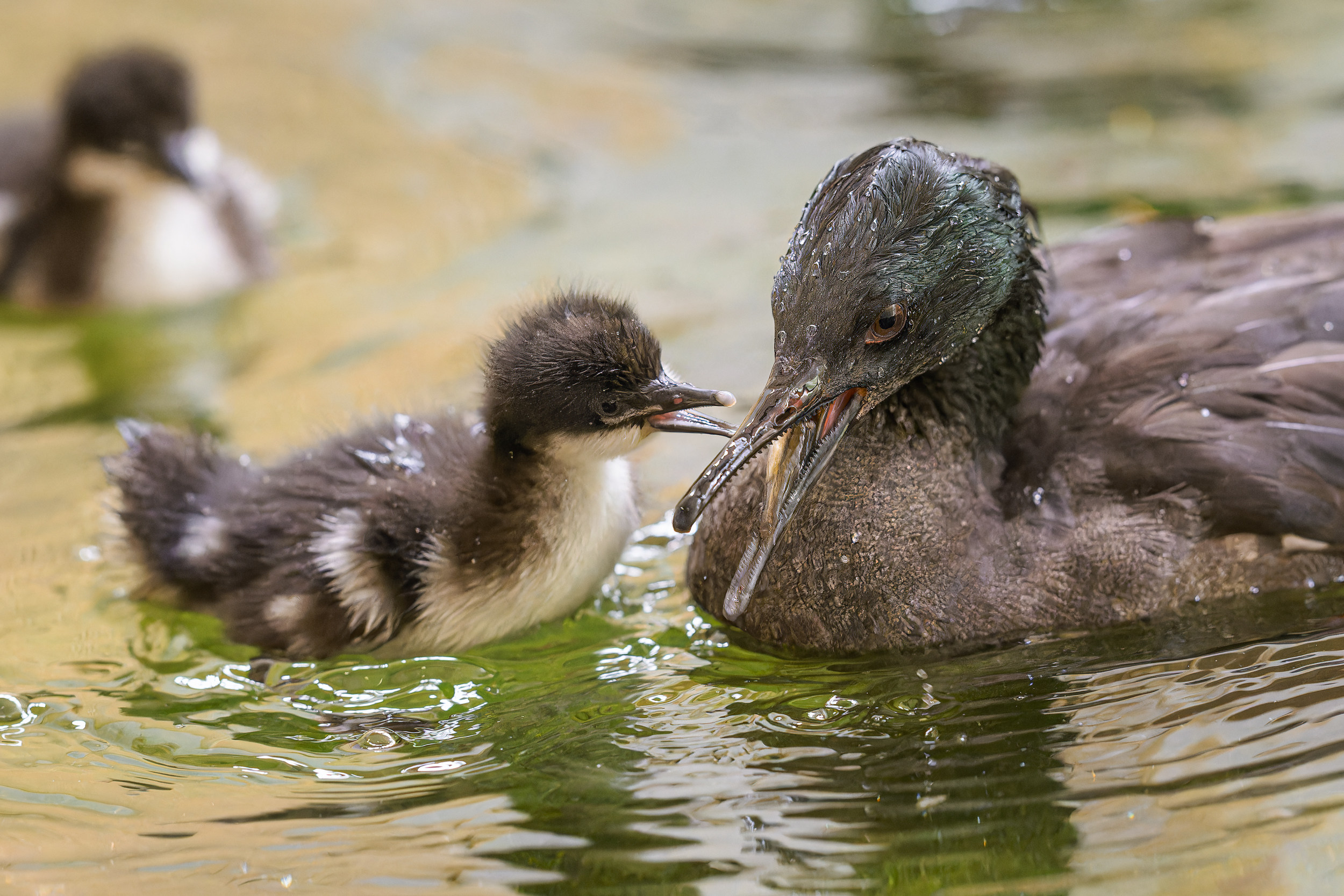
The contrasting colouring of the chick next to one of its parents. Photo: Petr Hamerník, Prague Zoo
Bornean River Turtle Mystery Solved
Last September, Prague Zoo hatched the critically endangered Bornean river turtle. Thanks to a new incubation technique, the keepers did not have to help the small turtles out of their eggs. These freshwater giants have an exceptionally hard shell. Coupled with intraspecific aggression, it makes breeding them incredibly difficult, with a number of European institutions having given up. However, Prague’s reptile curator, Petr Velenský, and his team persevered and last year they were rewarded with five young that hatched on their own, the first time ever in captivity.
In the wild, the Bornean river turtle most likely lays its clutch in the rainforest floor, which is very acidic, almost aggressively so. The thick shell protects the embryo, however, if the egg develops in the sterile environment of the zoo, it remains so strong that the tiny turtle cannot break through it. The eggs were thus placed in a mixture of vermiculite and peat, the acidity of which ate away at the shell during its 100-day incubation period, making it thin enough for the turtles to break through.
Prague Zoo acquired its first river turtle in 2001. It was from a confiscated shipment that was heading to the food markets of Asia. Prague Zoo is now coordinating the European Breeding Programme (EEP) for this species as part of the European Association of Zoos and Aquariums (EAZA).
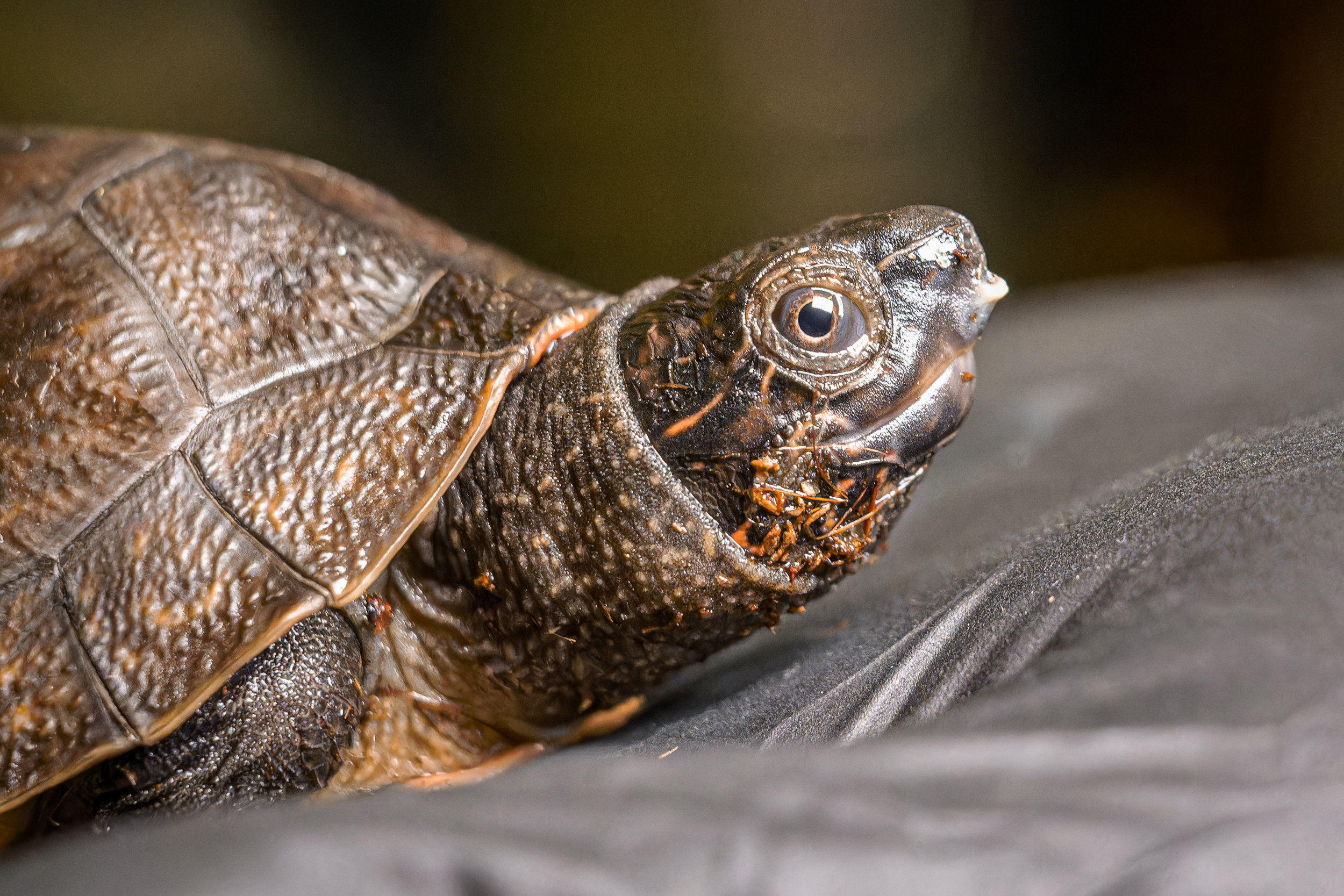
The egg tooth is clearly visible on the hatchling’s snout. Photo: Petr Hamerník, Prague Zoo
Hirsute Additions All Over the Garden
Last year Prague Zoo’s mammals held their heads up high as concerns reproduction. For the first time ever the red river hogs gave birth to a litter of piglets. Their antics in the Dja Reserve were comparable to those of Mobi and Gaia, the gorilla sisters in the neighbouring exhibition. These “Golden Pigs” were a joy to behold, especially at Christmas.
Prague Zoo also saw a surge in Przewalski’s horses. In addition to the two mares that were born directly in the Troja grounds, another four foals were also added to the enclosure at Prague’s Dívčí Hrady, and yet another addition was welcomed by the breeding station in Dolní Dobřejov. The seven Przewalski’s horses form an excellent basis for the planned transports to Central Asia. Similarly promising additions have been seen in the mountain bongo, a critically endangered antelope. The two males born in August will be a valuable contribution to the European population in captivity.
The exact date of birth for one of the most anticipated cubs of the year is unknown. However, we do know the date of hatching. This is the second “Czech” wombat joey, which is now watching visitors to Darwin Crater from the safety of its mother's pouch. As concerns mammal offspring in 2025, it is also worth mentioning the cubs of the jaguarundi, the tayra, the black and rufous elephant shrew, the western tree hyrax, Mechow’s mole-rat and the mantled guereza.
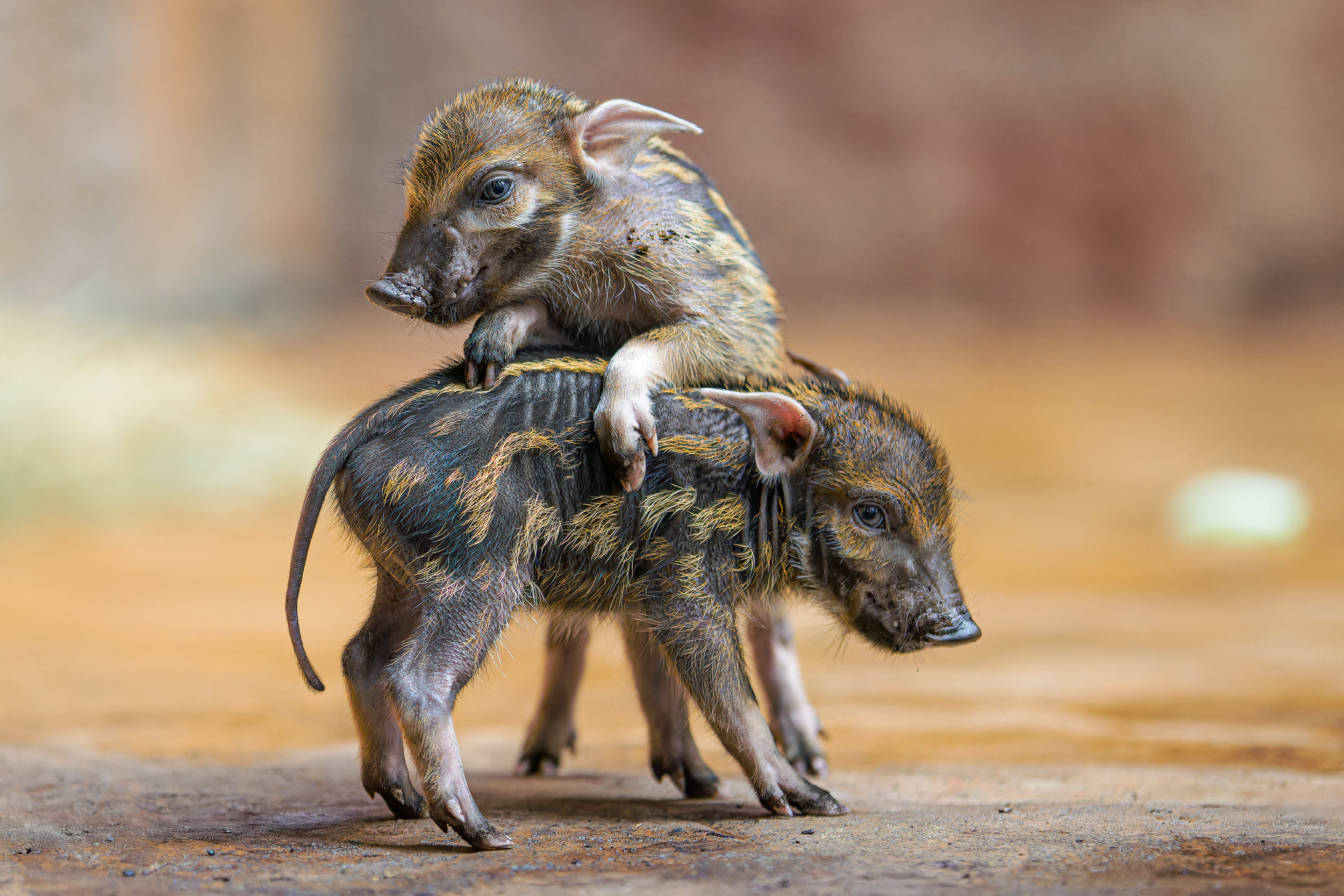
Red river hog piglets playing in the Dja Reserve. Photo: Petr Hamerník, Prague Zoo
Lord Howe Island Stick Insect Breeding
In March 2025, we were the only zoo in continental Europe to present the critically endangered Lord Howe Island stick insect to the public. Also known as the tree lobster, it is the largest flightless insect in the world. The animal, which literally rose from the dead, inhabits the Ball’s Pyramid exhibit.
The tree lobster grows up to 15 centimetres. Just 110 years ago it was common on Lord Howe Island in the South Pacific, about 700 km northeast of Sydney. In 1918, the steamship SS Makambo ran aground on its reefs, thus introducing a population of black rats. This marked the beginning of the end for the tree lobster, in just two years it had become extinct on the island.
At the start of the millennium it was confirmed that the stick insects were alive on Ball’s Pyramid—the world's tallest sea stack, which rises from the ocean twenty kilometres off Lord Howe Island. They were the first living specimens to be seen by the human eye in more than 80 years! Scientists discovered 24 insects at that time. Returning in 2003, they removed two breeding pairs as the basis for breeding in captivity. It is no exaggeration to say that they were the rarest insects in the world.
Lord Howe Island stick insects are now on display at Prague Zoo. Dozens of individuals have been bred from the eggs the zoo received, and they are currently laying their own eggs.
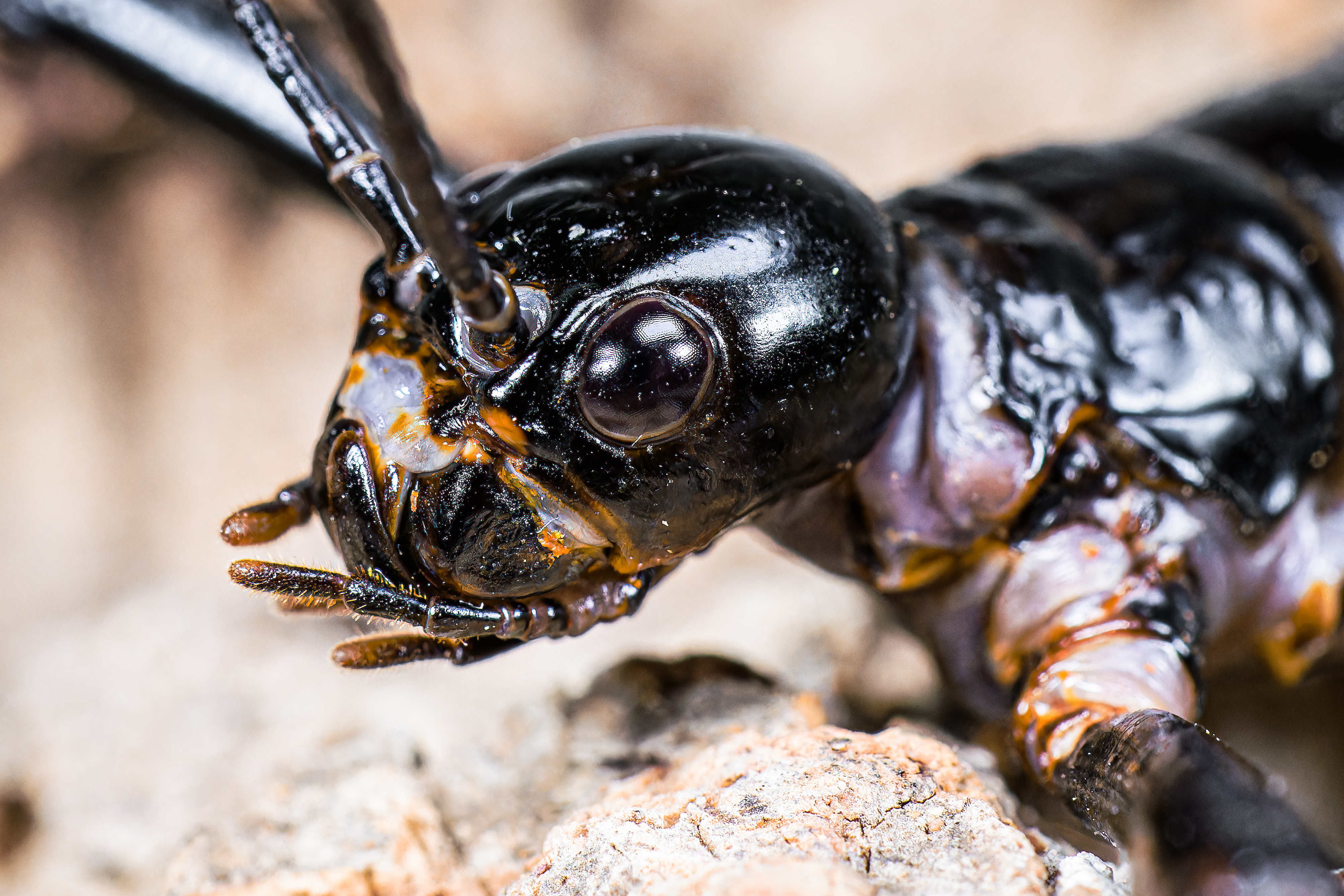
A close up of an adult from Prague's first generation. Photo: Petr Hamerník, Prague Zoo
Foundation Stone of the Arctic Exhibition
We are building a new home for polar bears! To mark Prague Zoo’s 94th season, the cornerstone of one of Prague Zoo’s most ambitious projects, the Arctic exhibition, was symbolically laid. A plaque with a polar bear motif by the world-famous illustrator Petr Sís was covered by an enormous ice cube. Visitors could break off small figures of polar bears from it. Each of the thousand bears had a chip that can be used as a ticket for the next visit. Our advice: keep the bear for good luck until the Arctic exhibition opens. It may well come in handy...
The Arctic exhibition will be located in the northern part of the zoo near the Gočár’s Houses. Spreading over more than 8,000 m2, it will give the polar bears first-class living conditions—large enclosures, pools, several types of surfaces and even a “bear maternity ward”, offering the female a quiet place to give birth and raise her cubs. Apart from polar bears, the Arctic will also be home to a group of harbour seals and will offer visitors a restaurant as well as many educational and gaming stations.
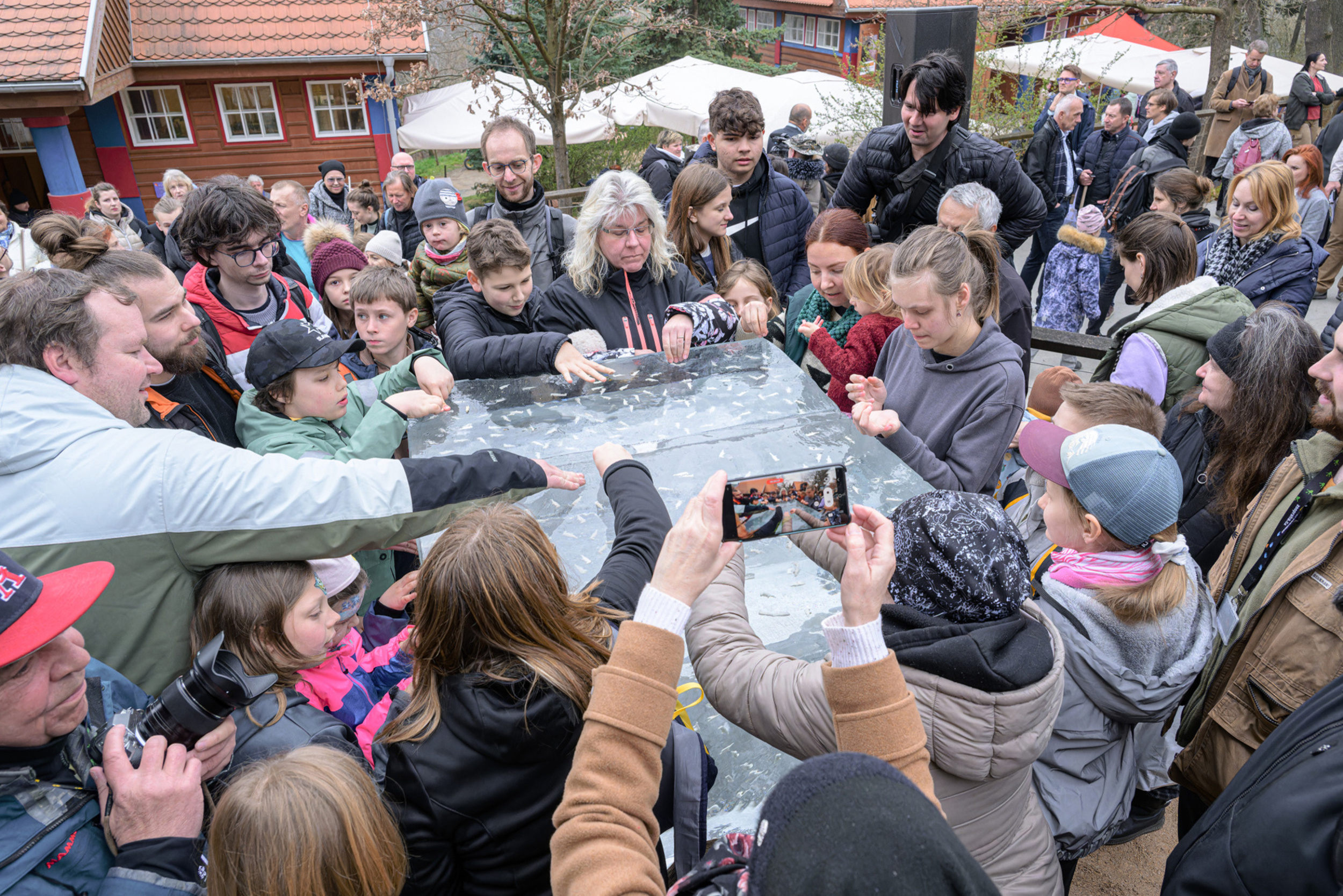
The frozen polar bear figurines garnered huge interest. Photo: Petr Hamerník, Prague Zoo
Bison in Dolní Počernice
“Bison in Prague”—thanks to Prague Zoo’s project, Europe’s largest land mammals made a home in Dolní Počernice last autumn. Three females and a breeding bull have inhabited a more than ten-hectare enclosure. Prague Zoo thus gained new breeding ground for this species that it has bred for many years. Despite this, the European bison almost became extinct in the last century.
Similar to the Przewalski's horses at Dívčí Hrady, the project also aims to revitalize the local ecosystem. By means of their grazing and browsing, the bison will help create and maintain a biotope that will provide suitable conditions for many other plant and animal species.
Prague City Hall, the Dolní Počernice district, and the Academy of Sciences of the Czech Republic are all working closely with us on the project. Last year’s release of the bison into the enclosure was the result of many years of cooperation and exacting preparation. This makes us all the more pleased when we receive messages from local residents about how proud they are of “their” new hoofed neighbours.
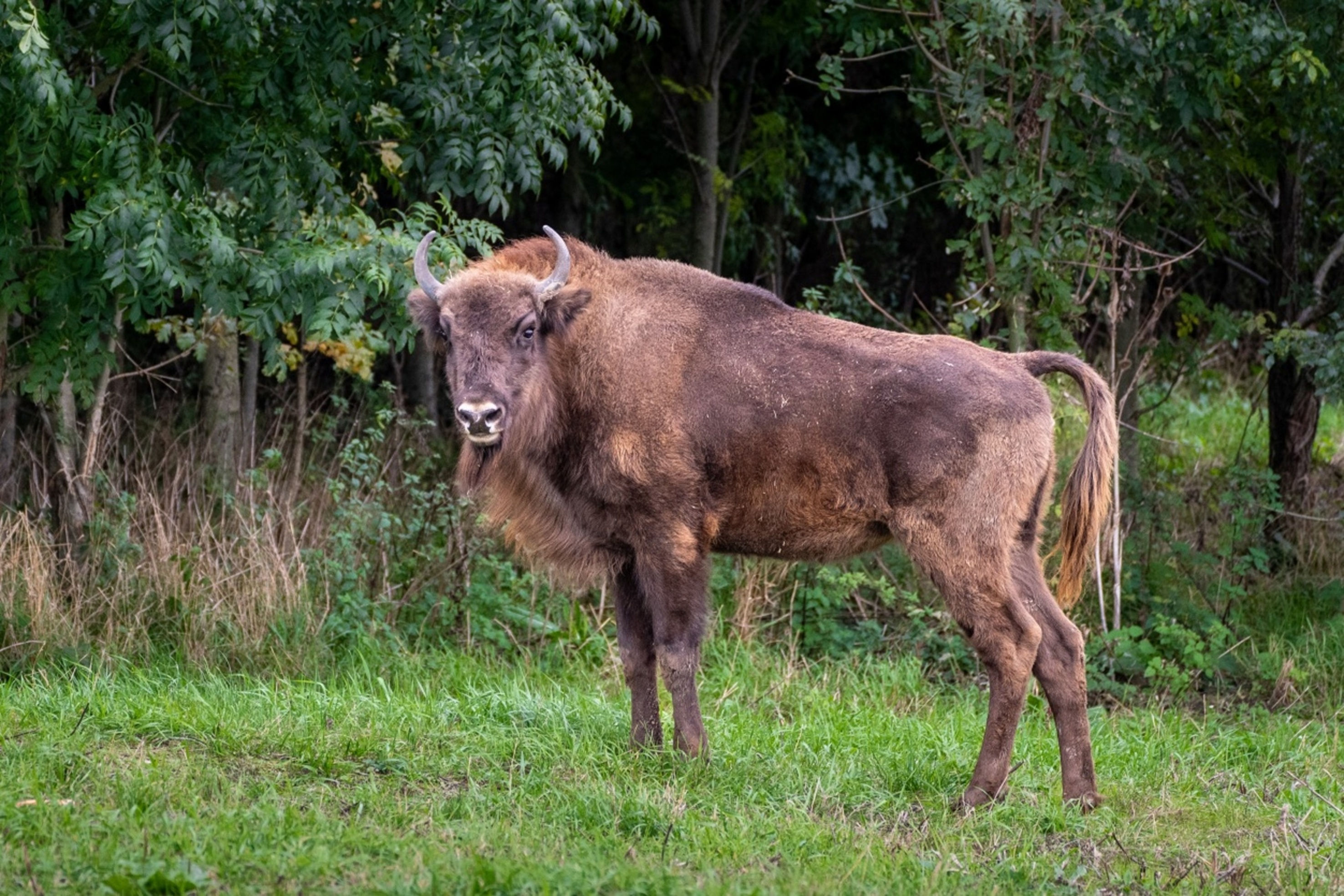
Omega a two-year-old female in the enclosure in September. Photo: Oliver Le Que, Prague Zoo
Przewalski’s Horses Transported to Kazakhstan
Prague Zoo, together with its partners in the Return of the Wild Horses project, released seven more Przewalski's horses into the Golden Steppe in central Kazakhstan. In cooperation with the Czech Army we transported, one stallion and six mares that had come from Prague and Debrecen, Hungary.
The stallion Galvan and the mares Grâce and Zina II first travelled from the breeding station in Dolní Dobřejov to Prague-Kbely Airport. From there a CASA military aircraft flew them to Arkalyk, Kazakhstan. The second Czech aircraft had the mares Csardas, Cili, Bűbaj and Celeb, which had come from the Hortobágy National Park, and transported them to the same location. After landing, both transport teams had a joint, eight-hour journey through demanding terrain to the Alibi reintroduction station. After more than 30 hours of travelling, all seven horses were fit and well and were released into the acclimatization pens.
Last year's transport went down in Prague Zoo’s history as one of the most demanding. Originally it was planned to take eight horses to the Golden Steppe in June. However, on the way to the airport, the stallion, Wisky, literally kicked his way out of the crate and then out of the moving vehicle, on the Prague Ring Road! Thanks to the swift intervention of the keepers, veterinarians and the Czech Police, the incident was without injury. One happy outcome was that Wisky inadvertently gained a lot of publicity for the project.
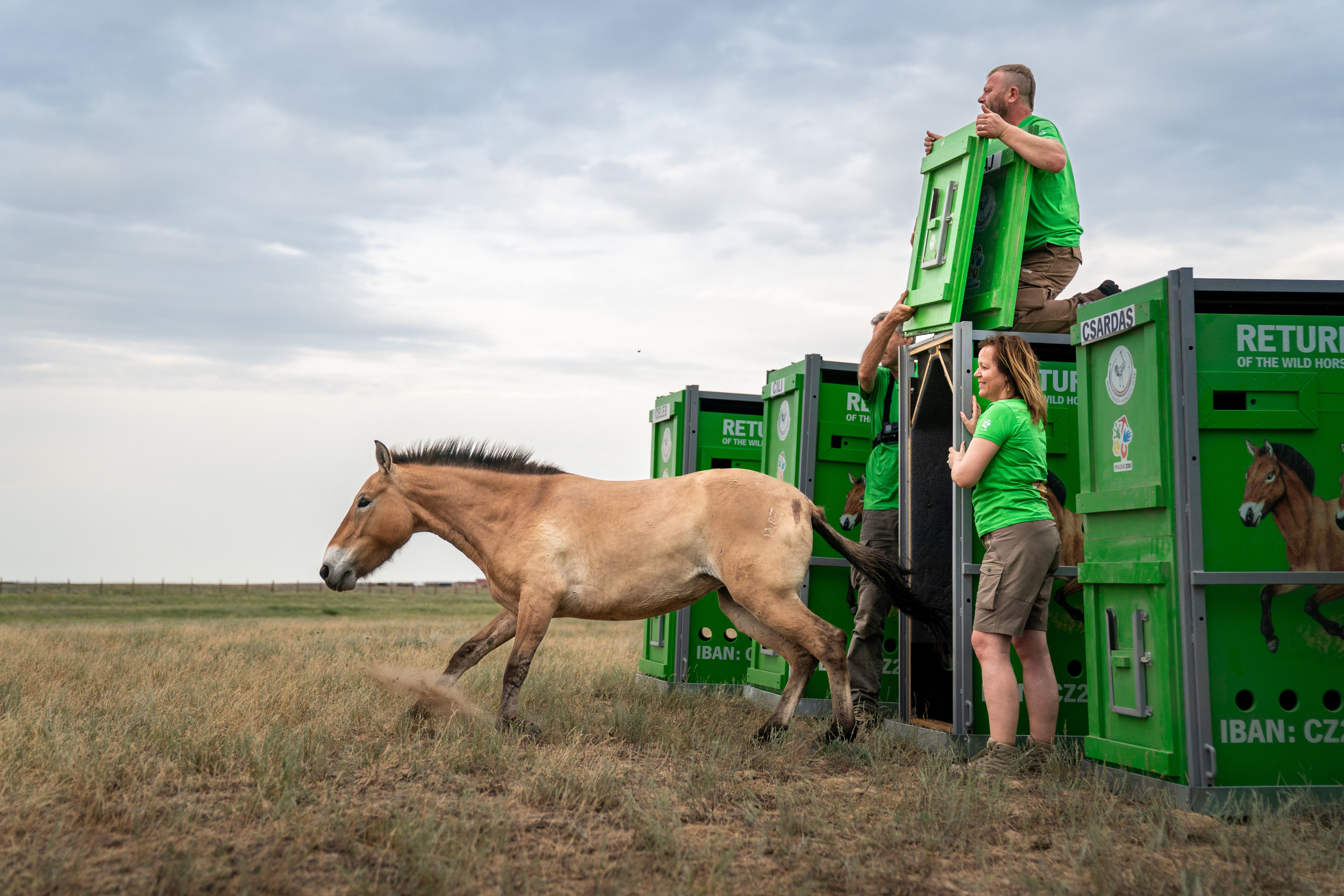
Bűbaj, a mare, being released into the acclimatization pen. Photo: Oliver Le Que, Prague Zoo
Welcome, Oslo! Welcome, Achilles! Or New Blood
Last year saw the addition of several key individuals to the species kept at Prague Zoo. Two of them truly stood out. The first was a Cape fur seal named Oslo. The young male’s arrival de facto ended the era of the much-loved Gaston. This was mainly due to the need for genetic variability. Although visitors have been able to watch him as he settles into his Czech home since the summer, the teenage Oslo has not yet taken part in the popular sea lion performance. However, he is training with the keepers and, hopefully, in the spring he will join his harem of females. It is also hoped that at the training demonstrations he will dazzle us all with everything he has learned in Prague.
The second significant arrival was also a carnivore and a male. Achilles, a nine-year-old Sumatran tiger, arrived from England and his mission here is clear. He came to see Surya, a four-year-old female, with whom he could possibly father cubs. The London native is a charismatic beast - he likes to watch his surroundings from raised platforms and enjoys bloody ice lollies in the summer heat. However, his main goal is to be Prague’s hope that this critically endangered subspecies of tiger will reproduce.
The arrival of new specimens, among them crocodile monitors and northern caiman lizards, allowed us to renew the breeding of several other attractive animal species.
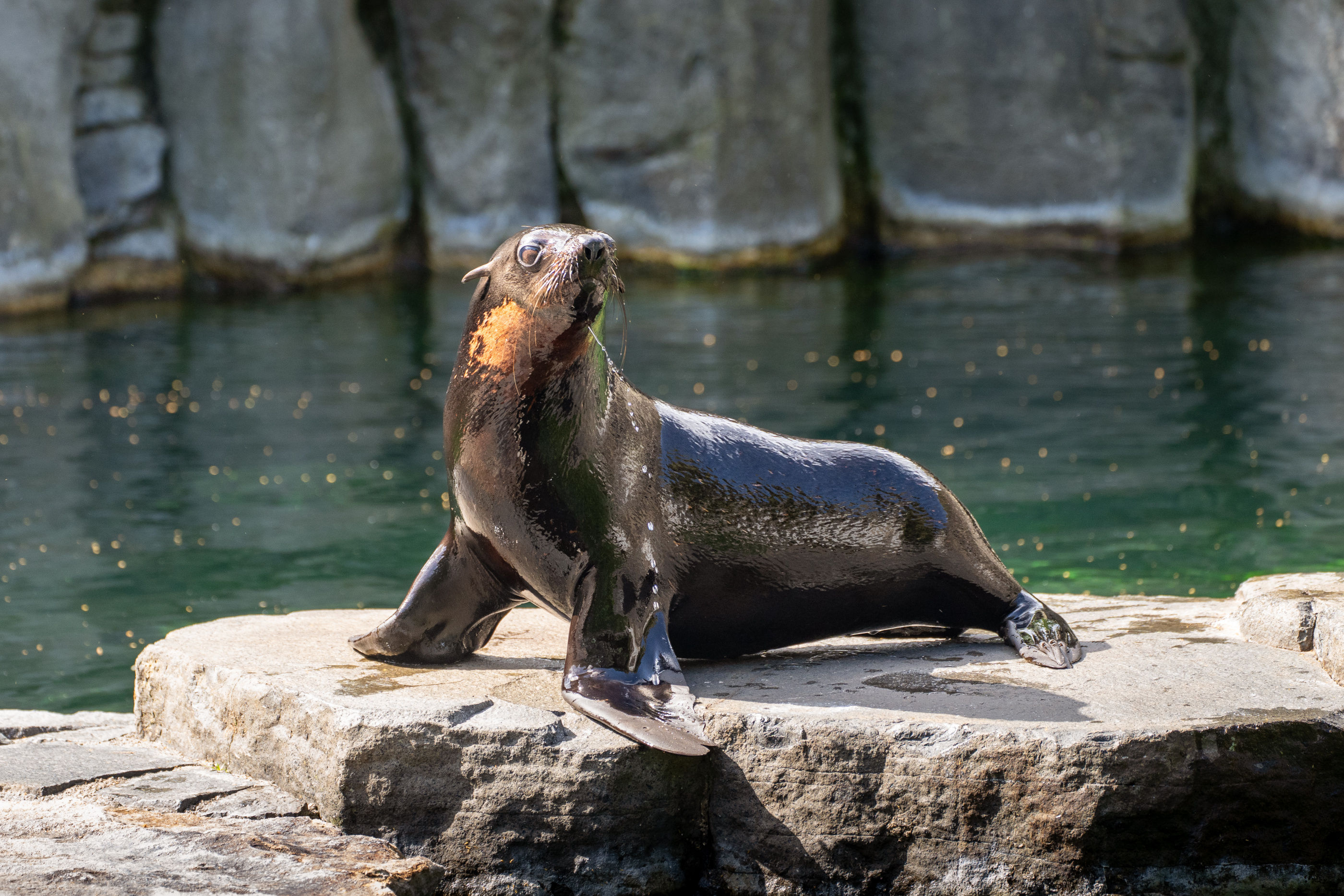
Oslo, a young male, came to Prague from Pairi Daiza, Belgium. Photo: Oliver Le Que, Prague Zoo
Stamps and 100 Pages
Don’t Miss This—that’s the title of the new brochure presenting Prague Zoo’s biggest attractions. All laid out in exactly one hundred pages. Not only is it a practical guide to the zoo’s grounds, but it also introduces readers to the zoo’s history and its breeding successes. The final section lists all the pavilions and important exhibitions one by one.
Apart from sumptuous photographs and an introduction to the animals, the book is full of interesting stats and behind-the-scenes info. Did you know, for instance, that the Indonesian Jungle has over 700 specimens from 60 species, or that the bears’ ice maker churns out 125 kilograms of ice flakes every hour? The brochure, packed with information, is available in the zoo’s shops and is an essential item in the collection of every Prague Zoo fan.
Last year, Prague Zoo's printed publications gleaned success on several fronts. The long-delayed issue of Prague Zoo’s Gazella, a professional journal, was published, and the zoo continued to publish its quarterly popular science magazine Trojský koník (Trojan Horse). Last but not least, we should also mention Prague Zoo Stars. This is the title of Czech Post’s limited edition of postage stamps bearing the faces of Prague’s famous gorillas.
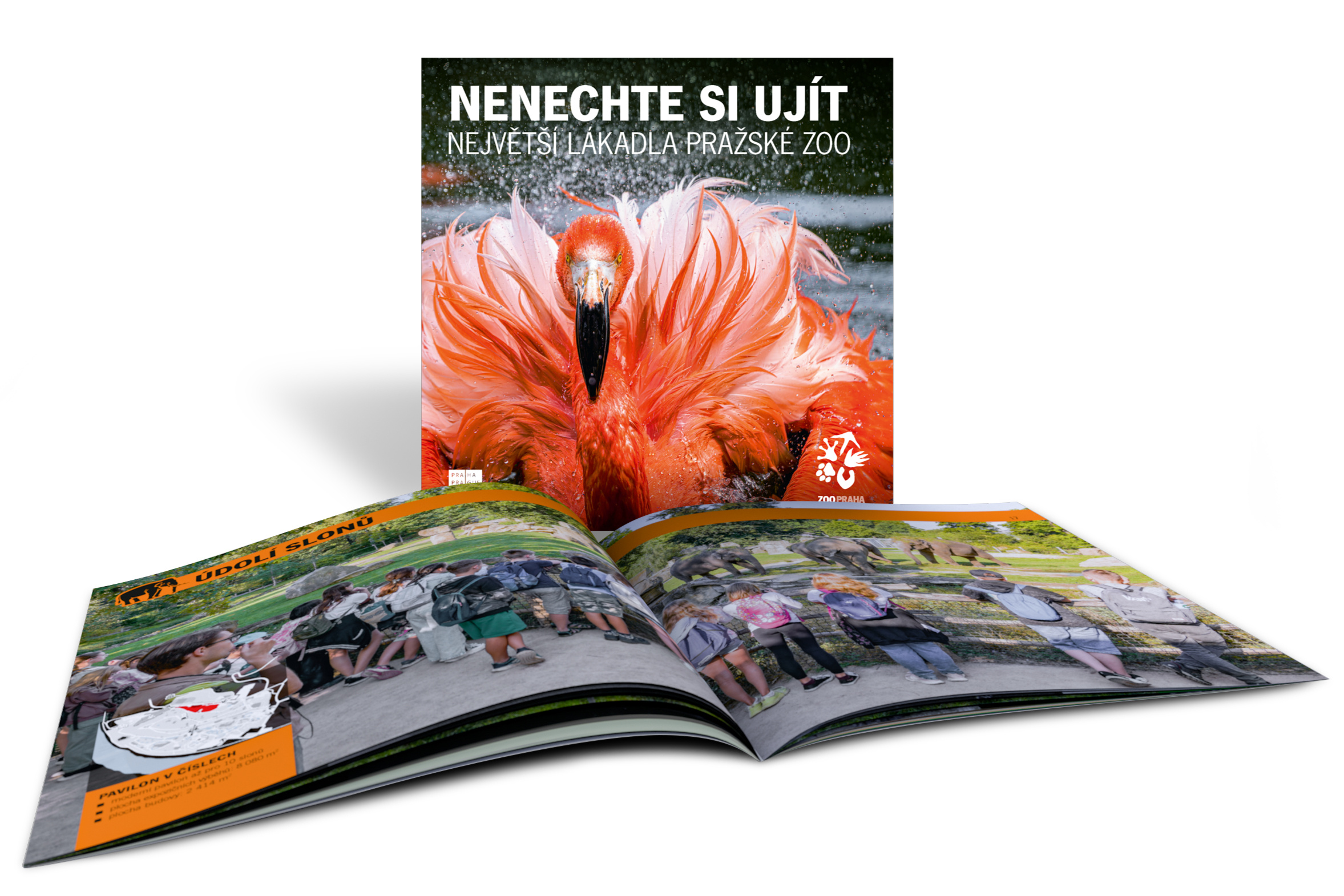
Don’t Miss This—that’s the title of the new brochure presenting Prague Zoo’s biggest attractions.
Fantastic Visitor Numbers
1,449,177 visitors! This was the enormous number of people that passed through the four entrances to Prague Zoo in 2025. As concerns visitors, this is the most successful year this decade. Moreover, it is the best figure since the COVID pandemic. It was just shy of the one and a half million mark. But this is no reason to hang our heads in shame, quite the opposite, we are delighted with such numbers, we are truly grateful and we undoubtedly take them as a stimulus to renew our commitment in the future.
To close with, here is some information from our visitor service department: August saw the most people come to Prague Zoo (an amazing 248,998 visitors), February saw the least (still a respectable 47,241). Statistically, Mondays were the weakest and Saturdays the strongest. An electronic ticket, which is much more convenient, was used by a record number of people. The zoo’s newest entrance, Sklenářka, also saw a record number of entries. In 2025 there were eighteen days where the number of visitors exceeded 10,000.
Once again we here at Prague Zoo would like to give a huge thanks to all our fans, supporters, well-wishers and friends and we wish everyone a successful and enjoyable year in 2026!
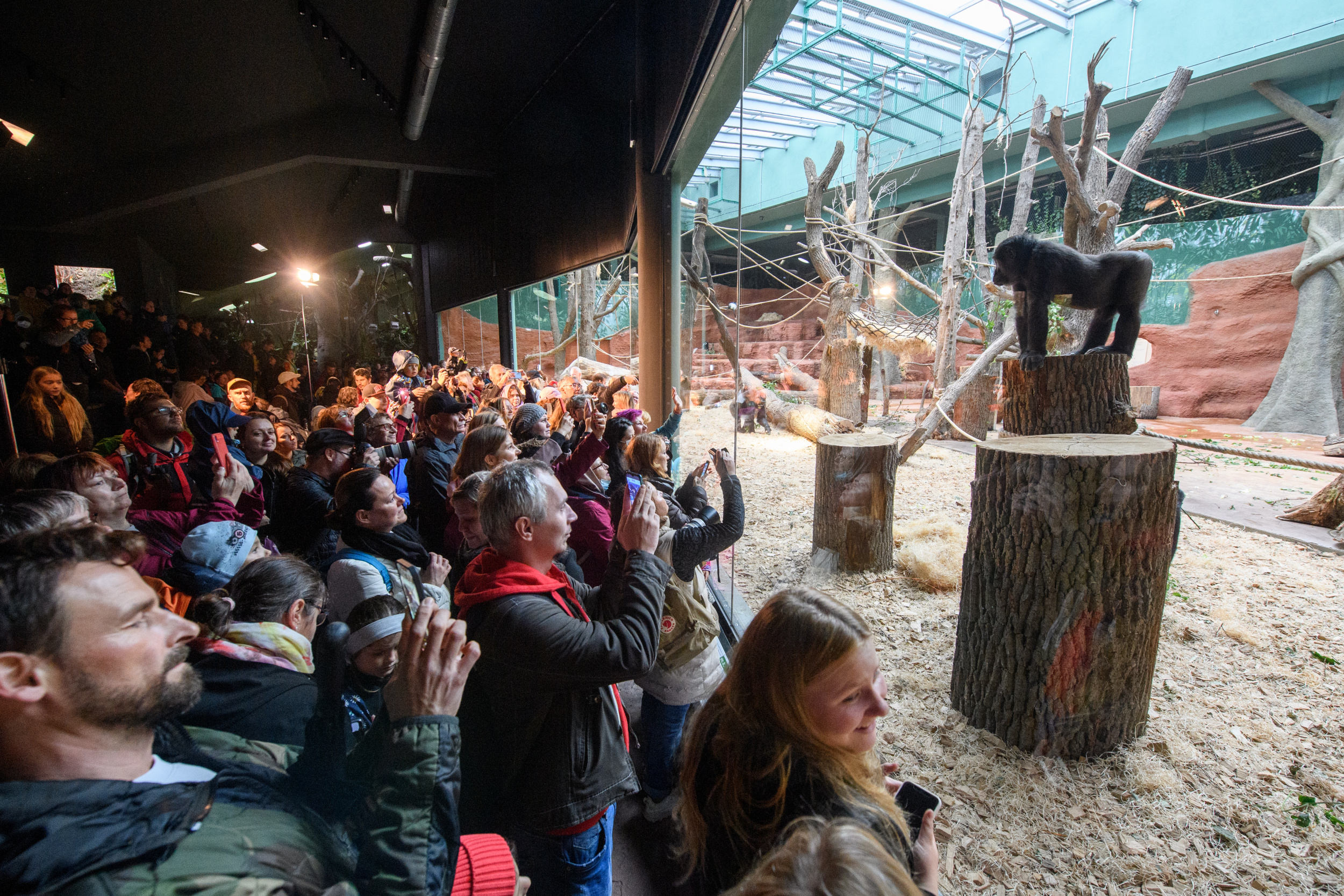
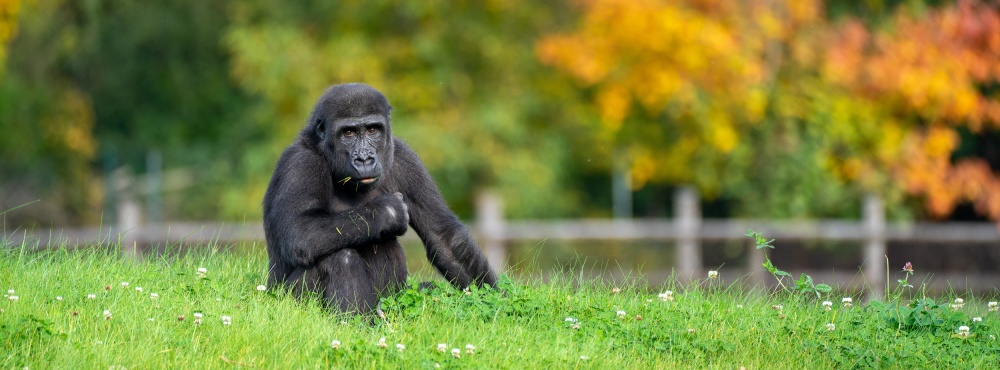
The two gorilla cubs in the Dja Reserve are highly alluring. Photo: by Khalil Baalbaki, Prague Zoo
ZOOPRAHA.CZ
Contacts
- The Prague zoological garden
U Trojskeho zamku 120/3
171 00 Praha 7
Phone.: (+420) 296 112 230 (public relations department)
e-mail: zoopraha@zoopraha.cz
Others