Five Bornean River Turtles Hatched Naturally at Prague Zoo
20. 11. 2025
Five critically endangered Bornean river turtles have hatched at Prague Zoo. Thanks to a new incubation technique, the keepers did not have to assist the hatchlings in breaking out of their eggs. These freshwater giants have an exceptionally hard shell and also exhibit pronounced intraspecific aggression. These are the two main reasons why several European institutions have abandoned efforts to breed them. However, the Prague team, led by reptile curator Petr Velenský, persevered, and the reward is five hatchlings that came into the world entirely on their own — a first. It is no exaggeration to say that the young turtles can be considered Prague Zoo’s “babies of the year”.
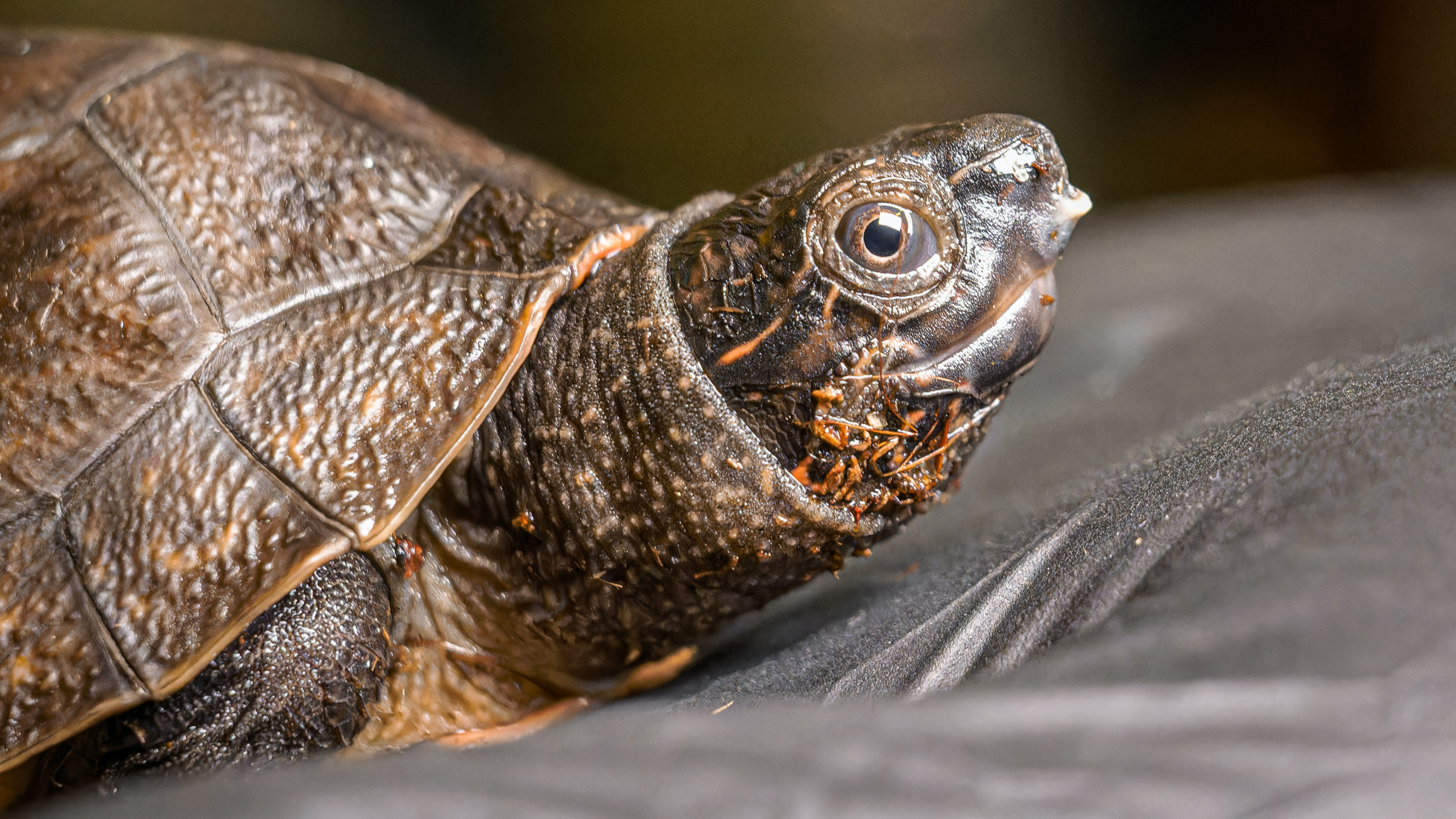
The egg tooth, used to break through the thick eggshell, is clearly visible on the snout of a young Bornean river turtle. Photo: Petr Hamerník, Prague Zoo
Petr Velenský, Prague Zoo’s reptile curator, said: “After almost a quarter of a century of effort, we have finally cracked the riddle of the Bornean river turtle’s extremely strong eggshell. We placed the eggs in a mixture of vermiculite and peat. The peat played a crucial role, as its acidity gradually weakened the shell during the 100-day incubation period. We also kept the substrate well moistened so that the acidic leachate remained in contact with the eggs.” He observed that in the wild, the turtles lay their eggs in rainforest substrate, which is highly acidic, even aggressively so. “The tough shell protects the young, but when the egg develops in a sterile environment, it becomes so strong that the turtle cannot break through it.”
Very little is known about the Bornean river turtle in the wild. The species lives a secretive life in deep lakes and rivers within primary forests in Malaysia and Indonesia. Due to habitat destruction, hunting for meat and egg collection, the river turtle population has declined by up to 80 per cent over the last three generations.
Prague Zoo acquired its first Bornean river turtles following the confiscation of a shipment of 10,000 turtles seized in Hong Kong in 2001. They had been destined for Asian food markets. Of the five turtle species that arrived in Prague from this seizure, the river turtle proved to be the most enigmatic, the most difficult to breed, and at the same time the largest.
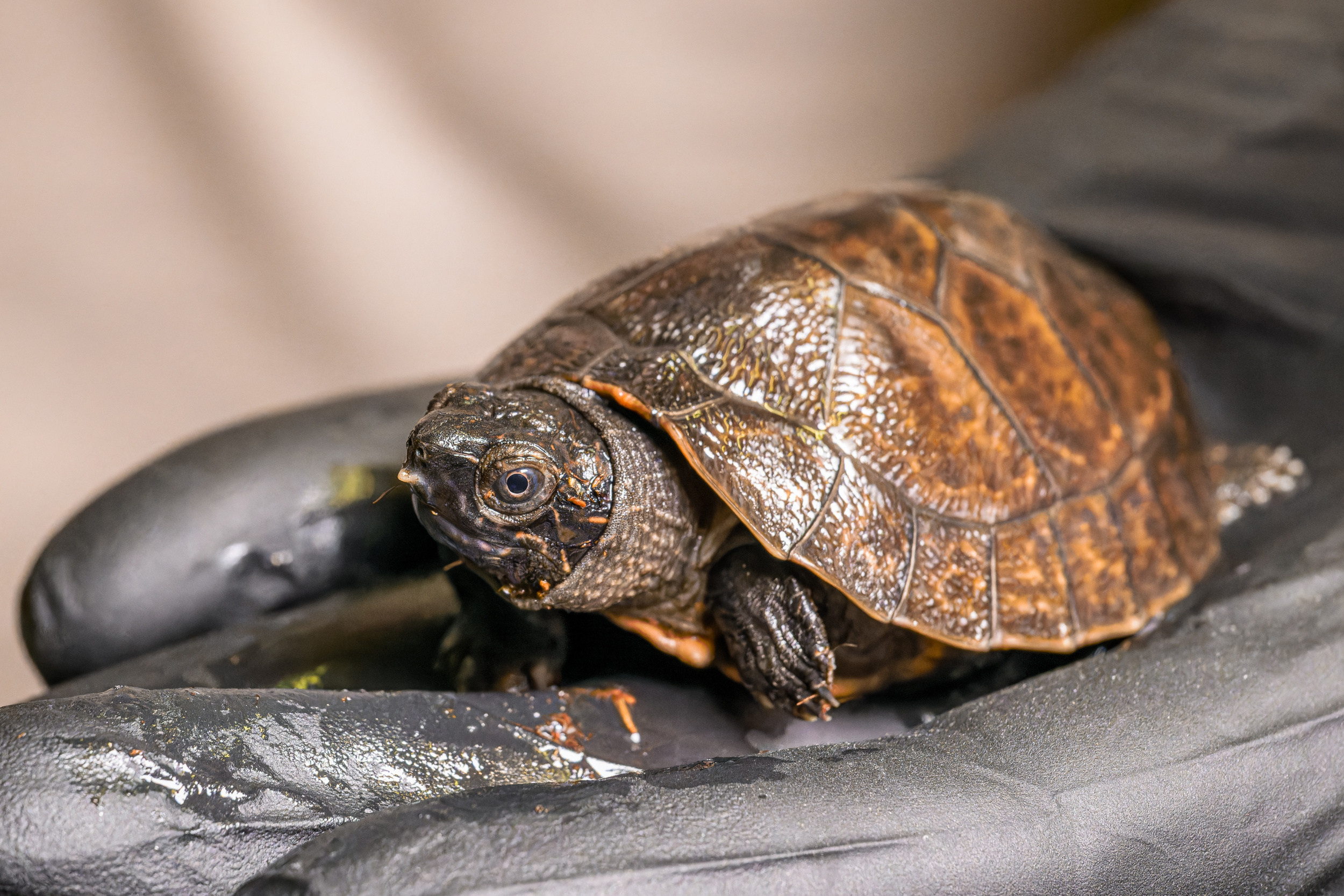
Young Bornean river turtles measure less than ten centimetres in length and weigh a few dozen grams. As adults, they rank among the largest freshwater turtles on the planet. Males can weigh up to 50 kilograms and reach a shell length of up to 80 centimetres. Photo: Petr Hamerník, Prague Zoo
Recalling those times, Velenský stated that breeding the species has brought a number of important scientific findings. “The Bornean river turtles were the toughest nut to crack. The animals were stressed, injured, had fishing hooks embedded in their necks that could not be removed, and we lacked the necessary materials to breed them. Their mutual aggression was confirmed soon afterwards; one male was nicknamed ‘Cut-throat’ after a lightning-fast attack on a female that had been introduced into the enclosure. It should be added that we managed to save the female.”
Another new finding was the pronounced sexual dimorphism, i.e. clear differences between females and males. While adult females weighed between six and eight kilograms, some males grew to as much as thirty kilograms. The keepers also clarified the species’ dietary preferences, about which very little had previously been known.
Over the years, the situation of the Bornean river turtle has deteriorated both in the wild and in captivity. Due to the aforementioned threats, the species was reclassified from Endangered to Critically Endangered on the IUCN Red List in 2018. At the same time, an increasing number of zoos ceased breeding these gigantic reptiles due to the challenges involved. As a result, the Bornean river turtle population declined rapidly, both in its native range and in European breeding centres.
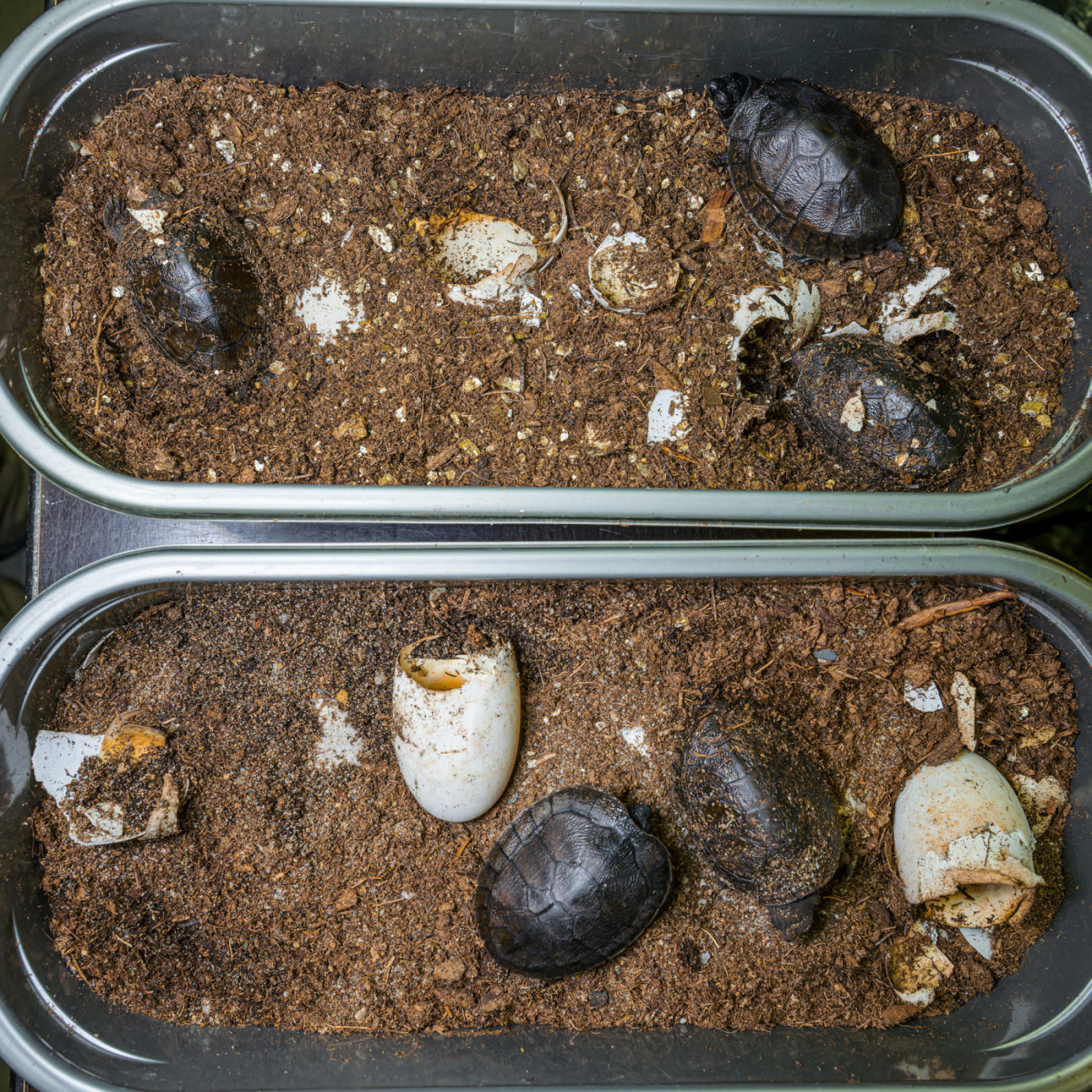
All five Bornean river turtles that hatched this year at Prague Zoo. The incubation box is also visible. Photo: Petr Hamerník, Prague Zoo
Velenský recalls his thoughts at the time: “If we don’t do it, who will? I had two occasions to reflect on this question while working with the species. The first was in 2002, when I was told that these volatile turtle colossi were practically impossible to breed. The second was at the end of the last decade, when it was uncertain whether the species would even survive in European zoos. In both cases, our efforts proved to be well worth it.”
Today, Prague Zoo coordinates the European Breeding Programme (EEP) for Bornean river turtles under the umbrella of the European Association of Zoos and Aquaria (EAZA). This year’s hatchlings are housed in the calm environment of Prague Zoo’s off-show facilities. Adult specimens can be seen in the water moat on the first floor of the Indonesian Jungle.
Prague Zoo’s milestones in breeding Bornean river turtles
- 2001: A shipment of 10,000 turtles confiscated in Hong Kong.
- 2002: Arrival of 27 Bornean river turtles from this shipment, most of them distributed to other zoos. Prague Zoo entrusted with managing the studbook, later the European Breeding Programme (EEP).
- 2007, 2008: First breeding; it was necessary to cut open the eggs to release the hatchlings.
- 2008: Breeding discontinued; the breeding group in the off-show facility was disbanded. No other institutions expressed interest in rearing the species due to the difficulties involved.
- 2018, 2019 and 2022: Acceptance of turtles from discontinued breeding programmes at zoos in Arnhem (Netherlands), Dvůr Králové nad Labem (Czech Republic) and Chester (England).
- 2022: A new breeding pair formed in the Indonesian Jungle; the first two young hatched on their own at Prague Zoo.
- 2023: None of the young survived; they were unable to break through the shell.
- 2025: A new incubation technique introduced, resulting in five hatchlings emerging on their own.
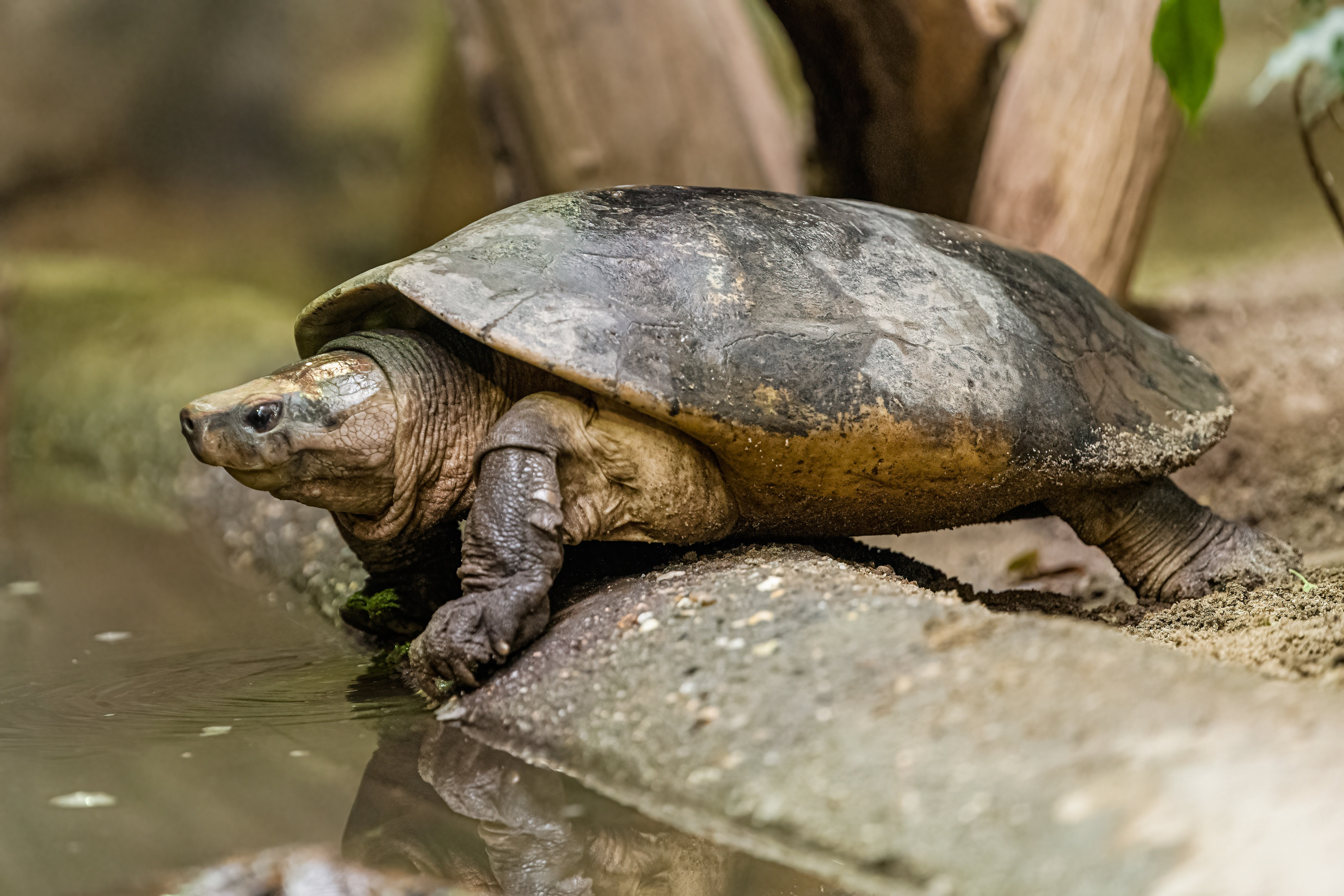
An adult Bornean river turtle at Prague Zoo. Photo: Petr Hamerník, Prague Zoo
Menu
Social networks