Observing the Amphibians

Various water bodies, such as those found throughout the zoo grounds, provide suitable habitats for wild amphibians. At least during the breeding season in spring, they seek out water—and this is when they are easiest to observe.
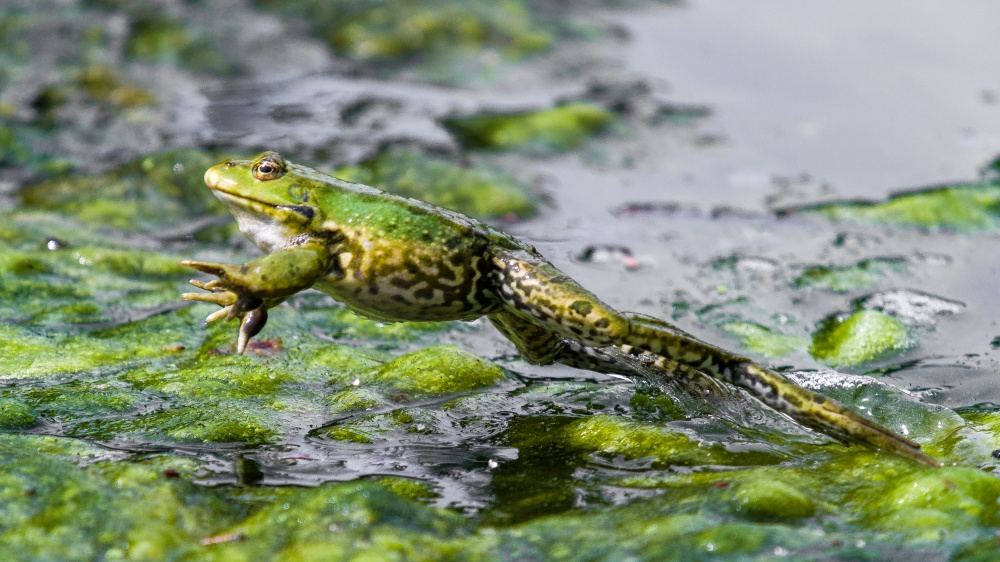
European marsh frog at Prague Zoo. Photo: Petr Hamerník, Prague Zoo
Amphibians at the Zoo (and Beyond)
An unmistakable springtime chorus is provided by the marsh frog, a critically endangered species in the Czech Republic. In various parts of the zoo, you can also observe European green toads, common toads and, more rarely, even the smooth newt and the agile frog.
Altogether, 21 species of amphibians occur in the Czech Republic: 13 species of frogs and toads, one species of salamander and seven species of newts. As adults, all are carnivorous, feeding mainly on a wide variety of small invertebrates. Some species are important predators of mosquitoes and can also help control other insect pests in gardens. Amphibians are also valuable indicators of environmental quality and form a basic component of the diet of many animals, from grass snakes to numerous water birds. A decline in amphibians can therefore severely disrupt the functioning of other species’ populations.
When observing amphibians, it is important to remember that they have very sensitive skin. Human hands are too warm and dry for them, and touching them can easily damage the protective layer on the skin surface, making the animal ill. Many species also secrete toxins from their skin glands. For these reasons, amphibians should not be handled.
Creatures of Two Worlds
Amphibians undergo a remarkable transformation during their lives. Their larvae (called tadpoles in frogs and toads) live in water and breathe through gills. Adults, by contrast, are mostly adapted to life on land and, although they can swim, may even drown if they cannot reach the water’s surface.
In spring, during the breeding season, amphibians gather at water bodies. Male frogs and toads attract females with their characteristic croaking, chirping or rasping calls. Some species have vocal sacs—specialised membranes of skin that inflate when calling, resembling small balloons and serving to amplify the sound. Toads, brown frogs and the European tree frog have a single large vocal sac under the throat, while water frogs have two smaller sacs on the sides of the head.
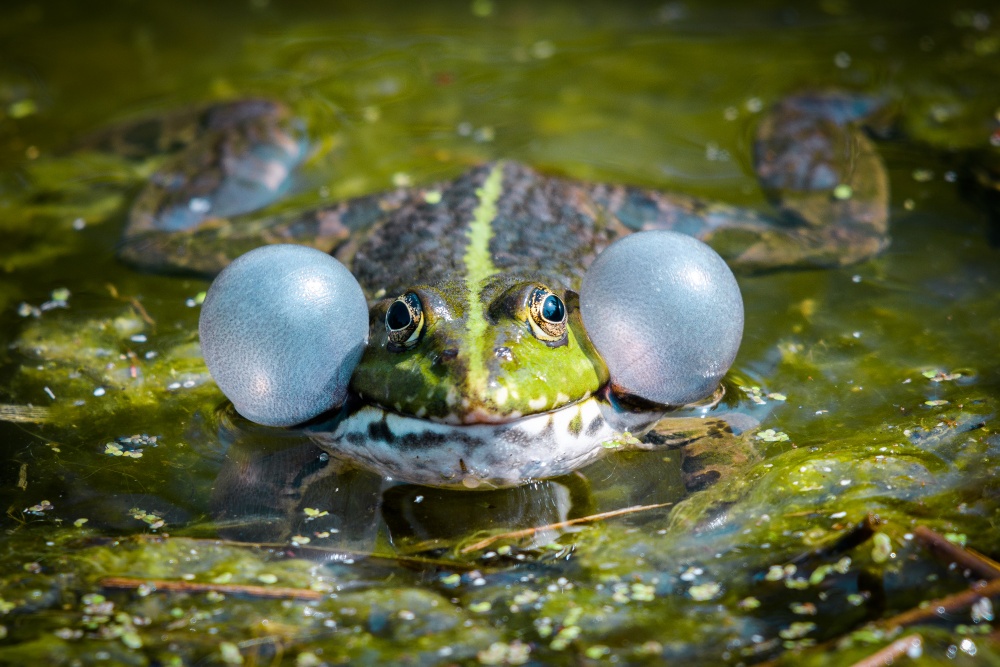
Male water frogs, such as the European marsh frog shown here, amplify their calls using vocal sacs on the sides of the head. Photo: Petr Hamerník, Prague Zoo
A single glance at the surface of a pond, pool or even a shallow puddle or water-filled depression along a path is often enough to tell which animal has laid eggs there. Amphibian eggs are enclosed in a swelling gelatinous mass. In newts, the eggs are brownish-yellow or white and are attached singly to the leaves of aquatic plants, sometimes even wrapped within them. True toads lay their eggs in long, thin strings, while true frogs and European tree frogs lay them in clumps. Fire-bellied toads attach small clusters of eggs to aquatic plants, and spadefoot toads lay them in thick bands among vegetation. Fire salamanders do not lay eggs but give birth to live larvae.
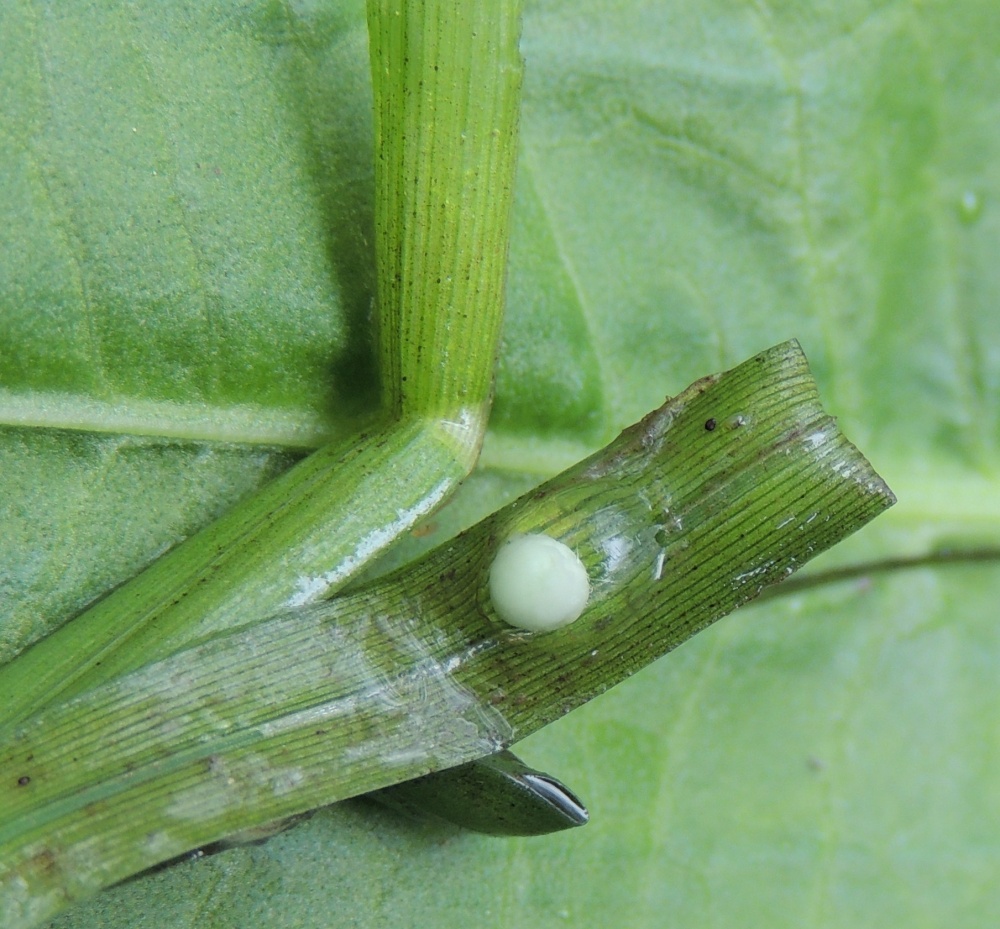
Newt eggs are usually attached singly to the leaves of aquatic plants. Photo: © Emma Creasey / CC BY-NC 4.0, iNaturalist
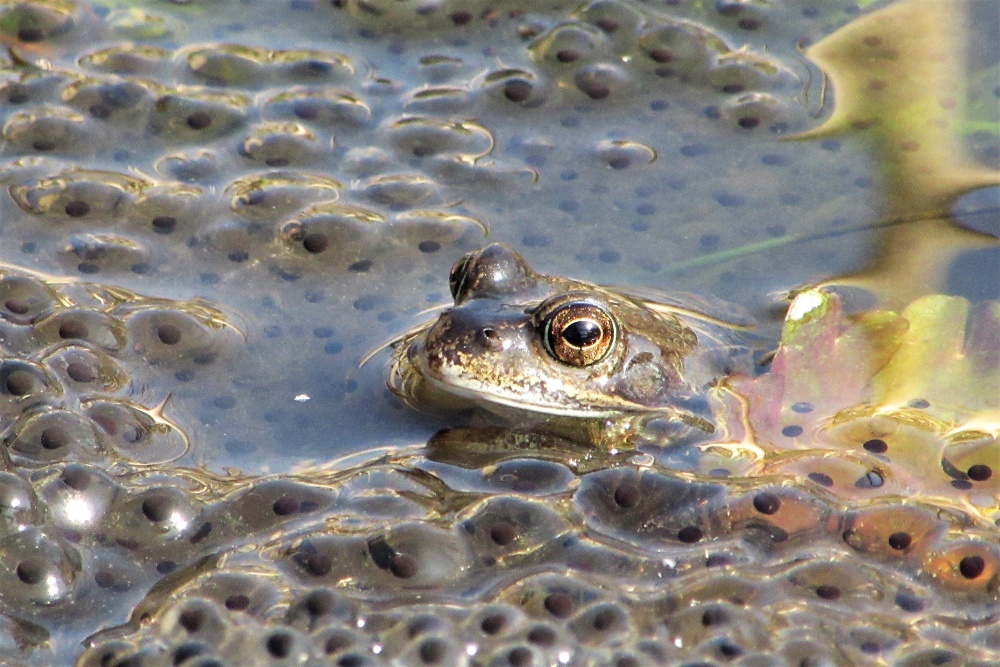
True frogs lay their eggs in large clumps. Photo: FotoRieth / CC0, Pixabay
Tadpoles of frog species native to the Czech Republic feed mainly on algae and organic detritus. As they grow, they gradually undergo metamorphosis: lungs develop in place of gills, hind legs and later forelegs appear, and the tail gradually shrinks until it disappears entirely. The tail is not shed—it is absorbed by the body.
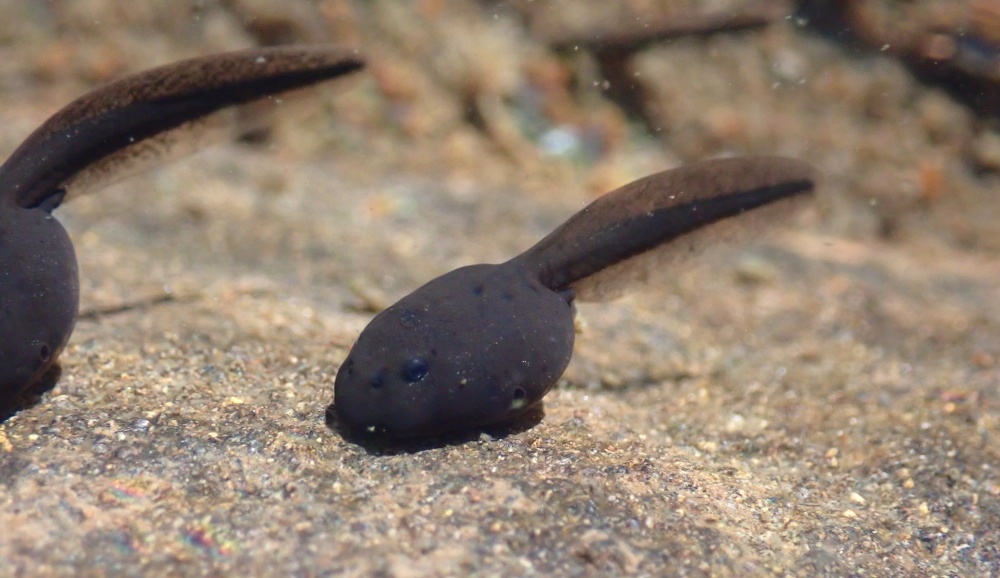
Common toad tadpole. Photo: © Calum McLennan / CC BY-NC 4.0, iNaturalist
Larvae of salamanders and newts somewhat resemble axolotls, at least during part of their development. They have conspicuous feathery external gills and although they lack limbs upon hatching, their limbs start to develop within a few weeks—first the front legs and then the hind legs. Unlike tadpoles, they are predatory, feeding mainly on small aquatic invertebrates.
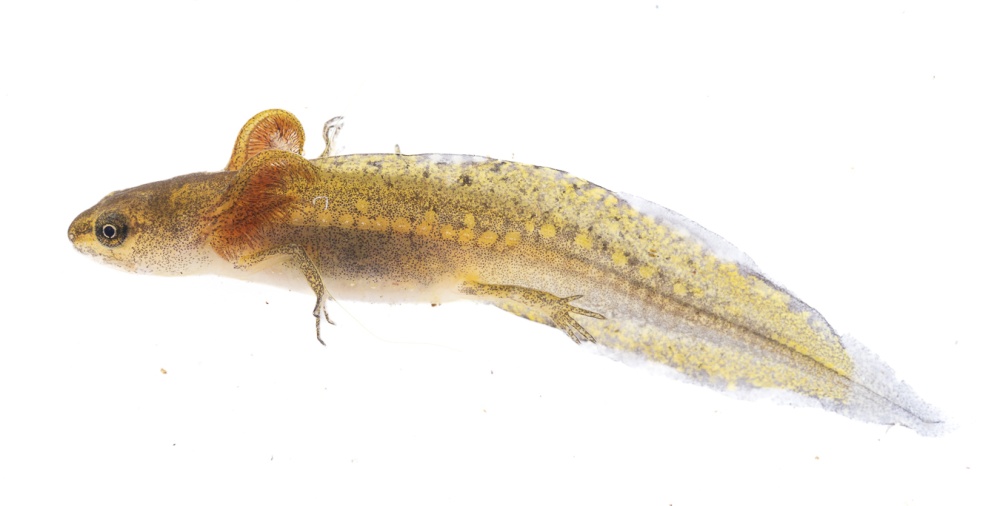
Smooth newt larva. Photo: © Michał Michlewicz / CC BY-NC 4.0, iNaturalist
Amphibians Under Threat
In the Czech Republic, amphibians are currently most threatened by inappropriate land management. This includes the drainage of wetlands and the loss of water bodies, overstocking of ponds with fish, and the introduction of fish into small pools and streams where they did not previously occur. Such small water bodies are particularly valuable for amphibians, and the presence of fish can severely disrupt their breeding and threaten their populations. The release of semi-domesticated ducks also poses a problem, as they are significant predators of both adult amphibians and their larvae. Other issues include the straightening of streams and the reinforcement of their banks, both excessive and insufficient land management, and, last but not least, the construction of towns and roads.
Many amphibian species, especially frogs and toads, spend part of the year on land but return to water to breed. They often undertake relatively long journeys to the ponds or lakes where they themselves hatched, following traditional migration routes. If these routes are intersected by roads, they attempt to cross them. As a result, thousands of toads and other frogs are killed every spring.
Poor water quality is another serious problem. Amphibians cannot survive without clean water. Through their permeable skin, they absorb up to a third of the oxygen they need. If the water is polluted, not only are they unable to breathe properly, but they also absorb toxic substances through their skin. These accumulate in their organs and can cause infertility or deformities in developing embryos. An even greater problem today in the Czech Republic than pollution itself—much of which has been reduced in many places—is eutrophication, that is, an excessive concentration of nutrients. Water enriched with too much phosphorus and nitrogen (for example from agricultural runoff) quickly becomes overgrown with algae, reducing water quality to a level often incompatible with the survival of amphibian larvae.
How to Help
There are many ways to support amphibians, and most of them are not demanding.
- Still water bodies with a natural bottom are ideal for most amphibians to breed and lay eggs. Even a small garden pond with gently sloping edges or a shallow pool is sufficient—ideally without inflow, supplied only by rainwater or groundwater. However, the water must not contain fish, which would consume amphibian eggs and larvae.
- Piles of pruned branches, heaps of grass, hay or turf, or stacks of stones may look untidy in a garden, but in fact they provide valuable shelter not only for amphibians but also for many other animals. Amphibians can use them for protection from the weather, for daytime refuge and as suitable hibernation sites.
- Allowing part of the garden to grow into a meadow saves you time and effort otherwise spent on frequent mowing, while providing habitat for a wide range of small animals, including amphibians. Mowing should be infrequent (even once a year is sufficient), not too short, and never carried out all at once. A mosaic pattern of cutting is far more beneficial.
- It is important to limit the use of chemicals. Large amounts of artificial fertilisers, herbicides and pesticides persist in the environment and gradually accumulate along food chains, for example in the liver or fatty tissues.
- Where migration routes have been disrupted, authorities or organisations can build crossings for amphibians, such as tunnels beneath roads, preventing mass mortality under car wheels.
At Prague Zoo, common toads migrate every year across the Zakázanka path. The video shows, among other things, the toad passages we have built to help them cross safely. Video: Jiří Bálek
After creating a new pond, patience is essential: new inhabitants will not arrive immediately. However, if the pond is suitable for breeding and its surroundings provide sufficient food and shelter, amphibians will usually find it sooner or later. They are capable of travelling much greater distances than one might expect—often covering kilometres between suitable water bodies.
Helping amphibians is highly beneficial, but catching them in the wild to release them into a garden pond can do more harm than good. If the new environment is unsuitable, it may endanger their survival. What is intended as a rescue can easily become an “abduction”. Moreover, most amphibian species in the Czech Republic are legally protected, and such translocations—even when well intentioned—are illegal. Supporting wildlife close to your home means creating and maintaining suitable conditions—and then waiting. If the habitat is right, with a bit of luck, the animals will find it and settle there.
List of Species Found in the Czech Republic
True frogs
This is the most species-rich group of frogs in Czechia, characterised by their smooth skin, slender bodies and long hind legs. They move in conspicuous leaps and are strong swimmers. True frogs are divided into so-called brown frogs and water frogs. All species, with the exception of the common frog, are protected in Czechia as either highly or even critically endangered.
Brown frogs—namely the common frog (Rana temporaria), agile frog (Rana dalmatina) and moor frog (Rana arvalis)—tend to be predominantly brown and often have a dark “mask” on the head. During the breeding season, male moor frogs turn blue to violet for a few days. In all brown frogs, the males have a vocal sac beneath the throat. During the breeding season, they seek out still waters, and they often overwinter in running water. For the rest of the year, however, they can be encountered in various habitats such as meadows, forests, fields and gardens.
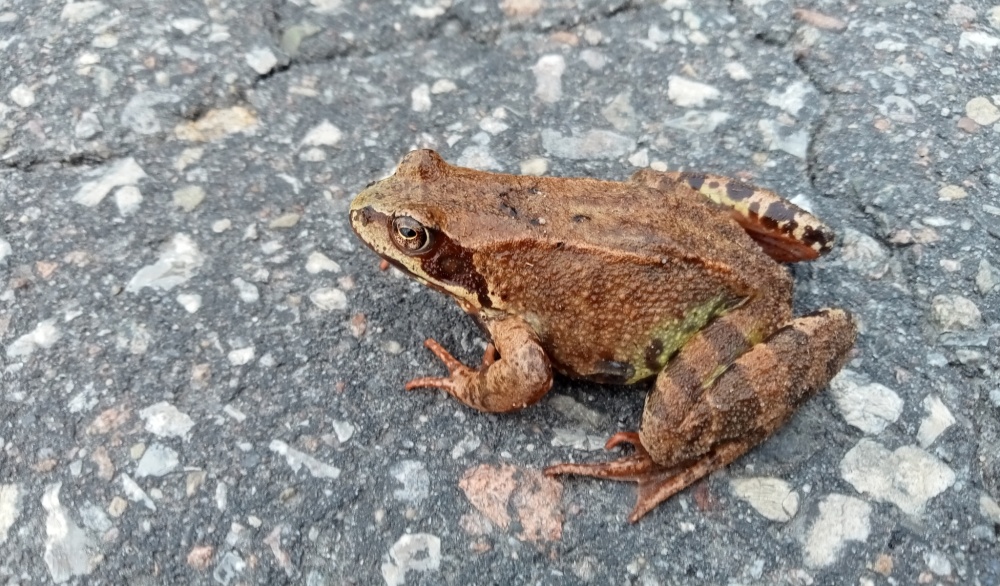
Common frog (also known as the grass frog). Photo: © Dawid Wojtachnio / CC BY-NC 4.0, iNaturalist
Water frogs—specifically, the edible frog (Pelophylax esculentus), marsh frog (Pelophylax ridibundus) and pool frog (Pelophylax lessonae)—usually lack the dark facial mask (although exceptions occur), but often have a light stripe along the spine. Their bodies are typically green or brownish-green, usually with dark spots. They are strongly tied to water, where they spend almost their entire lives, breeding and often overwintering there. Males have vocal sacs on the sides of the head.
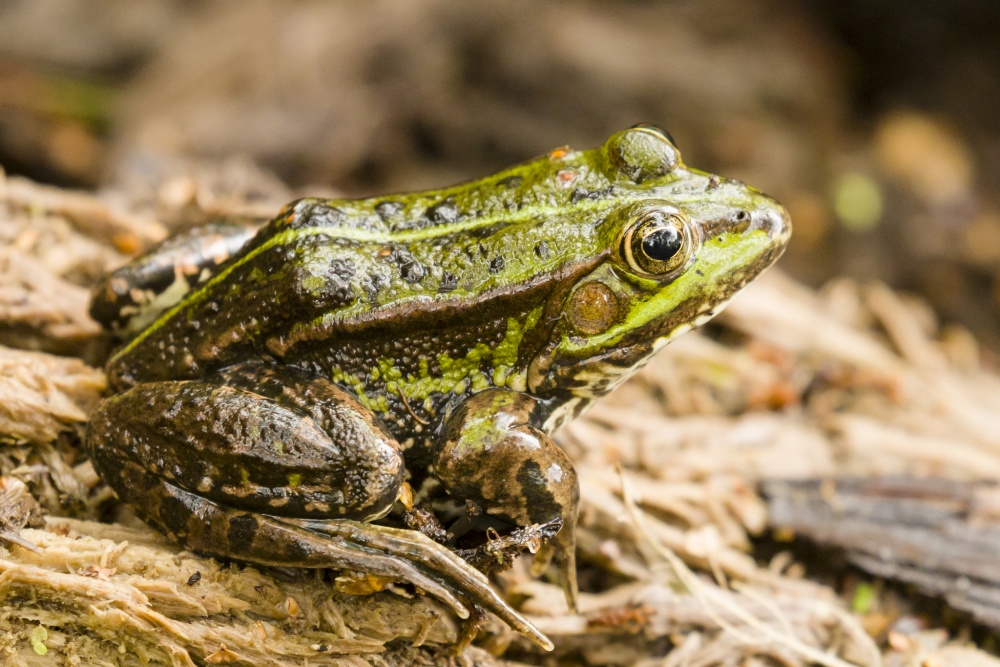
Edible frog. Photo: © Tobias S. Radmer / CC BY-NC 4.0, iNaturalist
True toads
They tend to crawl or walk rather than leap. They have warty skin, prominent glands behind the eyes and horizontal, elliptical pupils. They spend most of their lives on land—resting in shelters during the day and emerging at night to hunt invertebrates. They breed in still waters, often travelling long distances to reach them. Three species occur in the Czech Republic: the common toad, European green toad and natterjack toad.
The common toad (Bufo bufo) is an inconspicuous greyish-brown without distinct markings and is the most widespread and largest of our toads: females can grow up to 15 cm in length. In early summer, suitable sites are “flooded” each year with huge numbers of tiny, freshly metamorphosed toadlets barely a centimetre long, although only a fraction survive to adulthood. It is protected by Czech laws as an endangered species.
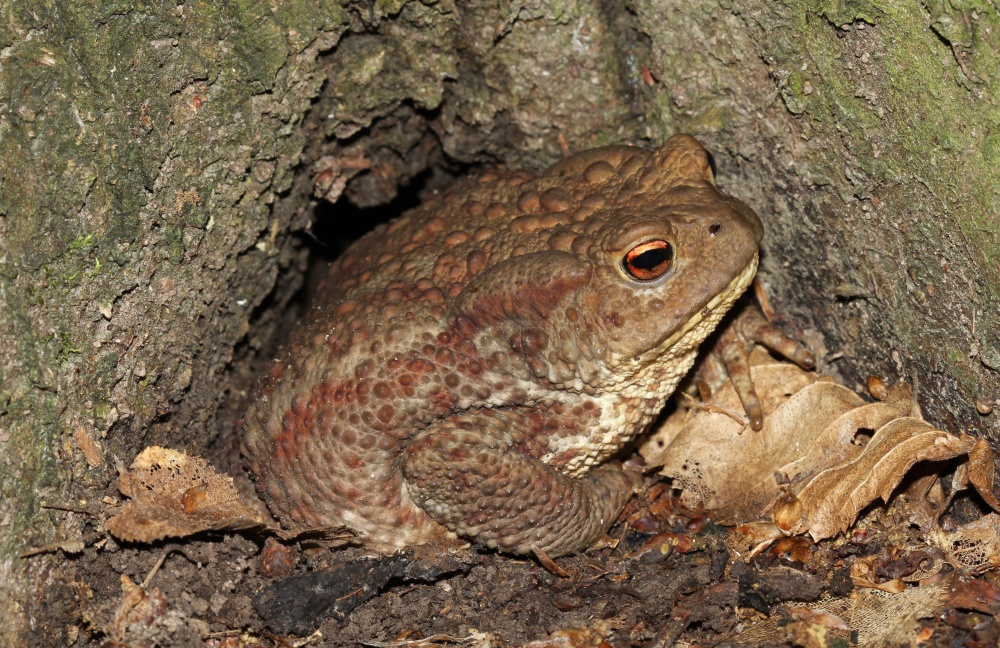
Common toad. Photo: George Chernilevsky / CC0, Wikimedia Commons
The European green toad (Bufotes viridis) has adapted to life near humans and even prefers gardens and parks to open countryside. During the breeding season, males produce loud, trilling calls. The warty skin of this toad is pale with greenish patches; in older females, the warts on the sides of the body are often tipped with orange or red. In Czechia, the European green toad is legally protected as a highly endangered species.
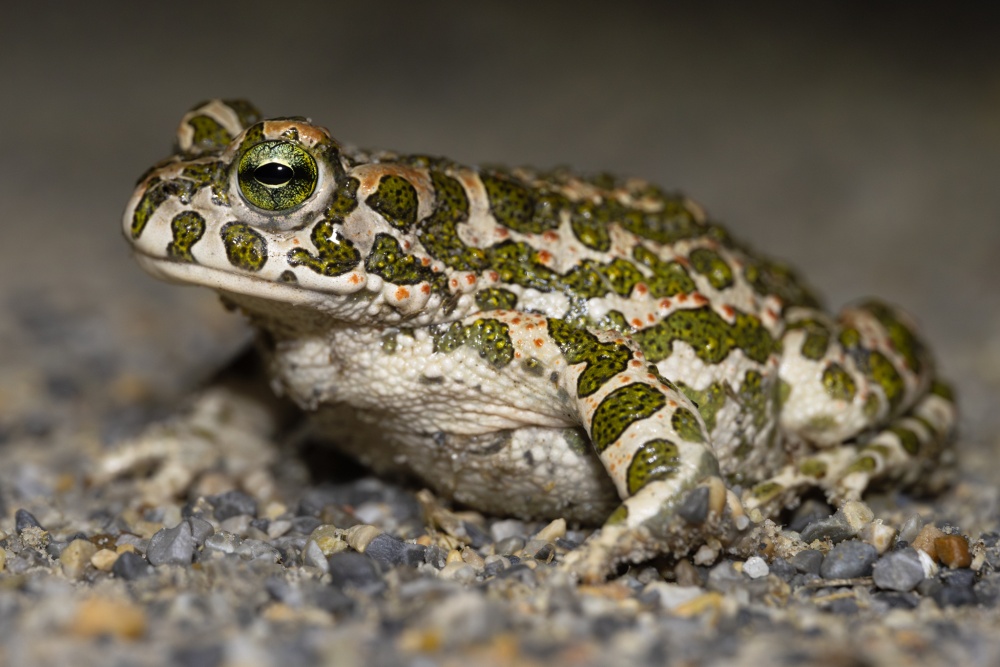
European green toad. Photo: © Manuel Raab / CC BY-NC 4.0, iNaturalist
The natterjack toad (Epidalea calamita) is the most threatened frog species in the Czech Republic and is therefore legally protected as critically endangered. It has grey to brownish mottled skin with red dots and a pale stripe running along the spine. It favours open, dry and sunny habitats. It overwinters buried in sandy soils and breeds in shallow pools.
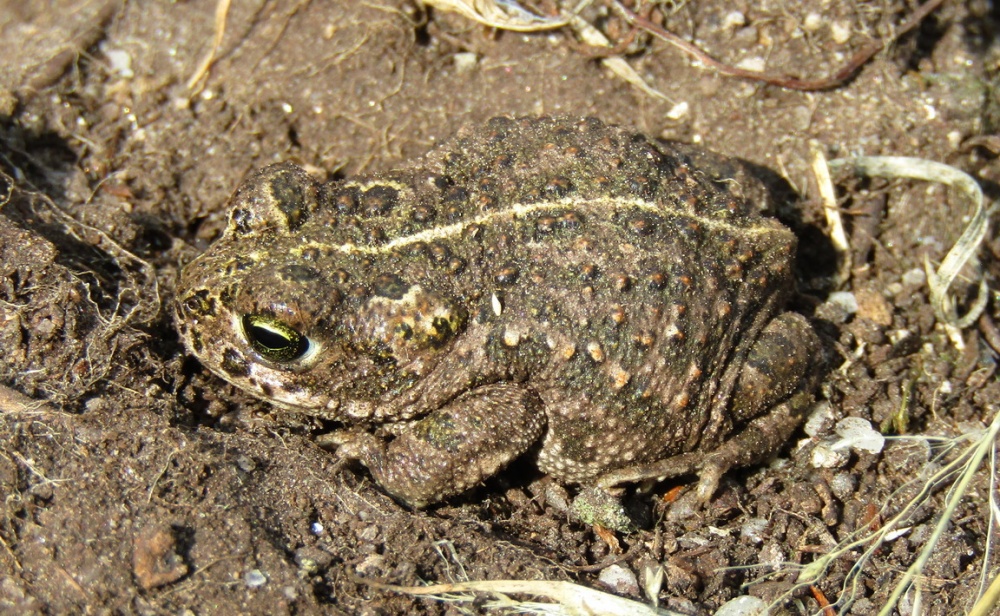
Natterjack toad. Photo: © Jonatan Antunez / CC BY-NC 4.0, iNaturalist
Fire-bellied toads
These are small toads with warty skin, relatively short hind legs, triangular or heart-shaped pupils, and a characteristic “whoop” call. Their upper side is inconspicuous—greyish, brownish or olive-green—but the underside is strikingly coloured in yellow-and-black or orange-and-black patterns. When threatened, they arch their bodies into a characteristic defensive posture, exposing their bright underside to signal their toxicity. This display is intended to gain time for escape; once they reach water, they burrow into the mud at the bottom, where their cryptic upper side blends perfectly with the surroundings. Two species occur in the Czech Republic: the European fire-bellied toad (Bombina bombina) and the yellow-bellied toad (Bombina variegata). Both are protected as highly endangered.
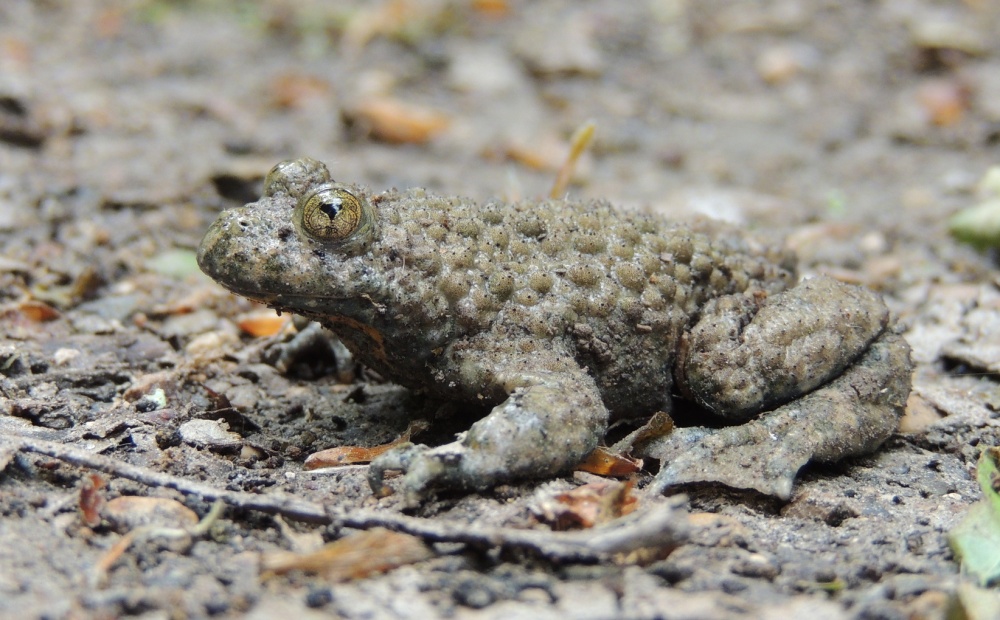
Yellow-bellied toad. Photo: © Michel Thome / CC BY-NC 4.0, iNaturalist
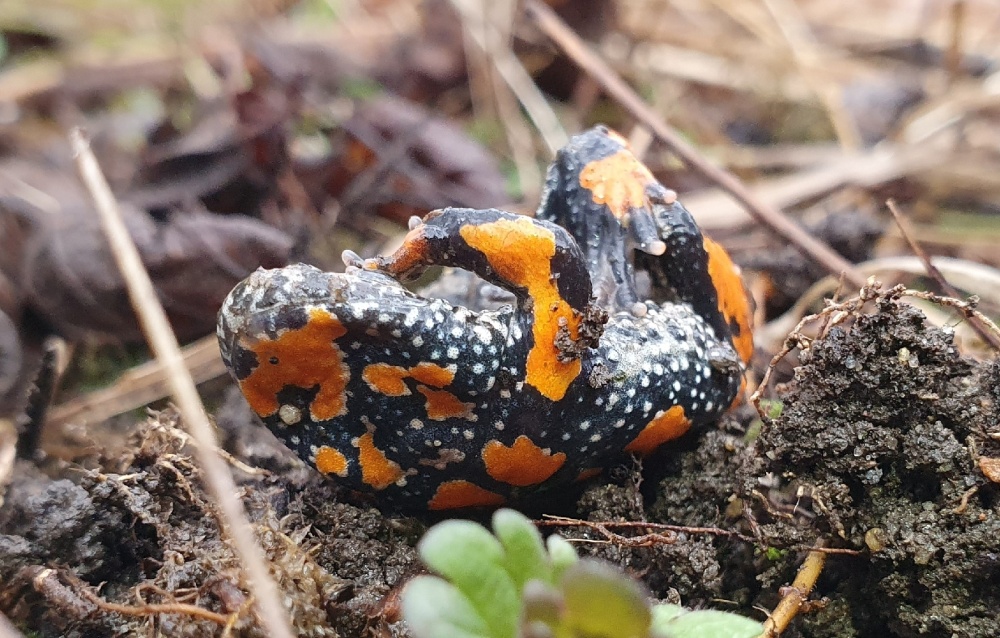
When threatened, fire-bellied toads arch their bodies in a characteristic defensive posture to reveal the contrasting colours of their underside. Shown here: European fire-bellied toad. Photo: © Arne / CC BY-NC-SA 4.0, iNaturalist
Spadefoot toads
The only species occurring in the Czech Republic is the common spadefoot (Pelobates fuscus). Its warty skin and stocky body is toad-like, but it has vertical, cat-like pupils and may sometimes emit a distinct garlic-like smell. It spends the day buried in moist soil, digging with the large and hardened “spades” on its hind feet. It is active at dusk and at night. It seeks out water only during the breeding season; otherwise, it spends almost its entire life on land—most often in meadows and fields, but also in gardens and shrubland or open woodland. Its tadpoles are the largest among the frogs and toads native to Czechia. When threatened, the common spadefoot may squeak, inflate its body, rise on its legs and lunge at the attacker in an attempt to intimidate it. It is protected by Czech laws as a highly endangered species.
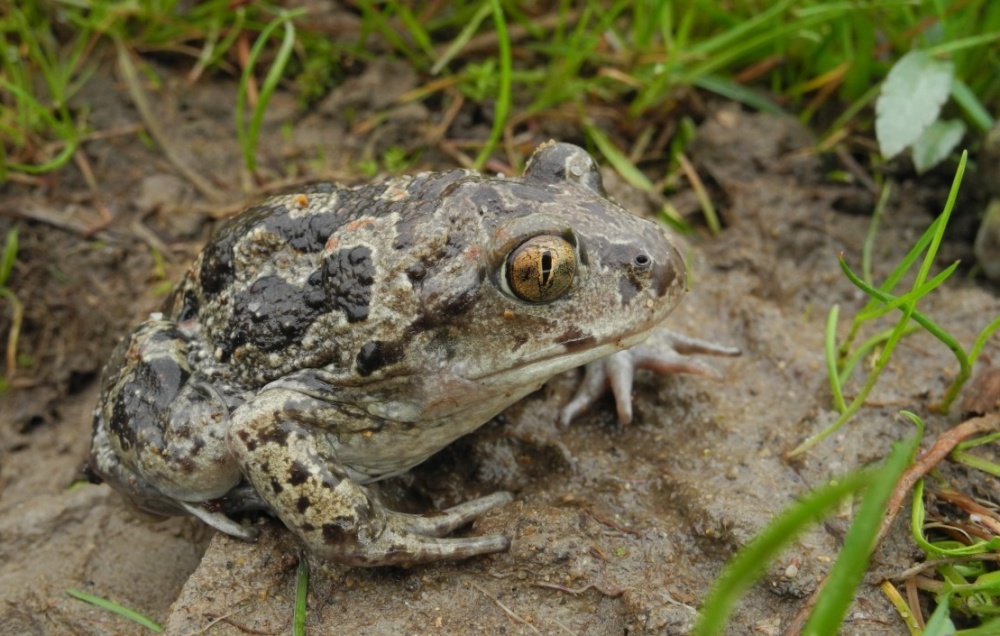
Photo: © Daniele Seglie / CC BY-NC 4.0, iNaturalist
Tree frogs
Only one species occurs in the Czech Republic: the European tree frog (Hyla arborea). This is the only arboreal frog in Czechia, more often found in shrubs and trees (where it basks or rests during the day) than in water. It is active at night, when males call during the breeding season with their characteristic loud sound. For breeding, it seeks out smaller ponds with densely vegetated margins but will also use other water bodies, including fire reservoirs and even water-filled barrels. It overwinters in piles of wood, among roots or in abandoned rodent burrows. In the Czech Republic, it is protected as a highly endangered species.
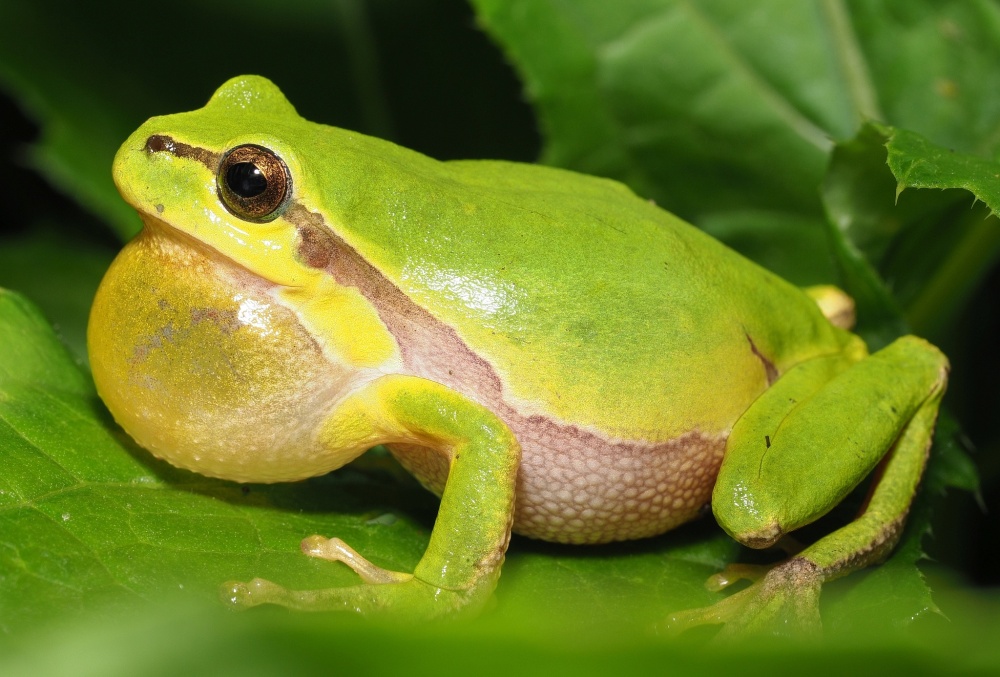
Photo: © Jakob Fahr / CC BY-NC 4.0, iNaturalist
True salamanders
The only true salamander species in the Czech Republic is the fire salamander (Salamandra salamandra), a lizard-like amphibian unmistakable thanks to its striking yellow-and-black colouration, which serves as a warning of its toxicity. It lives mainly in deciduous and mixed forests with small streams, springs and seepages, which it visits during the breeding season. Mating takes place on land: the male leads the female over a packet of sperm (a spermatophore), which she takes up into her cloaca. Several months after mating, females give birth to live larvae, seeking out water to do so. Salamanders overwinter on land, among stones, in caves or in burrows.
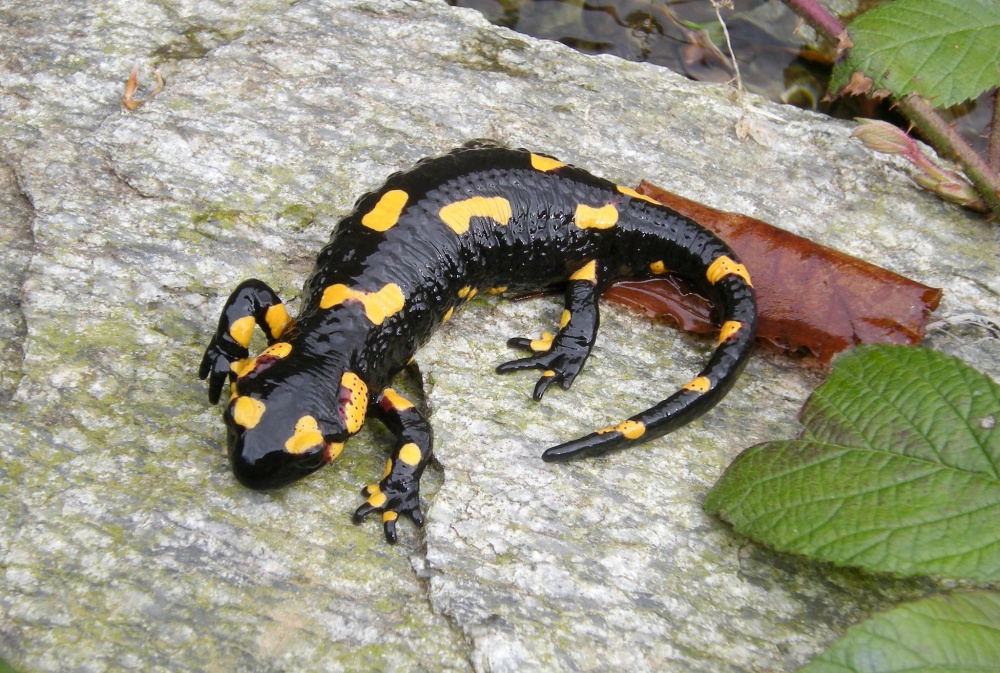
Photo: © Joachim Langeneck / CC BY-NC 4.0, iNaturalist
Newts
Newts are a type of salamander and, like all salamanders, they retain their tails into adulthood. They are remarkable in that they alternate between aquatic and terrestrial phases during the year, and look different in each. When living on land, they resemble other salamander species except they have laterally flattened, paddle-like tails and lack prominent poison glands. During this stage of life, they are usually dull brown or blackish above. However, they breed in water, where they develop a fin-like crest (especially pronounced in males) and their bodies acquire a more pronounced spotted pattern. In both phases, the belly is typically yellow or orange, sometimes with dark spots.
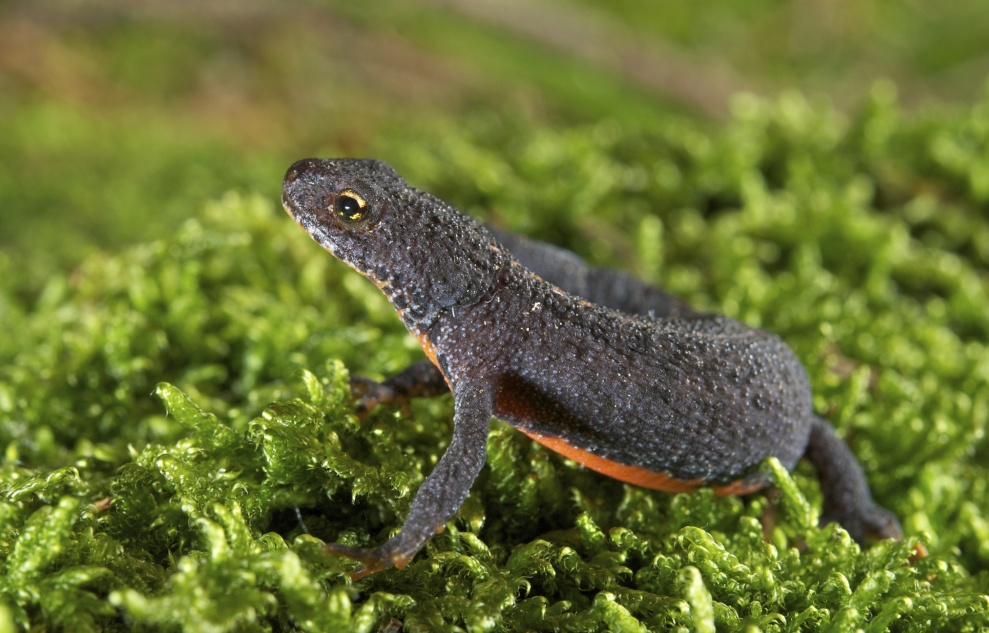
When living on land, newts lack both a crest and bold body markings; however, their orange or yellow belly remains. Shown here: alpine newt. Photo: © Karol Tabarelli de Fatis / CC BY-NC 4,0, iNaturalist
Newts in the Czech Republic can be divided into large (crested) species and smaller ones. These groups differ not only in size but also in lifestyle: crested newts are more strongly associated with water, where they may even overwinter, and they prefer larger and deeper water bodies for breeding. Small newts, by contrast, breed in smaller pools and usually overwinter on land. Crested newts found in the Czech Republic include the great crested newt (Triturus cristatus), which is fairly widespread, as well as the marginally occurring Italian crested newt (Triturus carnifex) and Danube crested newt (Triturus dobrogicus). Small newts include the relatively common smooth newt (Lissotriton vulgaris), the somewhat rarer alpine newt (Ichthyosaura alpestris), and the palmate newt (Lissotriton helveticus) and Carpathian newt (Lissotriton montandoni), both of which are restricted to small areas near the country’s borders.
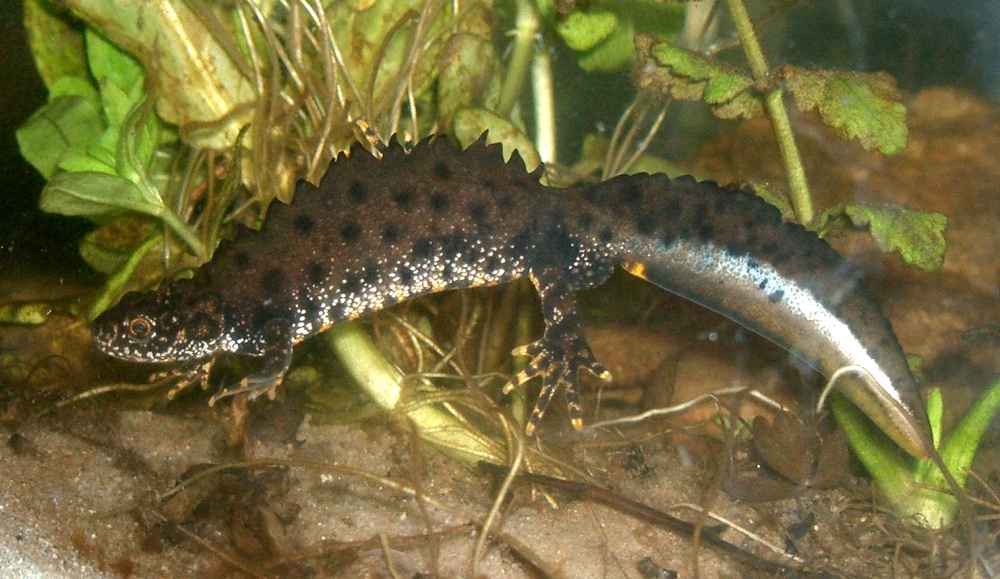
Great crested newt. Photo: Rainer Theuer / CC0, Wikimedia Commons
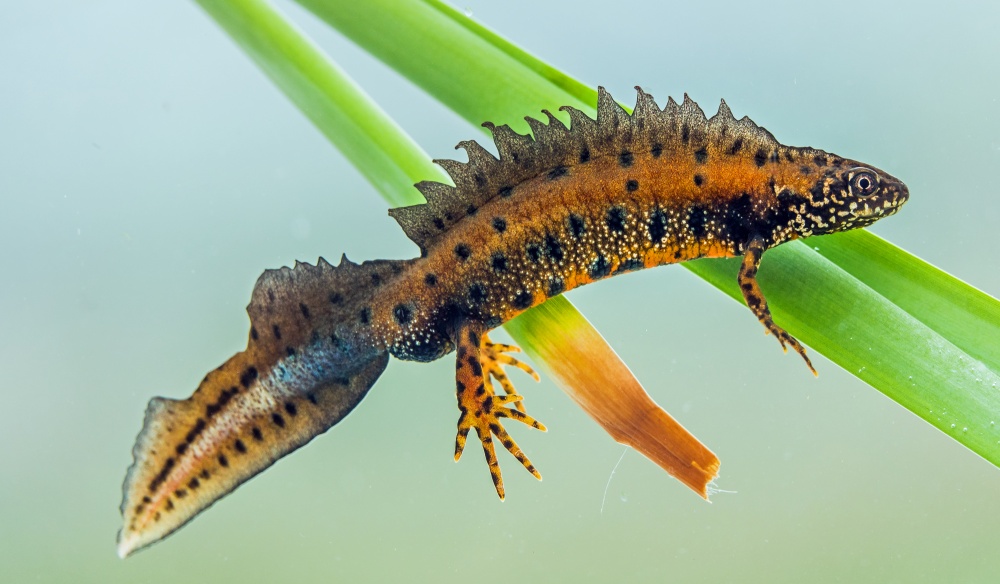
Danube crested newt. Photo: Russell Scott / CC BY-SA 2.0, Flickr
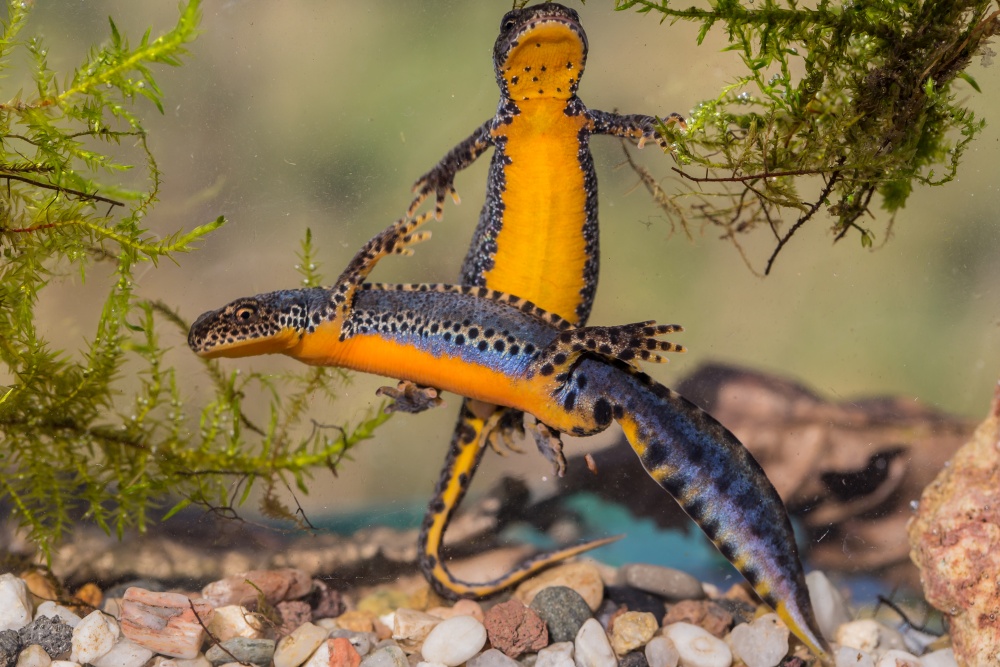
Alpine newt. Photo: Herwig Winter / CC BY-SA 4.0, Wikimedia Commons
Menu
Social networks