



Projects
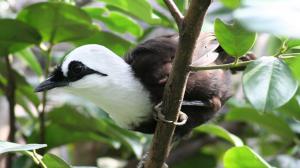
Indonesia’s nature constitutes one of the most valuable and, at the same time, most fragile places in the world. Its myriad islands have served as the cradle of some totally unique species. However, due to their isolation, they are much more susceptible to any sort of encroachment, which is why a lot of them are being pushed...
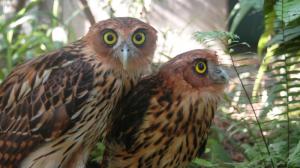
The Philippines is one of the world’s most species-rich regions. However, its unique local bird species are threatened by the terrifying speed with which their forest habitats are disappearing. The majority of Philippine owls and many other bird species, therefore, face an uncertain future.
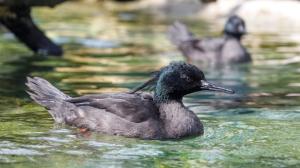
The Brazilian merganser is one of the world’s rarest ducks and the only extant merganser species native to the Southern Hemisphere. Fewer than 250 individuals remain in the wild; during the 1940s and 1950s, the species was even considered extinct. Prague Zoo supports the conservation of the Brazilian merganser in Brazil and,...

The grounds of Prague Zoo are home to a number of species of wild butterflies, some of which are rare and endangered. Prague Zoo works to ensure that these species continue to thrive here—and that those which disappeared from its grounds in the past may return.
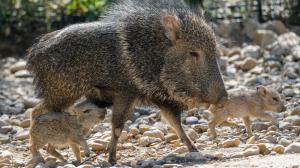
The largest of the peccaries became a scientific sensation in the 1970s when it was discovered that this supposedly prehistoric, long-extinct animal was still surviving in remote parts of South America. Today, however, this remarkable species once again faces the threat of extinction. Prague Zoo is contributing to the...
Northern buffed-cheeked gibbons (Nomascus annamensis), inhabiting the dense rainforests of Vietnam, Cambodia, and Laos, are unfortunately also among the endangered species. Populations of these agile and vocal primates in the wild are declining mainly due to habitat destruction and illegal hunting.
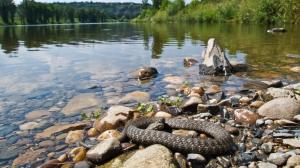
There are between 700 and 1,200 adult dice snakes living freely near the place where you are standing. This population is one of the healthiest and most valuable ones in the territory of Bohemia. Prague Zoo is deservedly proud of it and intensely advocates protection of these...

The eastern bongo (Tragelaphus eurycerus isaaci) is among the world’s most endangered large mammals. Due to habitat loss, poaching and disease, its numbers have declined dramatically. Today, the only remaining wild population of these antelopes survives in Kenya’s Aberdare National Park, numbering just thirty to forty individuals.
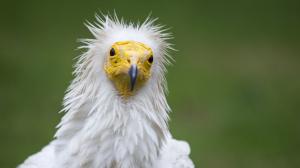
The smallest of the four vulture species found in Europe, the Egyptian vulture also holds a sad primacy as the most endangered of the four. That is why Prague Zoo is pursuing and developing a project to help vultures in their South European homeland.
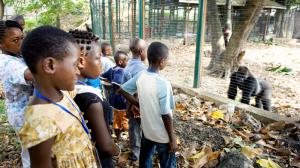
Gorilla conservation in Central Africa is the subject matter of one of Prague Zoo’s flagship in situ projects. Thanks to the funds collected in the ‘We Help Them to Survive’ fundraising account, Prague Zoo can pursue and develop activities to help gorillas, focusing on environmental education.
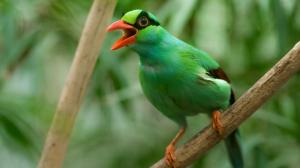
Indonesia is one of the most biologically rich, yet also most fragile regions in the world. Its countless islands have given rise to entirely unique species. However, due to their island isolation, these species are far more vulnerable to any disturbances, and many have been pushed to the brink of extinction as a result of human activity.
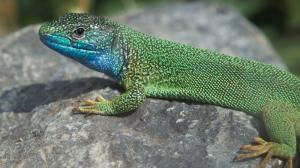
The European green lizard (Lacerta viridis) is protected under Czech law as a Critically Endangered species. In Bohemia, it occurs in small, isolated populations confined to habitats with specific microclimatic conditions. This also applies to the population living within Prague Zoo, which has been the subject of long-term...
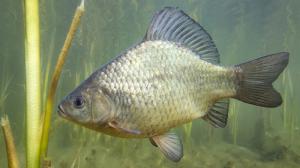
In the Czech Republic, the crucian carp, once a common fish in pools, ponds, and the lower reaches of rivers, is now threatened with extinction. Prague Zoo, in cooperation with the Czech Academy of Sciences, the Czech University of Life Sciences, and the Czech Angler’s Union, has been involved in efforts to rescue it and return it to the wild.
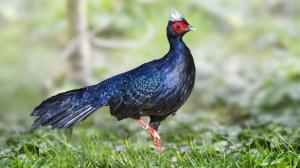
The Vietnam pheasant is one of the most endangered pheasants on the planet. Its natural habitat is the rainforests of Vietnam, yet unfortunately it has not been observed in the wild for more than two decades. For this reason, it is listed on the IUCN Red List as a “Critically Endangered species – possibly extinct in the wild.”
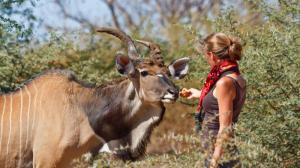
At the beginning of the 20th century, the western subspecies of the giant eland occurred in seven African states. Now, it is found in the wild only in Senegal – in the Niokolo-Koba National Park – and numbers around 170 individuals.
The European bison, the largest land mammal in Europe, was tragically driven to extinction in the wild in the 1920s. Ancient European cultures regarded the bison as a symbol of natural strength and resilience; however, for centuries it was also a hunted species. Combined with the gradual loss of its natural habitat, this...
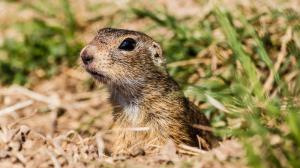
As late as the 1950s, the European ground squirrel was regarded as an agricultural pest. Over just a few decades, however, it has become critically endangered. Today, it is strictly protected in the Czech Republic, and a governmental action plan has been launched for its conservation.
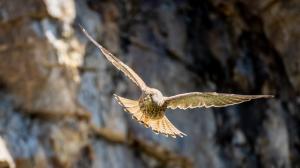
At first glance, the lesser kestrel resembles our native common kestrel, but it is slightly smaller and the males lack the dark spotting on the back. It breeds mainly in southern Europe and Asia. In Bulgaria, this small bird of prey was once widespread, but a quarter of a century ago, it disappeared completely from the...
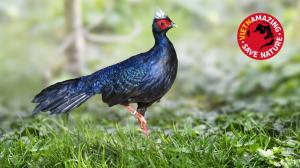
More than 35 European zoos have joined the Vietnamazing campaign, which aims to support the conservation of Vietnam’s natural heritage. The country’s wildlife has suffered from the lasting effects of war, faces threats from poaching and habitat loss, and is under increasing pressure from rapid economic development. Prague...
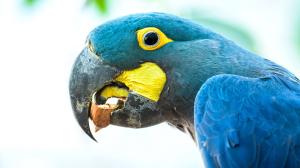
The Caatinga region in the state of Bahia, Brazil, is the last home of the Lear’s macaw (Anodorhynchus leari). Today, this rare species survives only in a very limited area due to habitat loss and illegal wildlife trade. Thanks to breeding in human care, subsequent reintroduction, conservation activities, and environmental...
ZOOPRAHA.CZ
Contacts
- The Prague zoological garden
U Trojskeho zamku 120/3
171 00 Praha 7
Phone.: (+420) 296 112 230 (public relations department)
e-mail: zoopraha@zoopraha.cz
Others