



Triple Success in Troja: Prague Zoo Reports First Rearings in Three Snake Species
At Prague Zoo, three snake species have reproduced that had not previously bred here. Rough-scaled pythons—originating from north-western Australia and only recently described by science—have hatched for the first time; the clutch produced two young. The remaining species are viviparous: a female Nosy Komba ground boa, a species endemic to the island of Madagascar, gave birth to ten young. The third reptile to be reared for the first time at the zoo is a subterranean inhabitant of Asian sand dunes: a female Tartar sand boa delighted her keepers with four offspring.
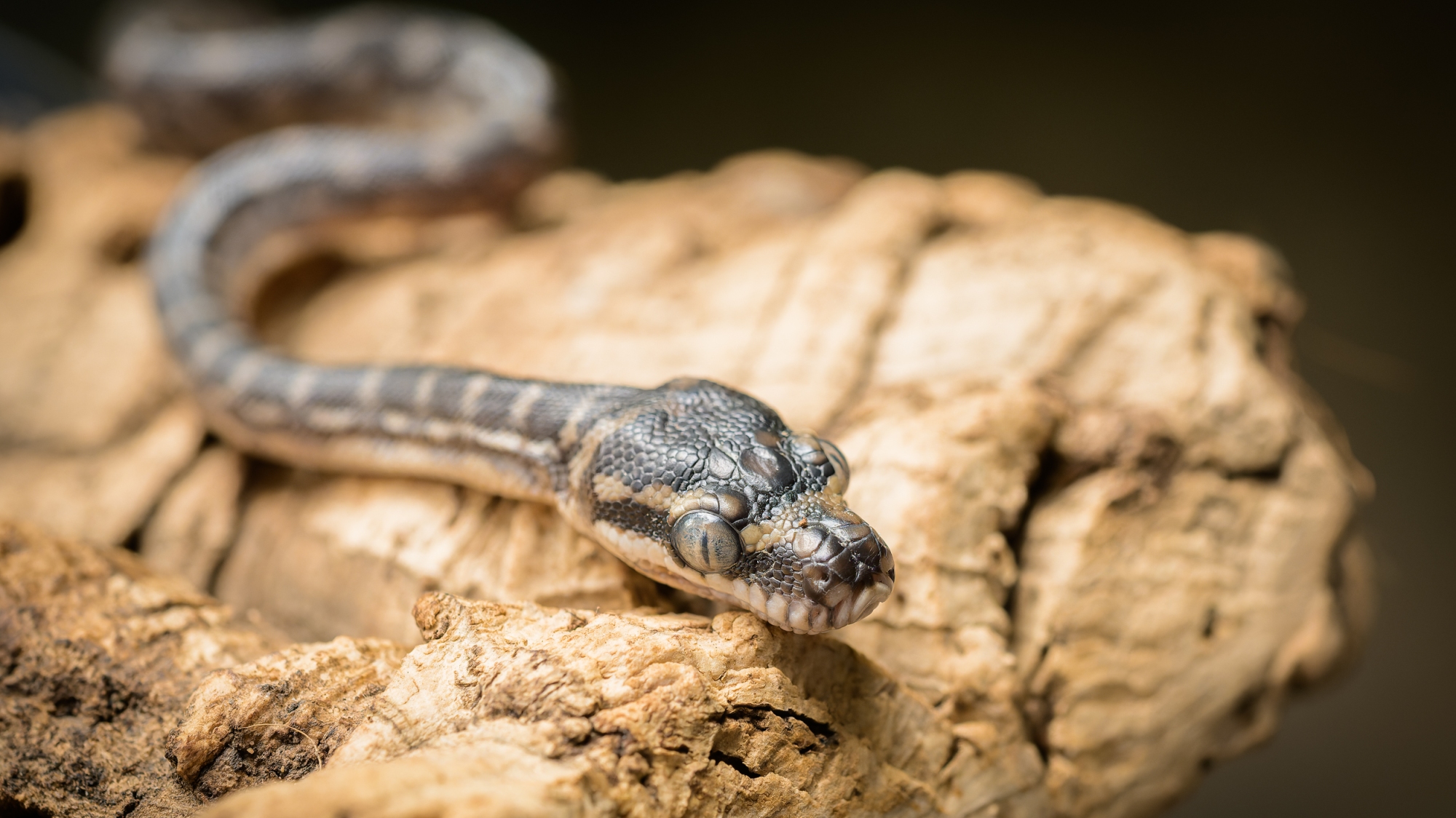 The rough-scaled python is a small arboreal python. This species was discovered in 1981 and, until 2007, was known from only ten individuals. It is a relict species: as an inhabitant of humid forests, it has survived only where such habitats persist in north-western Australia—namely in the deep gorges of the Kimberley region. Its range is among the smallest of any snake species in the world. Photo: Petr Hamerník, Prague Zoo
“These are three very different snakes, literally from three different corners of the world. All these rearings give us great pleasure, although two of them perhaps a little more so. I’m thinking of the rough-scaled pythons and the Tartar sand boas. In both cases, the young are the grandchildren of snakes confiscated from smugglers—the pythons in Vienna and the sand boas in Cologne,” says Petr Velenský, Curator of Reptiles. “The successful breeding of descendants of confiscated snakes is a nice continuation of what is otherwise quite a sad story,” adds Velenský.
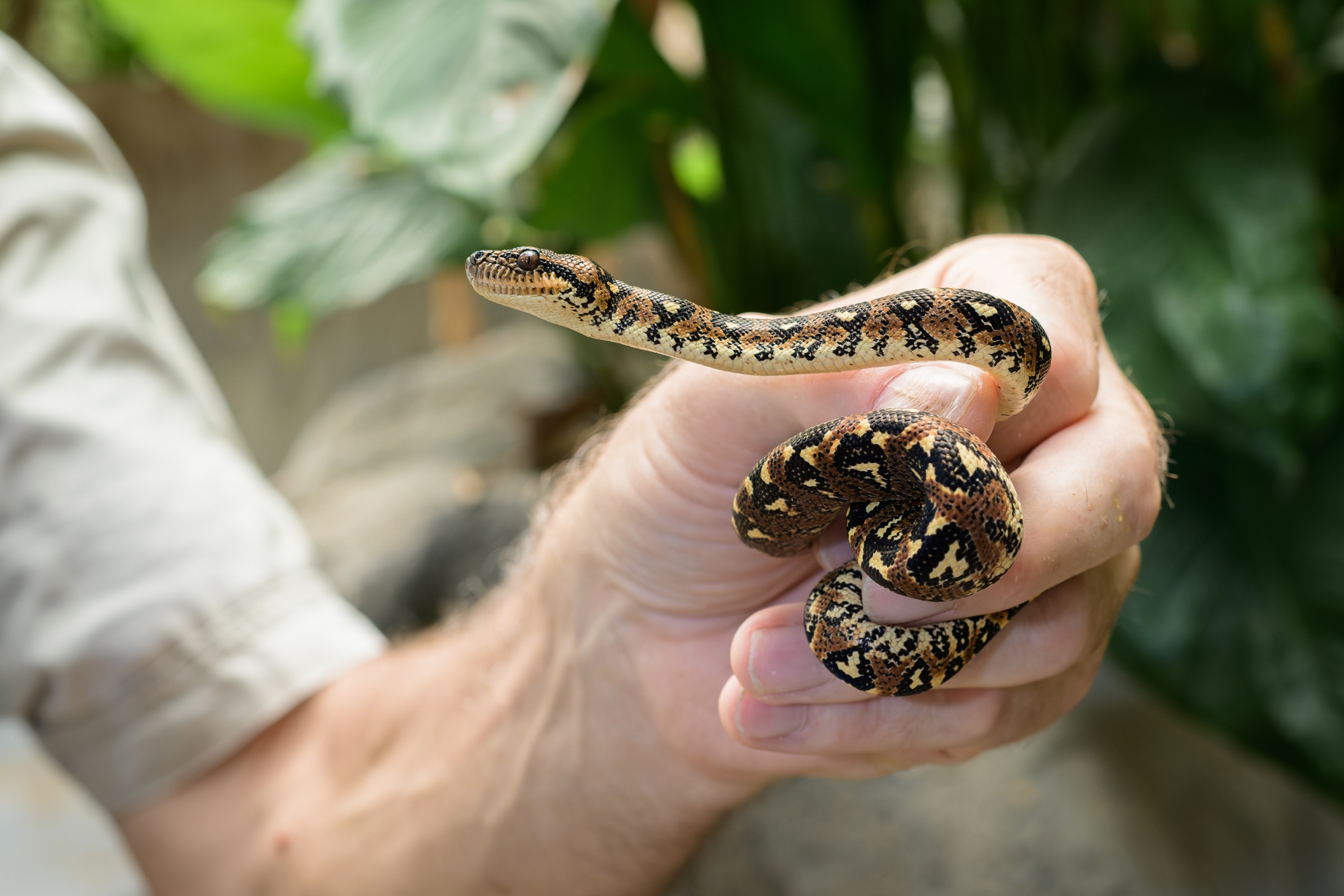
Young Nosy Komba ground boas are more colourful and striking than adults. The species was previously considered a subspecies of the Madagascar tree boa, but genetic testing has shown that they have been evolving separately for millions of years. Photo: Petr Hamerník, Prague Zoo
Visitors can find the rough-scaled python in the Darwin Crater exhibit. Opposite, in the Terrarium building, they can view the Nosy Komba ground boa. The Tartar sand boa, meanwhile, can be found in the upper part of the zoo, in a small pavilion within the Gobi exhibit.
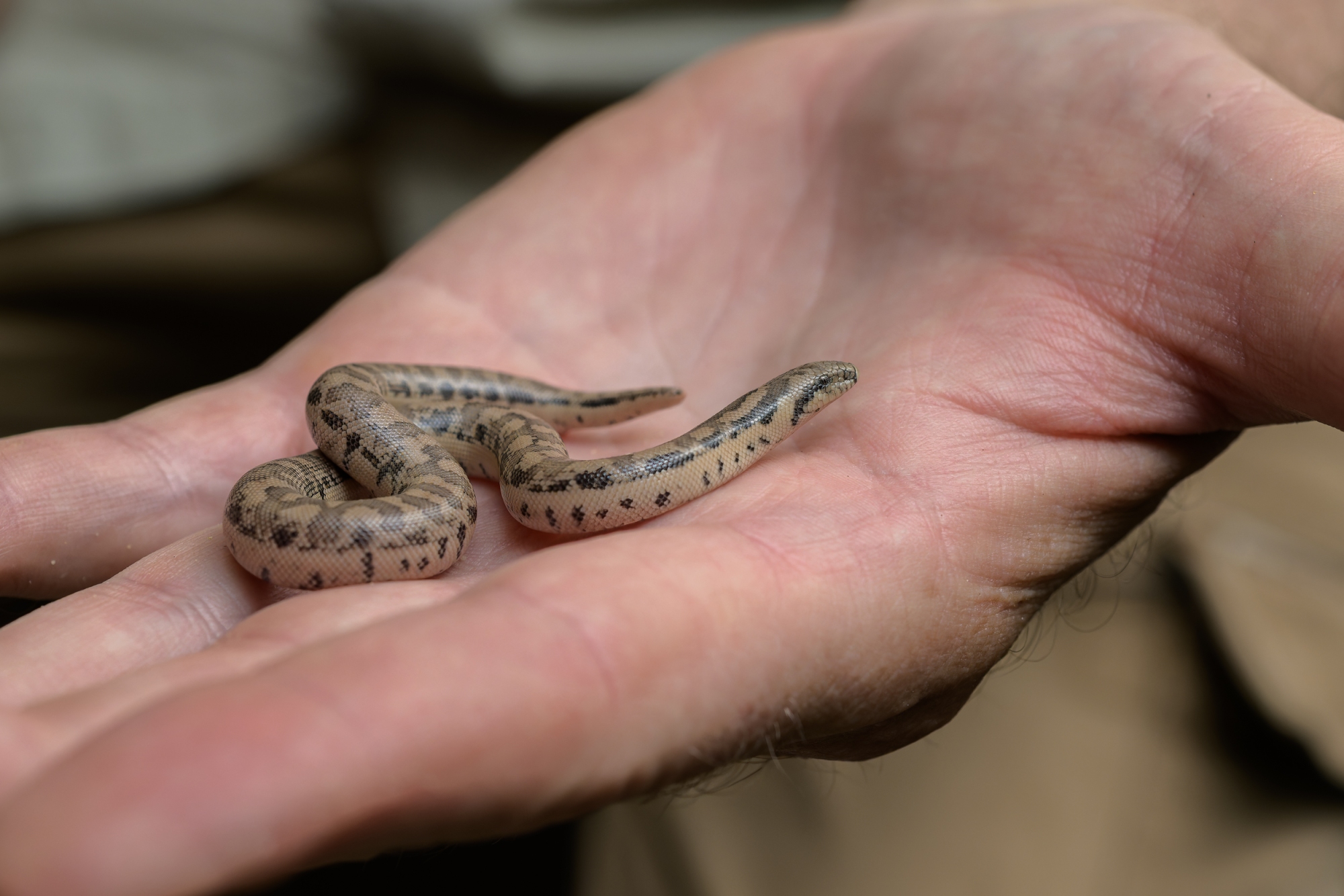
The Tartar sand boa, originating from the (semi-)deserts of the Middle East and Central Asia, is a “sand swimmer”. This is reflected in its reduced eyes and cylindrical body. Photo: Petr Hamerník, Prague Zoo
ZOOPRAHA.CZ
Contacts
- The Prague zoological garden
U Trojskeho zamku 120/3
171 00 Praha 7
Phone.: (+420) 296 112 230 (public relations department)
e-mail: zoopraha@zoopraha.cz
Others