18 Chicks in 18 Years: Prague Zoo Is a Record Holder in Rhinoceros Hornbill Breeding
10. 12. 2025
Prague Zoo is celebrating a world first. Nowhere else has managed to rear 18 rhinoceros hornbill chicks in as many years. The record is all the more significant following the death of the female Markéta in 2022. It was her maternal instincts that enabled her to rear 17 chicks with two males. After her demise, it seemed impossible to continue this era. Nevertheless, a new female, Sharjah, acquired from the United Arab Emirates, took up her mantle—she has now reared her first offspring in Prague, which is also the first European chick in five years.
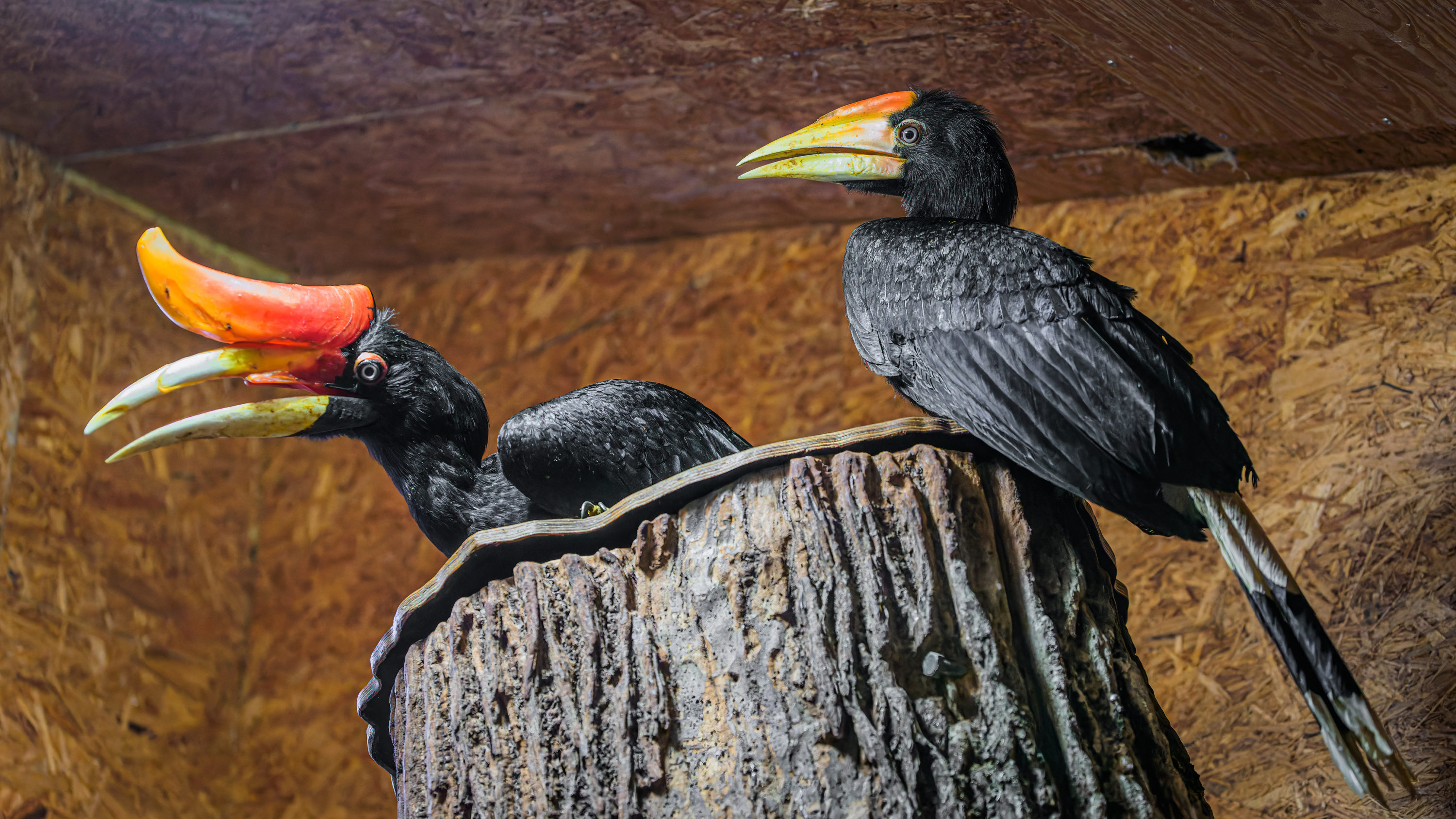
The female hornbill Sharjah and her first Prague chick (right). The parents are very protective during nesting and while caring for their offspring. Photo: Petr Hamerník, Prague Zoo
Putting the figures into context, Antonín Vaidl, Prague Zoo’s curator for birds, said: “This autumn, the new pair raised their first chick. This was Prague Zoo’s eighteenth addition and the first in Europe in five years. Given that the previous one was also from our zoo, it underlines just how uncertain the future of the rhinoceros hornbill is in Europe.”
Vaidl went on to add that breeding this distinctive species presents a real challenge, which has resulted in an ageing population in European zoos. He expressed his concerns by saying: “It is possible that in the future the only rhinoceros hornbills will be found in encyclopaedias and museums. This makes every breeding success on our continent a fundamental step in the conservation of these treasures of the Asian rainforest.”
The rhinoceros hornbill is one of three species of hornbills in the genus Buceros, and, together with the great hornbill, is considered to be the largest arboreal hornbill. It inhabits the rainforests of Indonesia, Malaysia and Thailand and cannot survive in any other environment. Habitat loss and hunting have resulted in its classification as “Vulnerable” on the IUCN Red List of Threatened Species. Its prospects are not auspicious: experts predict a population decline of 40% by 2060.
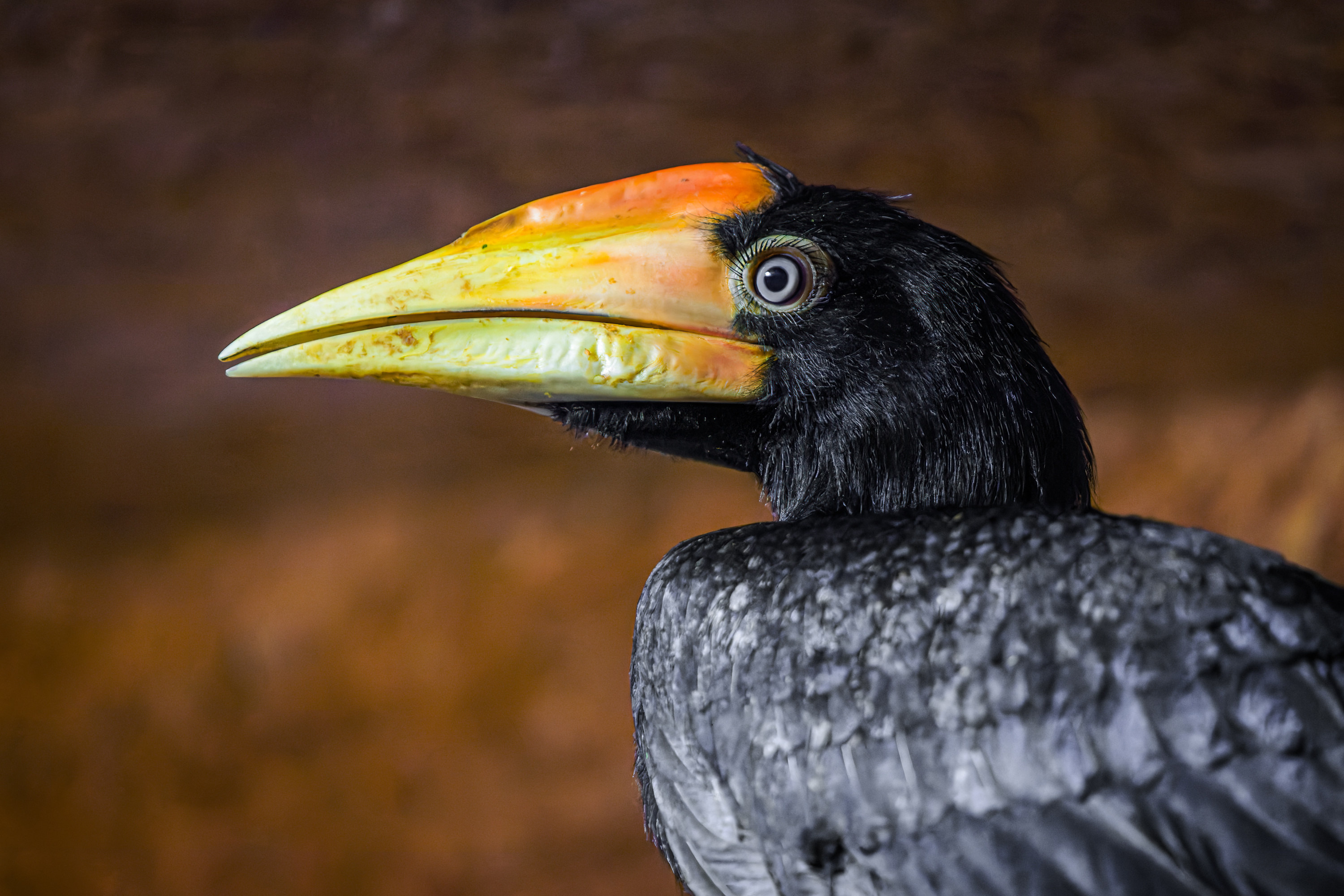
At present, the young bird’s bill shows only a hint of the casque that is so typical of all three hornbill species. This unusual feature is reflected not only in the common name of the genus, but also in its scientific name. Buceros combines the Ancient Greek βοῦς (ox) and κέρας (horn), loosely translated as “ox horn”. Photo: Petr Hamerník, Prague Zoo
Besides their huge bill and casque—which is actually very light and serves as a resonance chamber to enhance their already far-reaching calls—rhinoceros hornbills are captivating due to their unusual nesting habits. Once the female lays her eggs, both she and the male wall up the entrance to the tree cavity using a mixture of substrate, droppings and crushed fruit. The female remains inside and is completely dependent on the male, who provides care through a small hole left in the wall. Throughout the nesting period, he feeds both her and, once hatched, the chick.
Vaidl explained the courtship process: “The new pair first got to know one another vocally, just as they do in the wild, where the birds hear each other before making visual contact. After recording their duet, we introduced them to each other visually. They clicked instantly. Right from the start, they showed respect and a liking for each other, which is definitely not always the case with hornbills.”
The chick and its parents are currently housed in the zoo’s off-show facilities, which are warm and peaceful. Visitors will be able to see the rhinoceros hornbills in their exhibit once spring brings warmer weather. They can be found near the Penguin House, in one of the aviaries for South-East Asian birds.
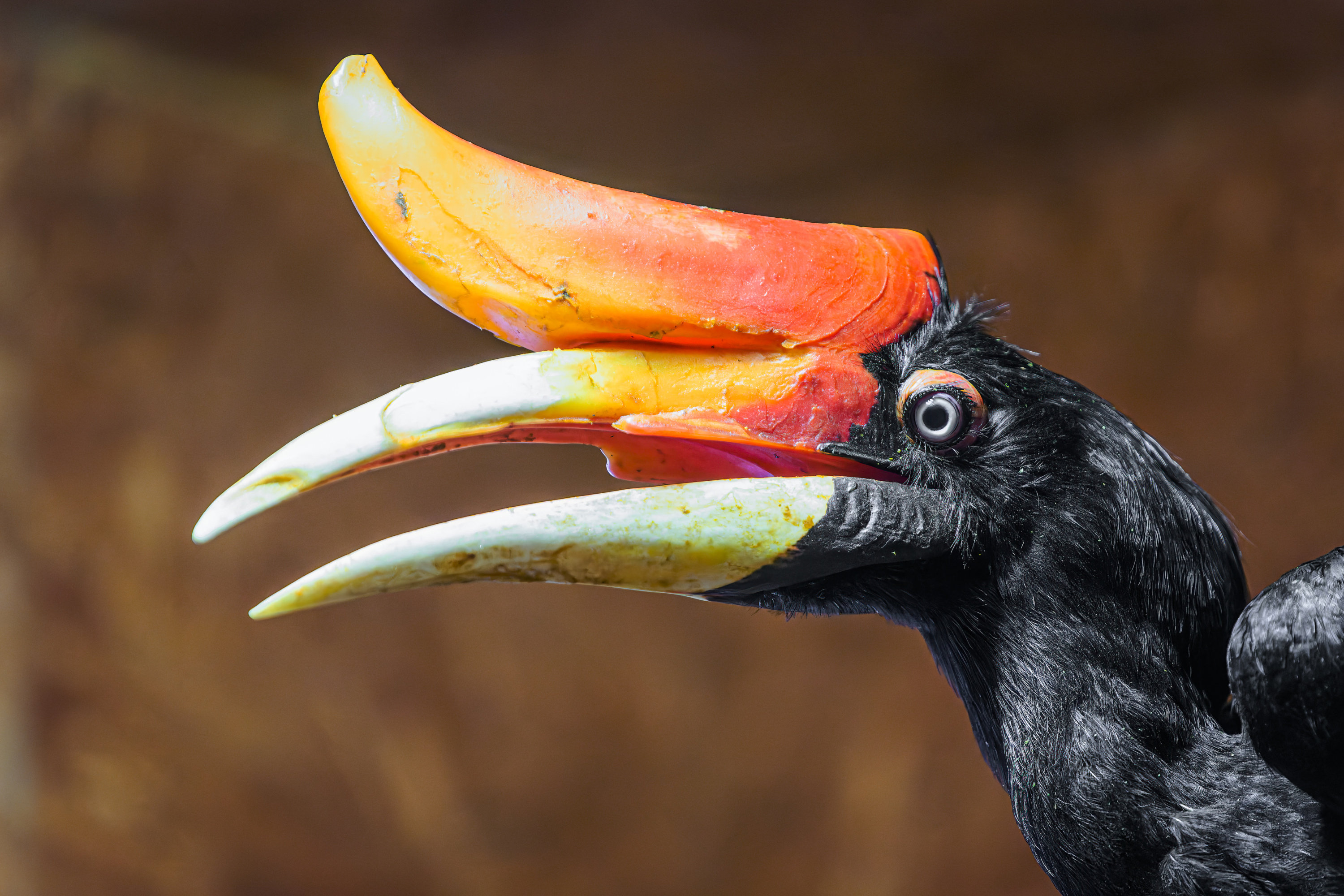
A close-up of the chick’s mother, Sharjah, a female rhinoceros hornbill. Hornbill sex is determined by eye colour: while females’ irises range from white to azure, males’ irises are red. Chicks have light-coloured irises regardless of sex. Photo: Petr Hamerník, Prague Zoo
Menu
Social networks